
Embodied Carbon Brings Sustainability Champions Together
A new study on embodied carbon in construction materials led to new guidelines to help the university meet its net-zero emissions goal by 2050.

A new study on embodied carbon in construction materials led to new guidelines to help the university meet its net-zero emissions goal by 2050.

Stanford Health Care has earned recognition as a leader in sustainability, receiving one of the first Sustainable Healthcare certificates from the Joint Commission.

In its inaugural year, the Living Lab Fellowship Program fostered cross-campus collaboration, hands-on learning, and lasting impact through 16 student-led operational sustainability projects.
The Stanford Center for Continuing Medical Education promotes sustainable event practices, using tools like a regionally informed infographic to reduce the carbon footprint of medical education.
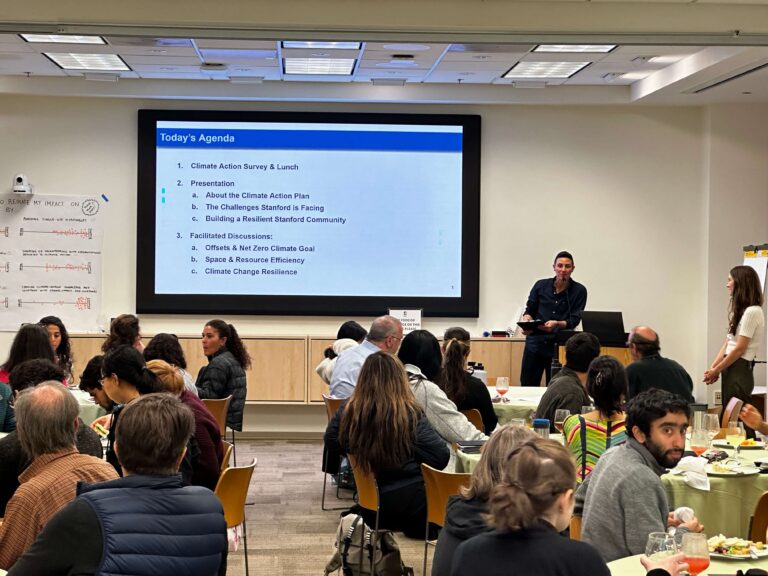
The Office of Sustainability hosted a Climate Action Plan Community Forum, bringing together over 60 participants to discuss Stanford’s climate initiatives and share feedback.

During Stanford’s Alumni Weekend, over 50 alumni gathered at the Explore Energy House for a powerful discussion on the university’s Climate Action Plan.

Stanford brought together over 160 leading experts to discuss climate-focused innovation and environmental justice in the food sector.

LBRE’s OCx program boosted energy efficiency in 2023, saving over $4,000 annually at Wallenberg through no-cost control system adjustments.

R&DE Stanford Dining set a public target to reduce food-related emissions by 25% by 2030, partnering with the Scope 3 Emissions Program to advance sustainable food sourcing.

The inaugural R&DE Stanford Food Institute Research Symposium showcased innovative food systems research from over 73 researchers and fostered collaboration.