
Simplifying Waste Sorting With an AI Chatbot
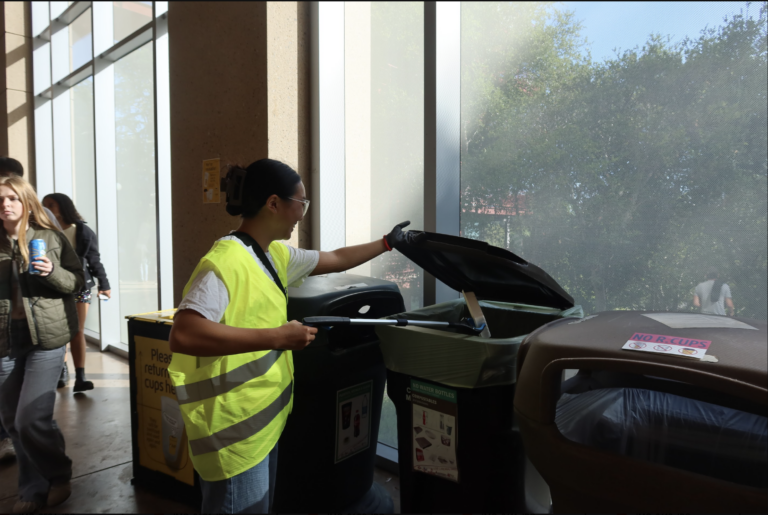
Sorting waste correctly can be a challenge due to varying guidance. Stanford is using AI to make that process simpler.

In celebration of Earth Week, on April 24th, the Office of Sustainability hosted a Climate Action Plan Community Forum, gathering over 60 participants from Stanford and nearby communities. At the forum, attendees had the opportunity to learn about historical and ongoing campus initiatives to mitigate greenhouse gas emissions and adapt to the effects of climate change, and exchange insights on Stanford’s Climate Action Plan. Participants shared feedback on topics including the role offsets play in Stanford’s climate action strategy, steps to build a climate resilient community, and practices for effective space and resource allocation.
This event is a part of a series of engagements organized by the Office of Sustainability. Through these engagements, the office aims to heighten internal and external community engagement with campus climate action, which is a foundational priority in Stanford’s climate action planning process. In ensuring that diverse perspectives are integrated into the planning process, the Office of Sustainability aims to foster an inclusive and effective process, reflective of the collective aspirations and concerns of the Stanford community.
Sorting waste correctly can be a challenge due to varying guidance. Stanford is using AI to make that process simpler.

Info about the wide range of goods and services is spread across a number of sources, and machine learning helps Stanford make sense of this data.

Stanford is testing whether machine learning can close the gap on making lower-carbon design decisions during initial planning stages.