
R&DE Tackles Climate Change, Bite by Bite
R&DE Stanford Dining set a public target to reduce food-related emissions by 25% by 2030, partnering with the Scope 3 Emissions Program to advance sustainable food sourcing.

R&DE Stanford Dining set a public target to reduce food-related emissions by 25% by 2030, partnering with the Scope 3 Emissions Program to advance sustainable food sourcing.

R&DE Stanford Dining became the first campus dining organization in the U.S. to earn the James Beard Foundation’s Smart Catch Ambassador status.

The inaugural R&DE Stanford Food Institute Research Symposium showcased innovative food systems research from over 73 researchers and fostered collaboration.
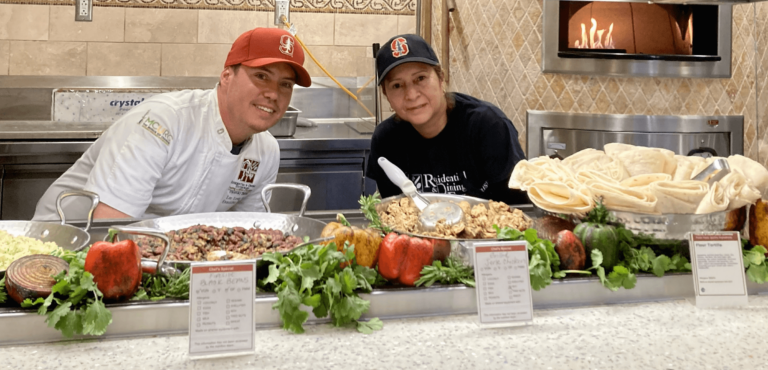
Stanford’s dining halls are living laboratories for innovative research on reducing food waste and promoting sustainable, plant-forward diets in collaboration with faculty.
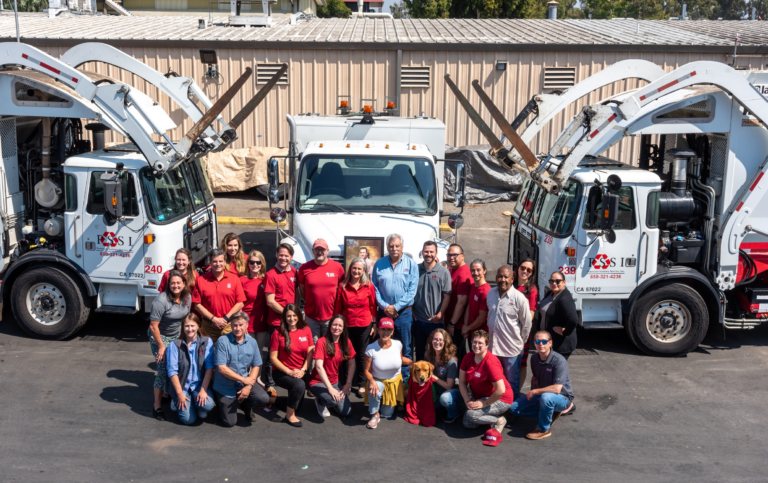
After a three-year competitive bid process, Stanford awarded a new 10-year contract to Peninsula Sanitary Service, Inc. (PSSI), continuing an 80-year partnership to support the university’s zero waste goals.
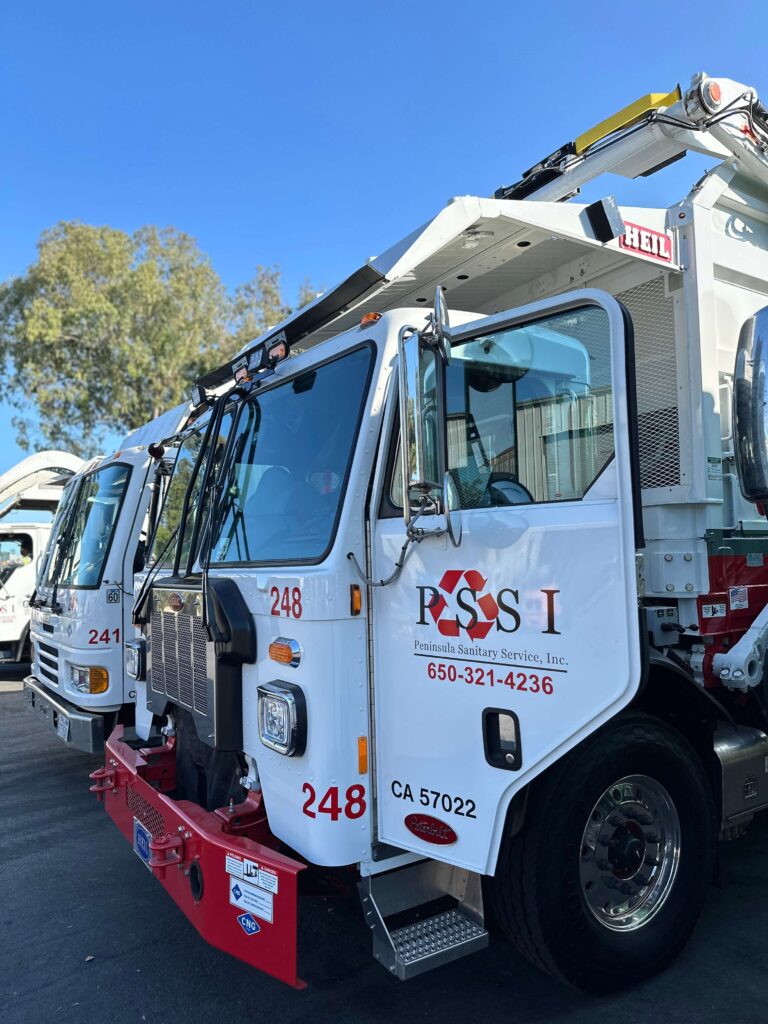
Stanford’s new contract with PSSI introduces a fleet management system that uses cameras, sensors, and AI to improve safety, monitor contamination, and optimize waste diversion.

Stanford maximizes waste diversion by sending recyclables, compost, and construction materials to multiple advanced facilities.
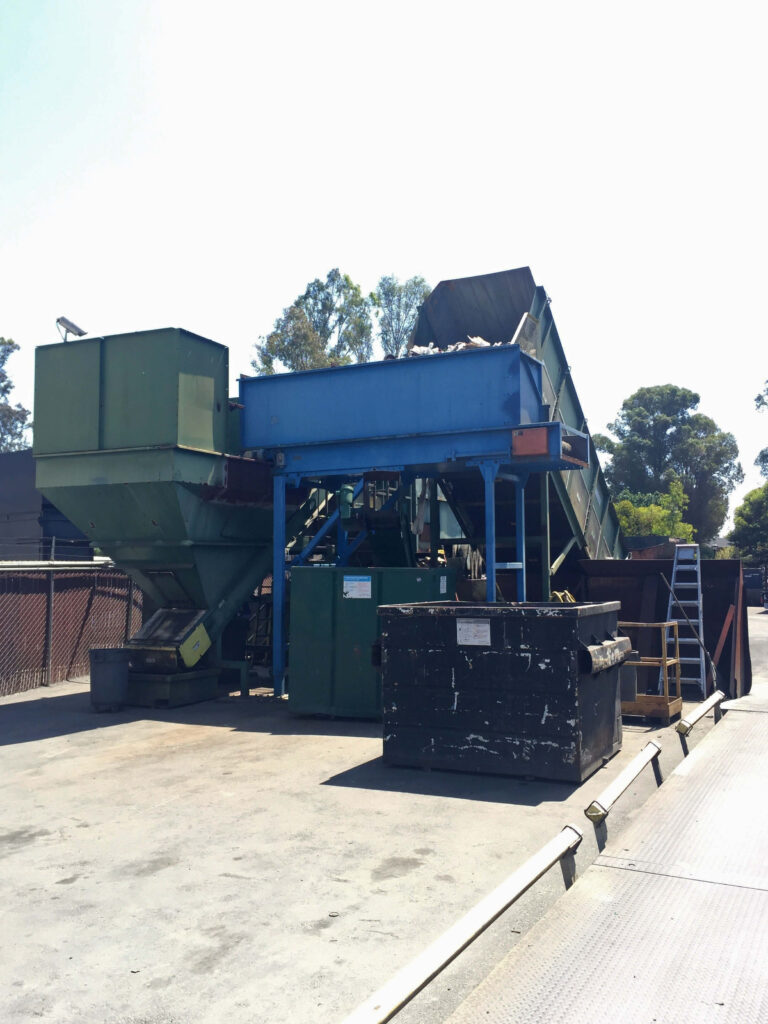
Stanford decommissioned its automated recycling sorting line and donated it to a California company, repurposing the equipment to turn food byproducts into animal feed.
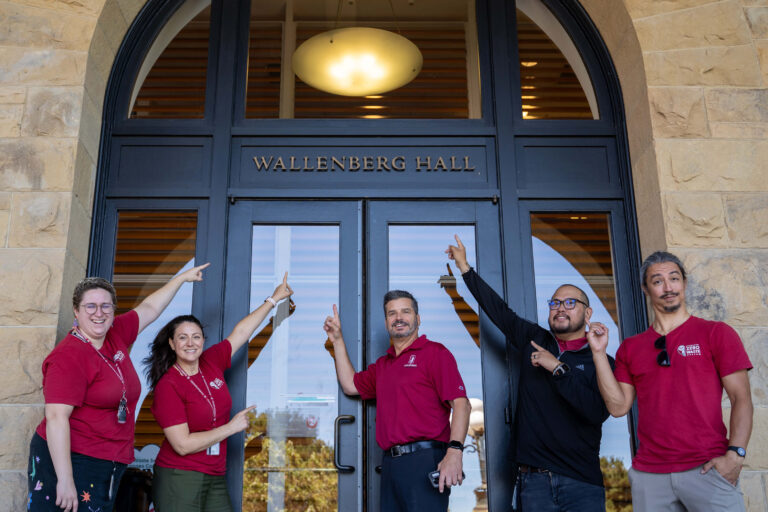
The newly established team brings together expertise on critical pieces of the puzzle to work towards zero waste goals.

A new enzyme-infused foam to clean air handling coils showed potential for improved energy efficiency and reduced energy use.