
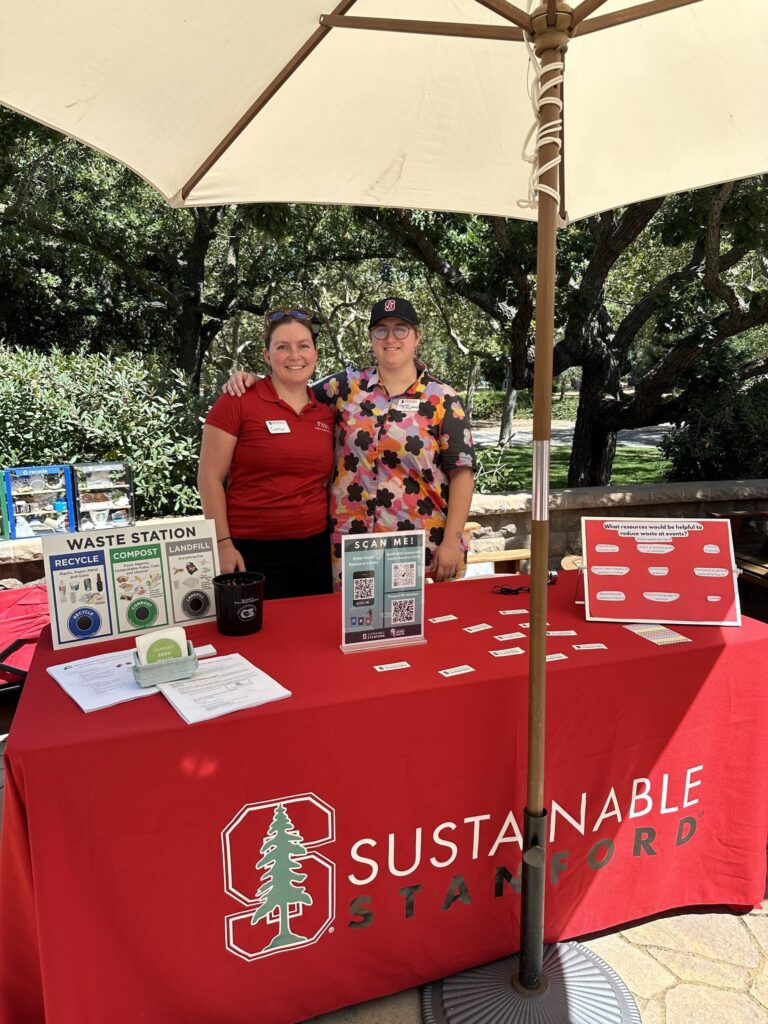
Inaugural Event Planners Summit Promotes Sustainable Practices
Sustainable Stanford showcased zero-waste event planning tips at the inaugural Event Planners Summit, offering expert advice on waste reduction and sustainable practices.
Sustainable Stanford showcased zero-waste event planning tips at the inaugural Event Planners Summit, offering expert advice on waste reduction and sustainable practices.

Stanford Health Care has earned recognition as a leader in sustainability, receiving one of the first Sustainable Healthcare certificates from the Joint Commission.
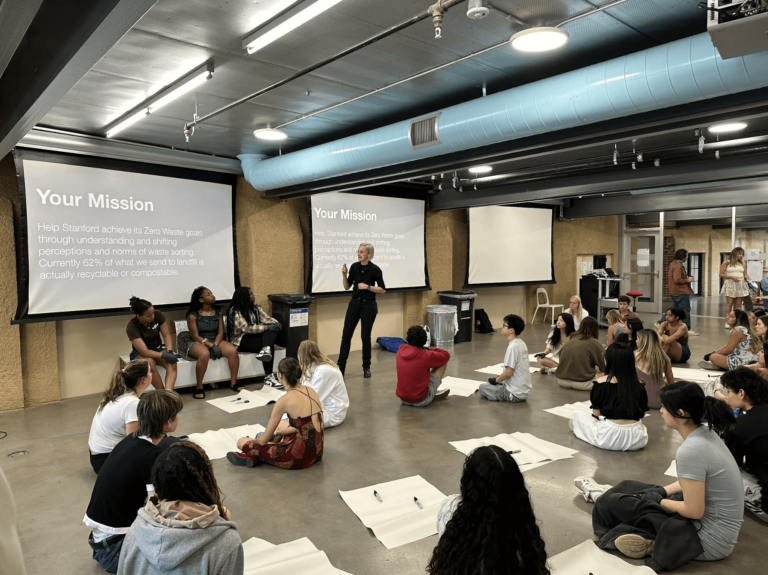
Stanford’s Office of Sustainability partnered with the d.school’s Design 1 course to inspire over 200 student-driven solutions aimed at promoting waste sorting and a zero-waste campus culture.

Joe Amaral is the recipient of the Office of Facilities Planning & Management’s “Hall of Fame” award for his exemplary collaboration and partnership in zero waste.

Sam Bunke, PhD candidate in chemical engineering, developed a framework for addressing waste justice in Stanford’s programs.

In its inaugural year, the Living Lab Fellowship Program fostered cross-campus collaboration, hands-on learning, and lasting impact through 16 student-led operational sustainability projects.
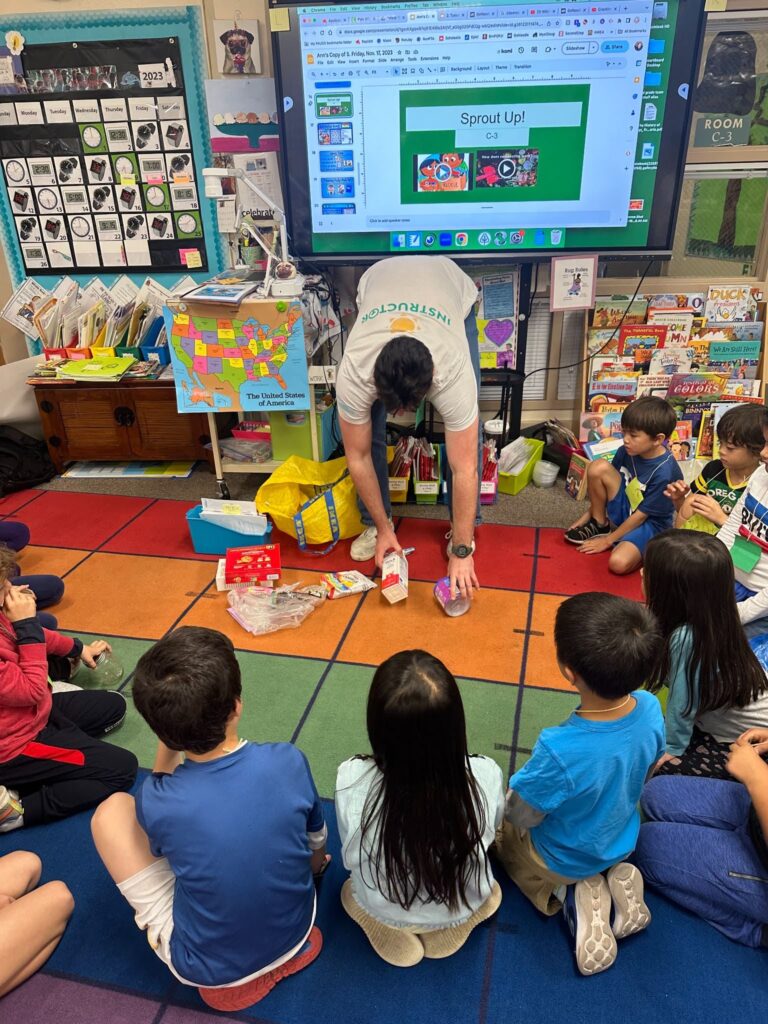
Linda Vera is using her Living Lab Fellowship to develop a zero waste strategy for local schools, aligning with Stanford’s zero waste goal.

Angela Trinh has made Stanford’s Fueling Station for athletes more sustainable through initiatives like reusable travel bags, refillable drink dispensers, and food donations.

Driven by climate action and care for students, Stanford well-being coach Donnovan Yisrael ’89 repairs abandoned bikes on campus and donates them to international and FLI students.

To reduce lab waste and save resources, Linda Heneghan, building manager of Lokey Stem Cell Research, hosts an annual reuse event where researchers exchange surplus lab supplies.