
Access for All: Zero Waste Update Completed
Proper sorting is now easier than ever, with over 9,000 new bins installed, thousands more reused, and over 30,000 new labels and signs added.

Proper sorting is now easier than ever, with over 9,000 new bins installed, thousands more reused, and over 30,000 new labels and signs added.

The new Reusable Dish Pilot Program is turning donated dishware into a zero-waste success, making reusable options more convenient and helping shift campus culture.
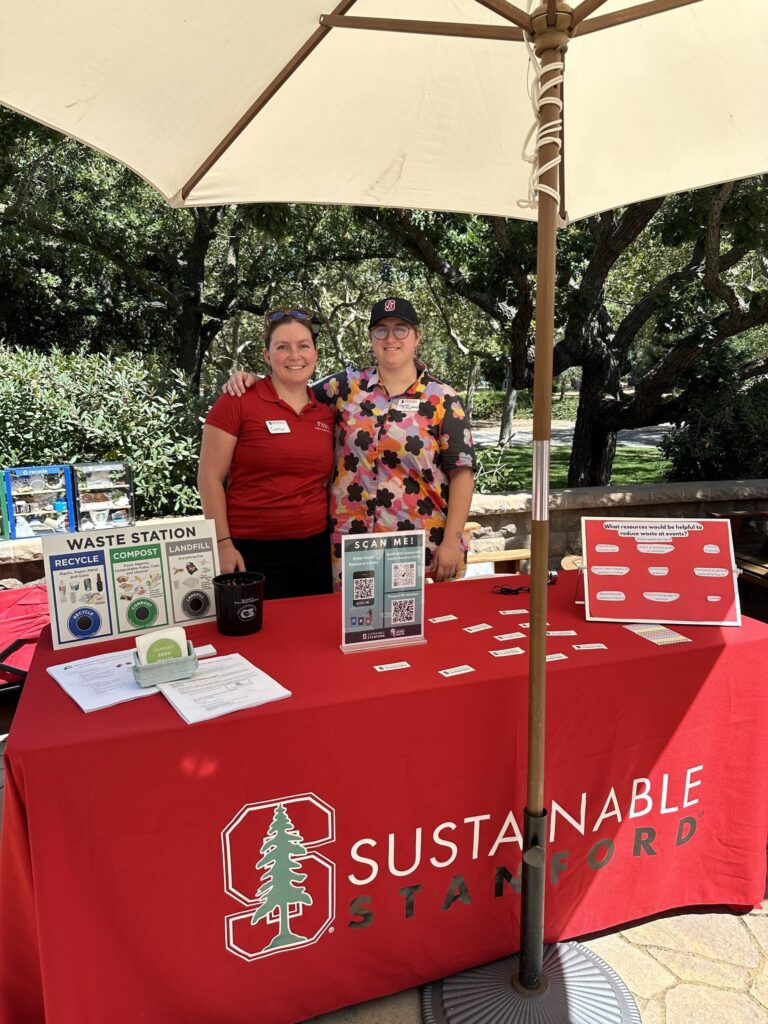
Sustainable Stanford showcased zero-waste event planning tips at the inaugural Event Planners Summit, offering expert advice on waste reduction and sustainable practices.
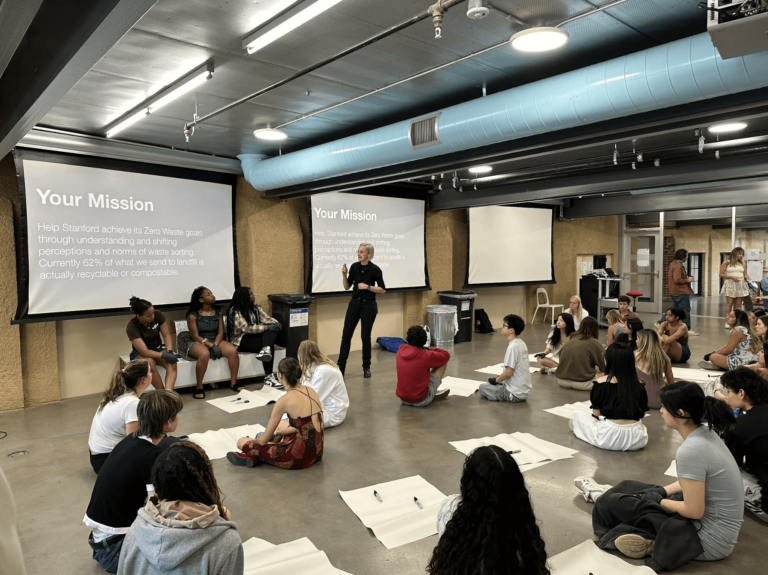
Stanford’s Office of Sustainability partnered with the d.school’s Design 1 course to inspire over 200 student-driven solutions aimed at promoting waste sorting and a zero-waste campus culture.

In its inaugural year, the Living Lab Fellowship Program fostered cross-campus collaboration, hands-on learning, and lasting impact through 16 student-led operational sustainability projects.

Angela Trinh has made Stanford’s Fueling Station for athletes more sustainable through initiatives like reusable travel bags, refillable drink dispensers, and food donations.

Since 2022, Béline Falzon has transformed event planning at the King Center by championing sustainable food choices, reducing single-use plastics, and making waste sorting easier.

Laura DiMario, Executive Director of Stanford’s Redwood City campus, is leading the way in sustainable building operations by piloting waste-reducing custodial products and championing zero-waste practices across campus.
The Stanford Center for Continuing Medical Education promotes sustainable event practices, using tools like a regionally informed infographic to reduce the carbon footprint of medical education.

Tanya Luhrmann chairs the SCRL Sustainability Committee, where she helps over 1,000 faculty and staff residents adopt greener practices through workshops, advocacy, and community-driven initiatives.