
A Friendly Reminder for People and Planet
Stanford is reimagining energy solutions across campus, with updates to key buildings like Lucile Packard Children’s Hospital and Green Library.

Land, Buildings & Real Estate (LBRE) is the operational core of Stanford’s physical campus and home to many departments within Sustainable Stanford, including the steward of the Sustainable Stanford brand (the Office of Sustainability), Land Use & Environmental Planning, Transportation, Mail Package Services, Energy Operations, Water Resources & Civil Infrastructure, Buildings, Grounds, & Maintenance, and many more. These groups showcase how planning for sustainability, climate adaptation, and resilience is possible for long-term efficiency, performance, and financial health. Through its day-to-day operations, LBRE lays the groundwork for sustainability innovation to emerge and thrive.
Stanford is reimagining energy solutions across campus, with updates to key buildings like Lucile Packard Children’s Hospital and Green Library.
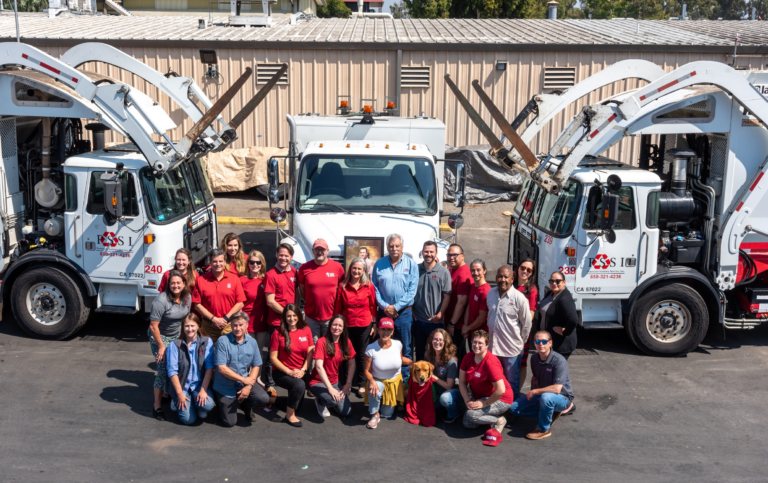
After a three-year competitive bid process, Stanford awarded a new 10-year contract to Peninsula Sanitary Service, Inc. (PSSI), continuing an 80-year partnership to support the university’s zero waste goals.
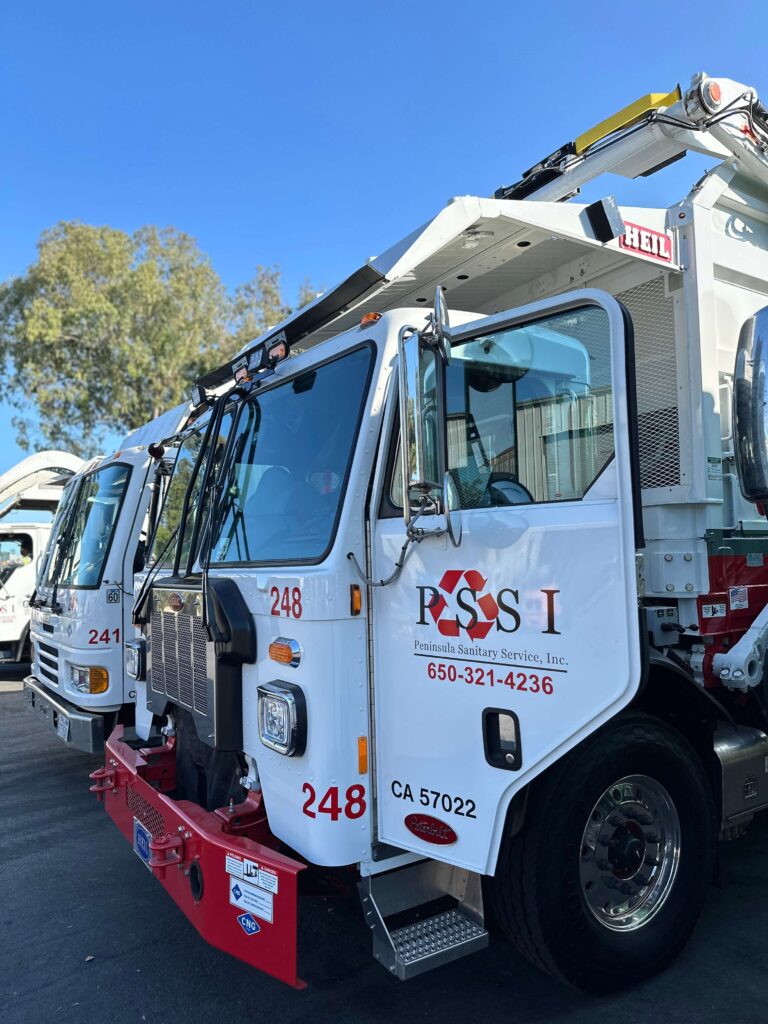
Stanford’s new contract with PSSI introduces a fleet management system that uses cameras, sensors, and AI to improve safety, monitor contamination, and optimize waste diversion.

Stanford maximizes waste diversion by sending recyclables, compost, and construction materials to multiple advanced facilities.
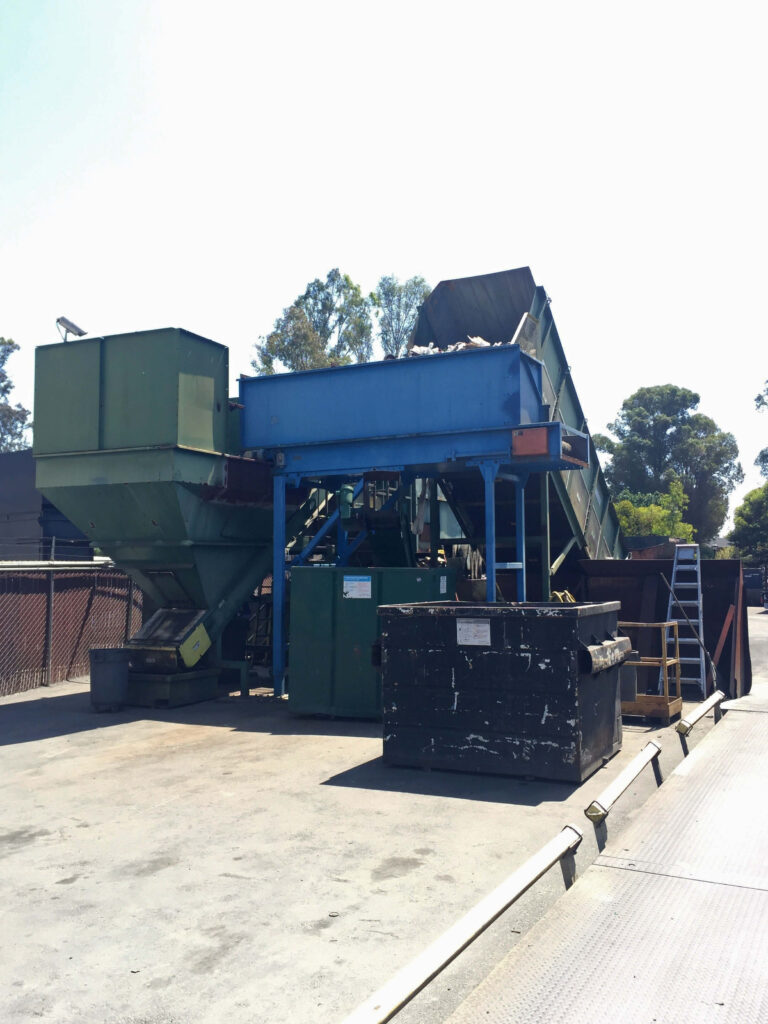
Stanford decommissioned its automated recycling sorting line and donated it to a California company, repurposing the equipment to turn food byproducts into animal feed.
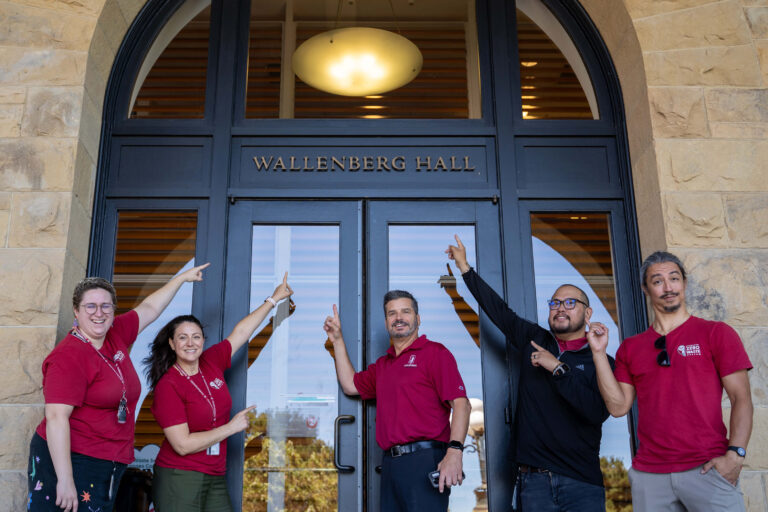
The newly established team brings together expertise on critical pieces of the puzzle to work towards zero waste goals.

A new enzyme-infused foam to clean air handling coils showed potential for improved energy efficiency and reduced energy use.

Stanford is revolutionizing cleaning with its ozone-based Cardinal Clean system, reducing chemical use by 90% and preventing over 2,140 pounds of plastic waste annually.
All 14 buildings of the School of Medicine now have recycling bins in labs and compost collection in bathrooms, breakrooms, and kitchens.

Stanford received the Outstanding Waste Prevention Award from the California Resource Recovery Association for the innovative Cardinal Clean program.