
Protected: Measuring Emissions from Purchased Goods & Services
There is no excerpt because this is a protected post.
The campus electric load is forecasted to exceed 80% capacity each day this week. Please reduce electricity from 2 to 6 p.m. this week to protect our overall campus power supply. (sustainable.stanford.edu/power-smart)

This April, a new study was released exploring the effects of a smaller serving size on diner satisfaction and meat consumption. This study, a joint collaboration between R&DE and Stanford faculty investigates how Scope 3 emissions can be reduced through dining hall interventions. R&DE staff members served meat portions with a 25% reduction in spoon size, which led to 18% less meat served per day without reducing diner satisfaction overall. However, when the spoon was reduced to 50% of its usual size, diner satisfaction significantly decreased, and did not reduce the amount of meat served that day.
“One big takeaway is that simple, subtle nudges – like changing default options or tweaking portion sizes – can actually work while also being feasible to implement in large-scale settings like campus dining,” Anaïs Voşki, the lead researcher and Stanford PhD student, shares. These efforts are part of a larger push to address Stanford’s Scope 3 Emissions targeted by the Climate Action Plan. By reducing the overall demand for meat on campus, Voşki hopes to “lower upstream energy and resource use while also benefiting public health and animal welfare more broadly.”
This study also represents a new opportunity for increased collaboration between Stanford faculty and R&DE. Eric Montell, the Assistant Vice Provost of R&DE Stanford Dining, hopes R&DE can “continue to collaborate with faculty exploring how these insights can inform decisions on programs to support sustainability and student satisfaction.”
As a result of this collaboration, students might soon start to see smaller spoons in their dining halls. But remember, a smaller spoon, with less meat, could help save the planet.
There is no excerpt because this is a protected post.
There is no excerpt because this is a protected post.
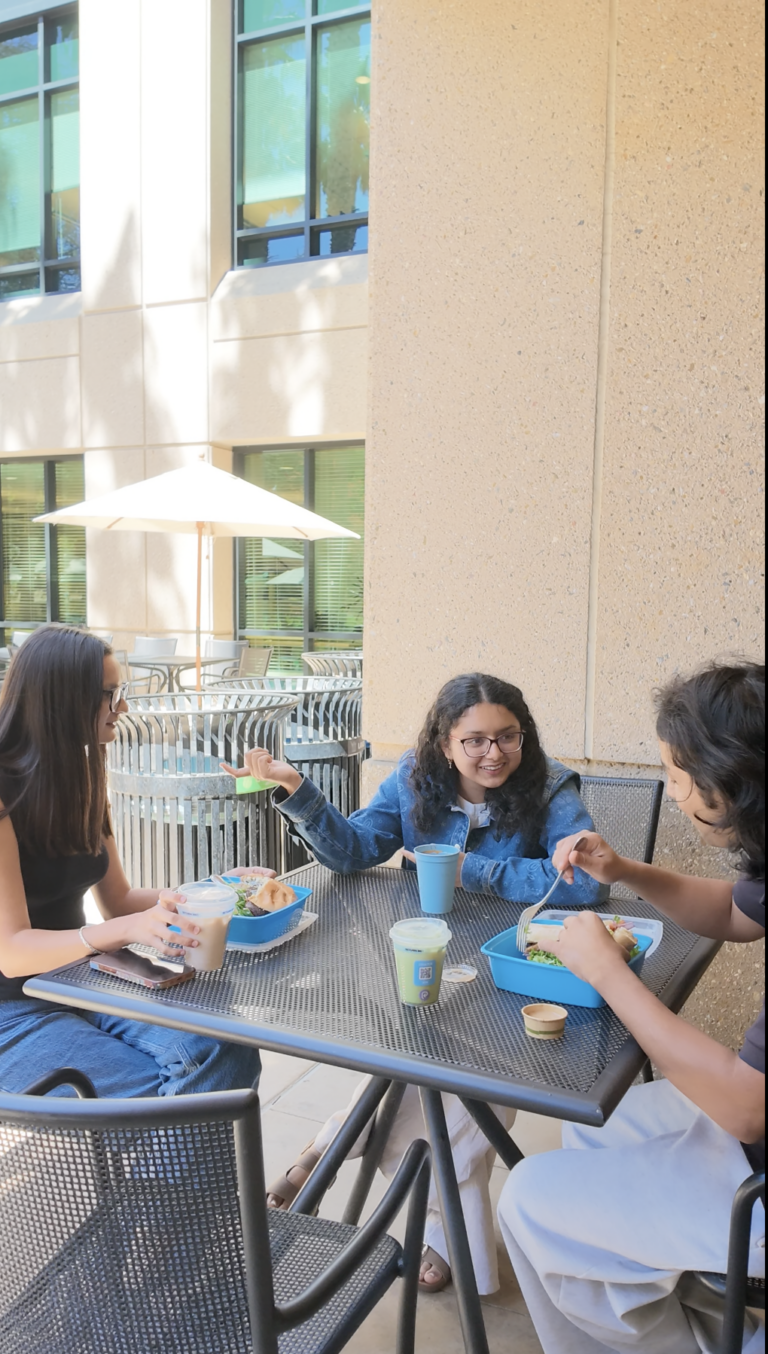
Meet Astha Bhandari ‘26, the Sustainable Stanford fellow getting campus cafés to rethink takeout.