
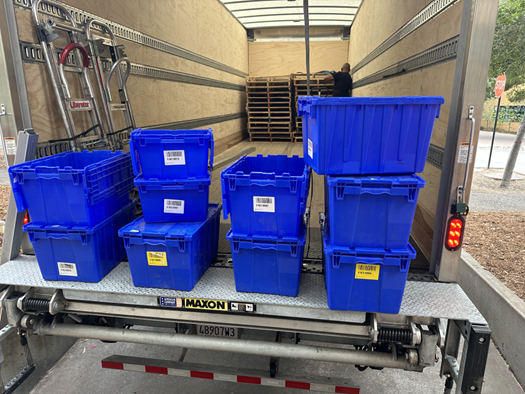
Same Supplies, Better Box: Closing the Loop on Campus Shipping
How one campus building manager is rethinking the supplies behind scientific discovery –helping labs be more circular.
The campus electric load is forecasted to exceed 80% capacity each day this week. Please reduce electricity from 2 to 6 p.m. this week to protect our overall campus power supply. (sustainable.stanford.edu/power-smart)

Living Lab Fellow Emily Blackwell, in partnership with the Stanford Doerr School of Sustainability (SDSS), gathered campus event planners and administrators to provide a comprehensive guide to conquering the challenges that come with planning sustainable, wasteless events.
The workshop introduced the Sustainable Events Toolkit, a culmination of Emily’s year-long Living Lab Fellowship project designed to operationalize sustainable practices in SDSS. The toolkit will help provide sustainable event resources for SDSS and serves as a great guide for other schools and units. The toolkit includes guidance for working with vendors and engaging attendees on sustainability and provides templates for communicating with catering services and effective promotion tactics for attendees. This toolkit is a working document that will continue to be updated throughout the year.
Do you host events on campus? Check out the first edition of the toolkit for resources on integrating sustainable practices in your next event.
How one campus building manager is rethinking the supplies behind scientific discovery –helping labs be more circular.
There is no excerpt because this is a protected post.
There is no excerpt because this is a protected post.