
Same Supplies, Better Box: Closing the Loop on Campus Shipping
How one campus building manager is rethinking the supplies behind scientific discovery –helping labs be more circular.

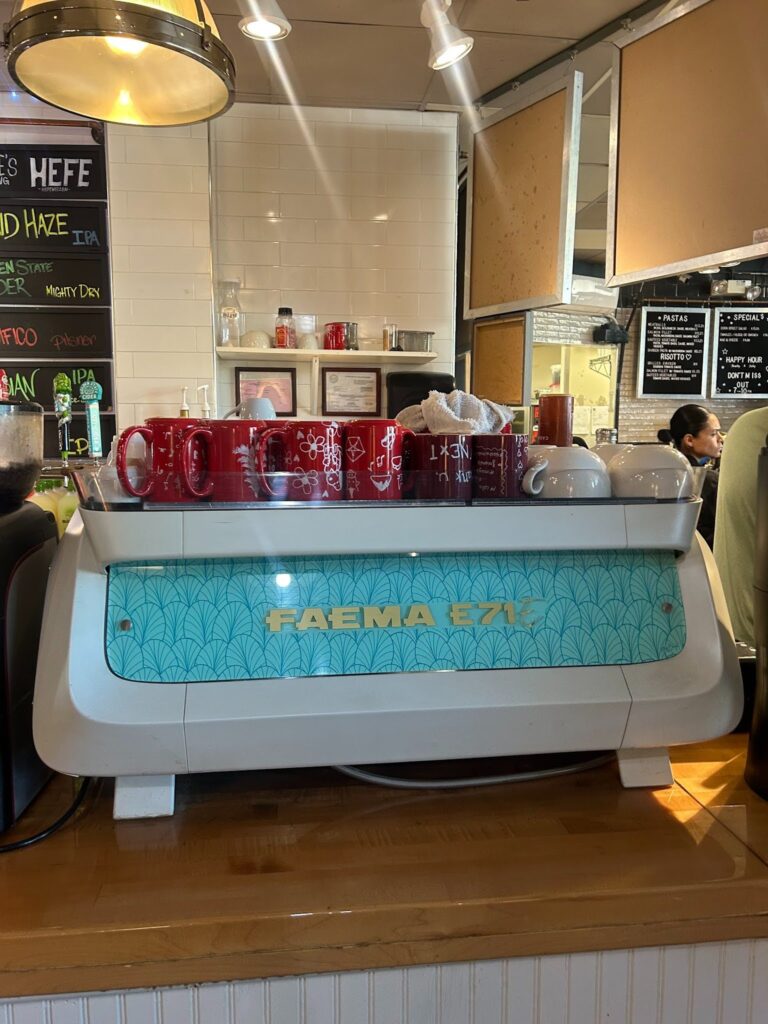
Reusable mugs have always been available at CoHo (Coffee House), but many students didn’t realize they could actually request one. Now, students are turning the hidden sustainability feature into a movement.
As part of a final project for SUST 220: Case Studies in Leading Change for Sustainability, a group of students launched the “Mug Club”, inviting the Stanford community to decorate reusable mugs that stay in circulation, encouraging a shift away from single-use cups while rebuilding the social rituals that make campus feel like home.
The idea blends student creativity with Stanford’s broader operational sustainability goals. CoHo owner Jenny Mountjoy says the café sees sustainability as part of its responsibility.
“As a restaurant, we feel like we have a responsibility to do that—from composting to reducing waste,” she explains. “We want to support and execute creative ideas.”
By normalizing reusable mugs through a social experience, the initiative aligns with campus waste reduction efforts while making sustainable choices feel personal and visible.
For organizers, Mug Club is also about strengthening community.
“The motivation was to make Stanford fun again — to create something meaningful people will remember,”
– Palmer Bank ’25, student organizer
Inspired by the Stanford Doerr School of Sustainability’s CAN (Connect-Adapt-Innovate) framework, the event focuses on connecting people, adapting familiar spaces, and innovating within a place students already love.
At its launch event in February 2026, more than 90 students showed up to decorate mugs. Some drew Hoover Tower, others wrote quotes that meant something to them, turning the mugs into objects they felt personally and emotionally connected to.
Mug Club event attendee Heena Khan ‘25, who studies at CoHo frequently, said she would “absolutely use the mugs,” adding, “I didn’t know that was an option before, but now I do thanks to Mug Club.”
The decorated mugs are now available in CoHo for anyone to use. As Stanford continues to explore ways to make sustainability part of daily life, Mug Club shows how student-led creativity can transform operational practices into community traditions.
The mugs decorated in 2026 may become a familiar part of CoHo, circulating across tables, in students’ hands, and along the café’s shelves.
What began as a small intervention has the potential to grow into a visible, community-driven culture of reuse, shaped through ongoing collaboration between students and CoHo staff. At its core, the Mug Club was designed to build a sense of community while creating something that would outlast its founders, a shared system that future students can continue to use and shape. Organizers say they hope to build a coffee home, not just a coffee house.

How one campus building manager is rethinking the supplies behind scientific discovery –helping labs be more circular.

There is no excerpt because this is a protected post.
There is no excerpt because this is a protected post.