Same Supplies, Better Box: Closing the Loop on Campus Shipping
How one campus building manager is rethinking the supplies behind scientific discovery –helping labs be more circular.

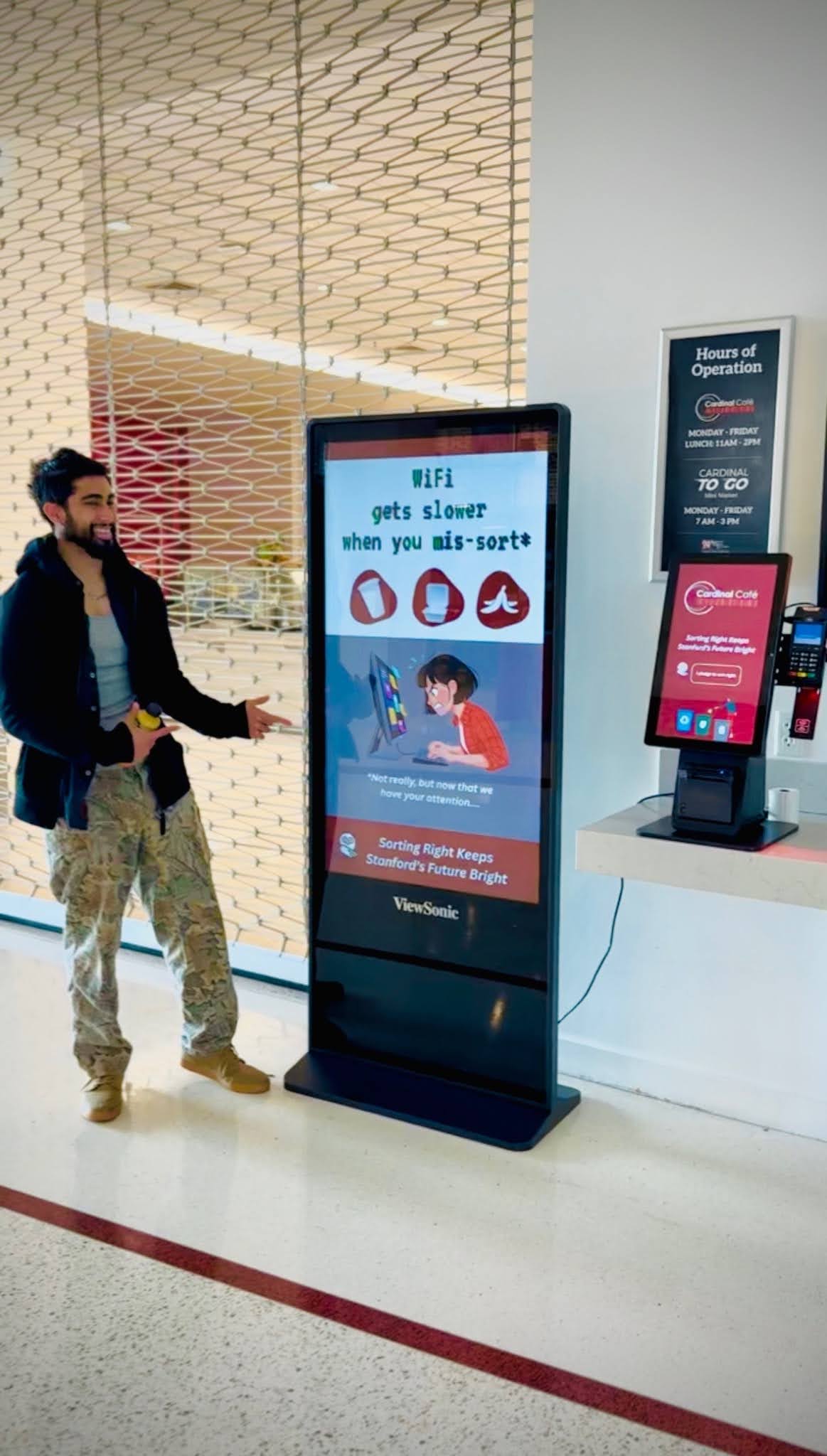
While we can’t directly link Wi-Fi speeds to waste sorting habits, we can certainly make the waste disposal process more engaging and memorable to encourage proper sorting. This is exactly what Sustainable Stanford Living Lab Fellow Matthew Mettias set out to do when tasked with reducing waste at Cardinal Café at Stanford’s Redwood City campus. He became curious about how humor and novelty impact sustainability habits. The result? A 10% improvement in waste sorting.
As part of the Sustainable Stanford Living Lab fellowship, students are tasked with solving campus sustainability challenges. To equip students with tools to succeed, they are enrolled in Sustain 120: Leading Organizational Change for Sustainability. It was in this course that Mettias found inspiration from guest speaker Tom Geary from School of Thought, who challenged students to brainstorm creative ways to solve low recycling rates. Encouraged to capture attention and use humor, Mettias’ group came up with the class favorite ad: “When he’s a 10, but doesn’t recycle.”
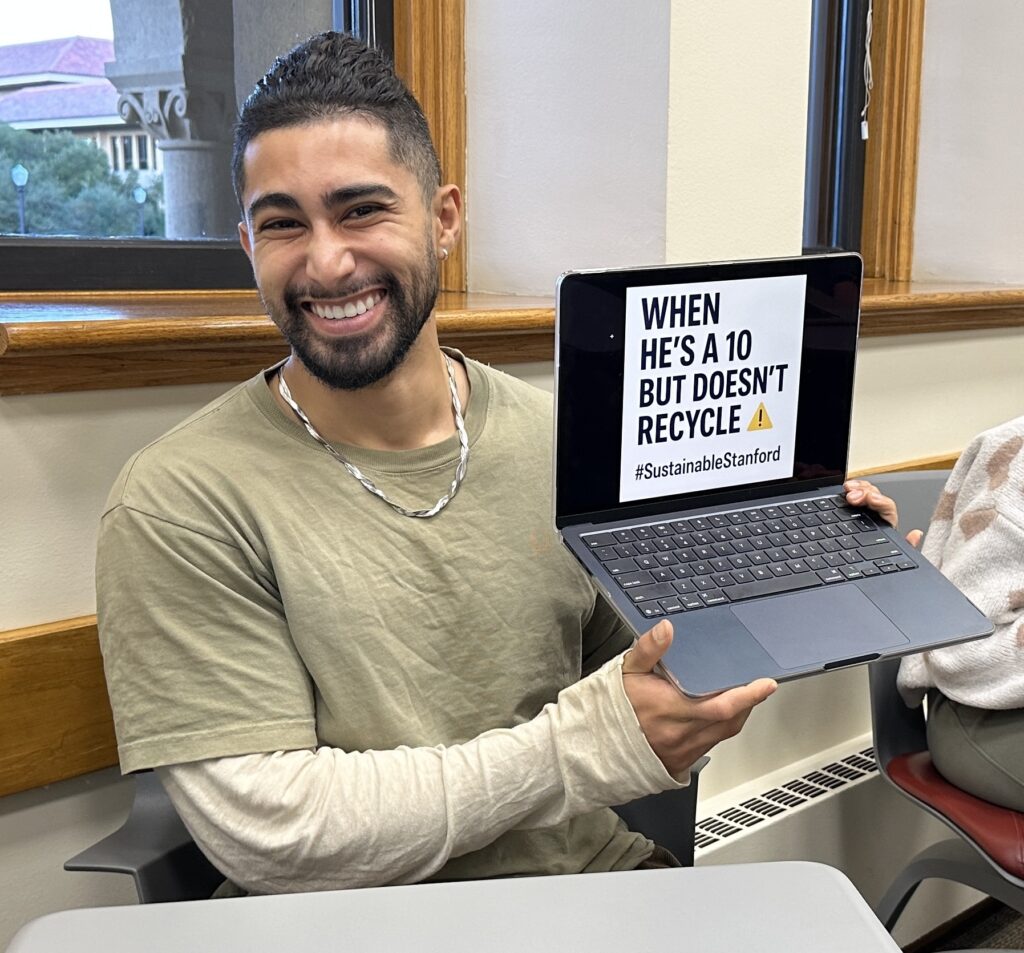
This clever concept sparked a shift in Mettias’ approach, leading him to focus on light-hearted yet effective nudges to encourage behavior change.
“If the labels are right and the bins are right, why aren’t our habits right? Where is the misalignment?” Motivated to bridge this gap, he developed a multi-step behavioral intervention to increase proper waste sorting at Cardinal Café.
The first step was introducing a digital “green” pledge on the cafe’s ordering screens, planting the seed of proper waste sorting right at the point of sale. This initial nudge was designed to make customers think about their environmental commitment even before they receive their food.
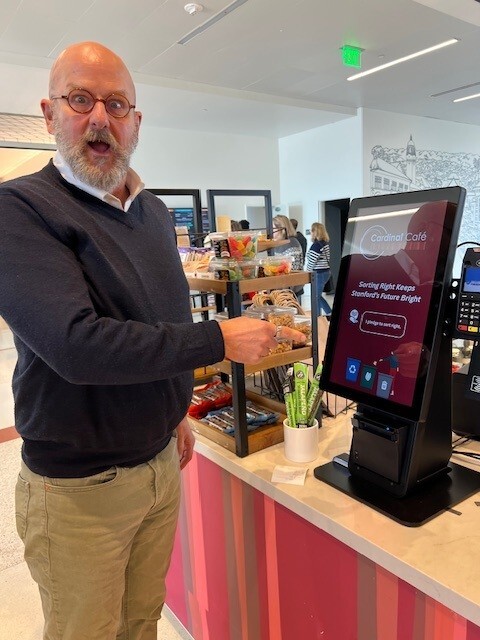
To further reinforce this commitment, a series of eye-catching signage was displayed both digitally and physically throughout the cafe with humorous messages playfully linking waste sorting habits to wi-fi speeds, elevator functionality, and food temperature. Mettias recognized that traditional instructional signage often faded into the background noise, so he opted for creative, out-of-the-box messaging that was more likely to capture attention.
“Humor interrupts autopilot and can increase recall. Which do you remember: a prescriptive rule or a joke that made you smile?” – Matthew Mettias, Sustainable Stanford Living Lab Fellow, Sustainability Sciene & Practice ’26
This initiative resulted in a 10% reduction in improper sorting–a great result for a low-cost intervention that can easily be replicated in other cafes. By using the campus as a living lab, Mettias was able to work on a real-world sustainability challenge while advancing Stanford’s operational goals.
Through this engaging and innovative approach, Mettias’ project demonstrated that humor and novelty can be powerful tools in promoting sustainable practices, making waste sorting not just a responsibility but an enjoyable part of the dining experience at Cardinal Café.
How one campus building manager is rethinking the supplies behind scientific discovery –helping labs be more circular.
There is no excerpt because this is a protected post.
There is no excerpt because this is a protected post.