Protected: Simplifying Waste Sorting With an AI Chatbot
There is no excerpt because this is a protected post.

Every week, when Todd Eberspacher would make his rounds to each of the chemistry department’s buildings, mountains of cardboard boxes piled up and were strewn about. As Facilities Service Manager and a long-time sustainability advocate, Eberspacher asked a simple question: “Is there a better way to get our packages?”
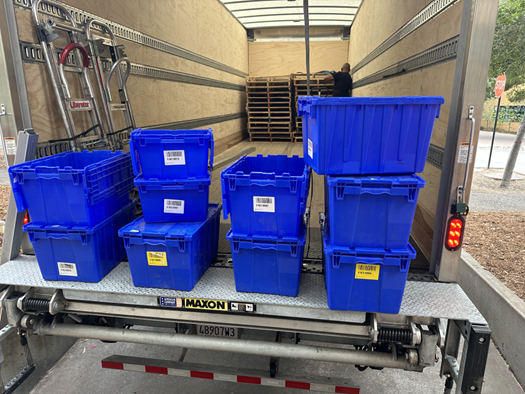
Cardboard piles are practically a fact of life in busy research buildings. After inquiring with his supplier, Eberspacher discovered that there was a more efficient way to ship supplies–swapping out the endless single-use cardboard boxes for reusable shipping containers that can stay in circulation.
Introducing this option to his department has saved money, created efficiencies, and is contributing to the university’s waste reduction goal. This circular shipping program has now expanded to over 25 campus labs, making sustainable shipping the default. As of July 2025, eligible purchases (non-chemicals and non-refrigerated items) are automatically delivered in reusable shipping containers. No changes are required in the ordering process. The containers are picked back up by the supplier, saving lab personnel and custodians the time of having to properly dispose of the cardboard.
“We get 75 packages a day. These reusable shipping containers cut cardboard down by about 25% from our buildings. The best part about it is you don’t have to flatten them, you don’t have to transport them…the driver picks them up the next day.” – Todd, Eberspacher, Facilities Service Manager, Department of Chemistry
Eberspacher paved the way for a more efficient shipping solution that helps make waste reduction a part of the way we operate, not an extra task. By asking the question, “Could we do this differently?” staff can help turn ambitious sustainability goals into practical, everyday solutions. And collaboration with campus suppliers is key.
Interested in exploring sustainable shipping options with your major vendors? Share the university’s sustainable packaging guidelines with your vendors, or contact the Responsible Purchasing Program (responsiblepurchasing@stanford.edu) for assistance.
There is no excerpt because this is a protected post.
There is no excerpt because this is a protected post.
There is no excerpt because this is a protected post.