Same Supplies, Better Box: Closing the Loop on Campus Shipping
How one campus building manager is rethinking the supplies behind scientific discovery –helping labs be more circular.
The campus electric load is forecasted to exceed 80% capacity each day this week. Please reduce electricity from 2 to 6 p.m. this week to protect our overall campus power supply. (sustainable.stanford.edu/power-smart)

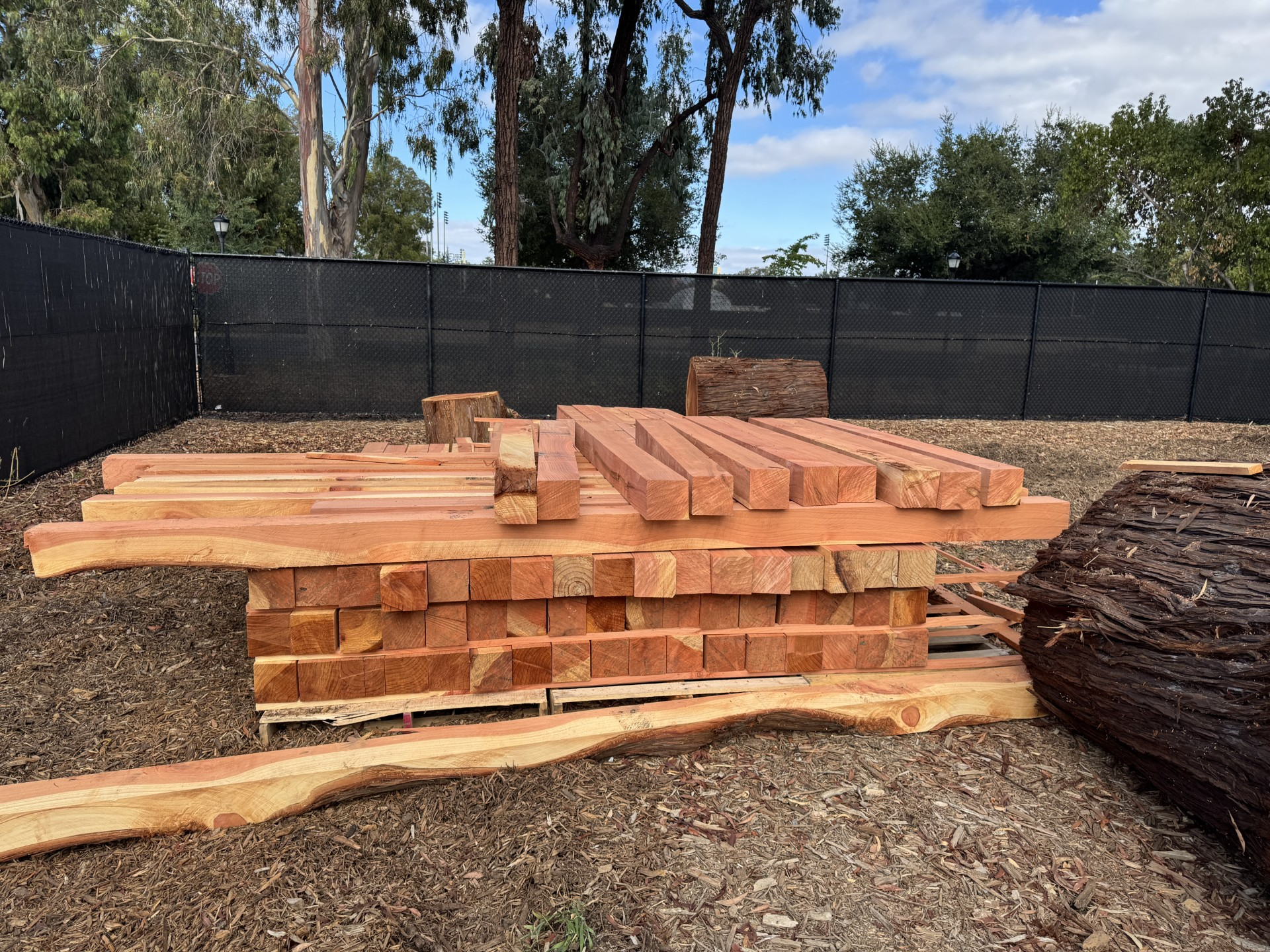
Transforming Stanford trees into lumber keeps them on campus, preserving their role in carbon sequestration while providing the campus community a local, sustainable, and cost-effective alternative to imported lumber.
During the rainy season, it’s common to spot fallen branches after a period of heavy precipitation or wind. Much of this wood is allowed to decompose back into Stanford’s soils, but with larger tree limbs, these fallen branches mysteriously disappear, whisked away for reuse by the team of people operating under the radar and managing our campus trees.
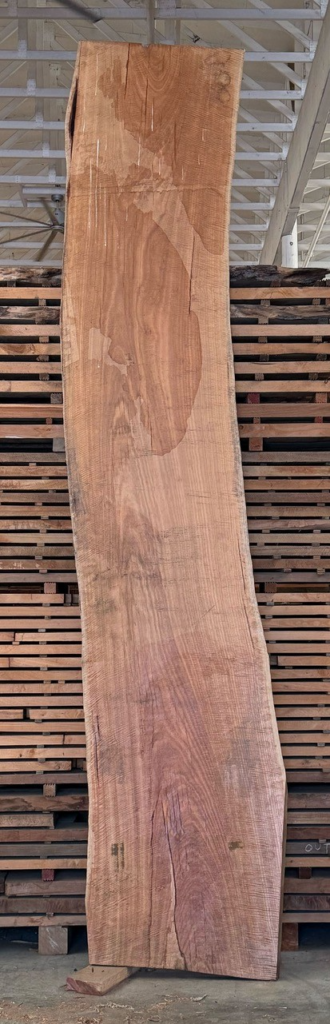
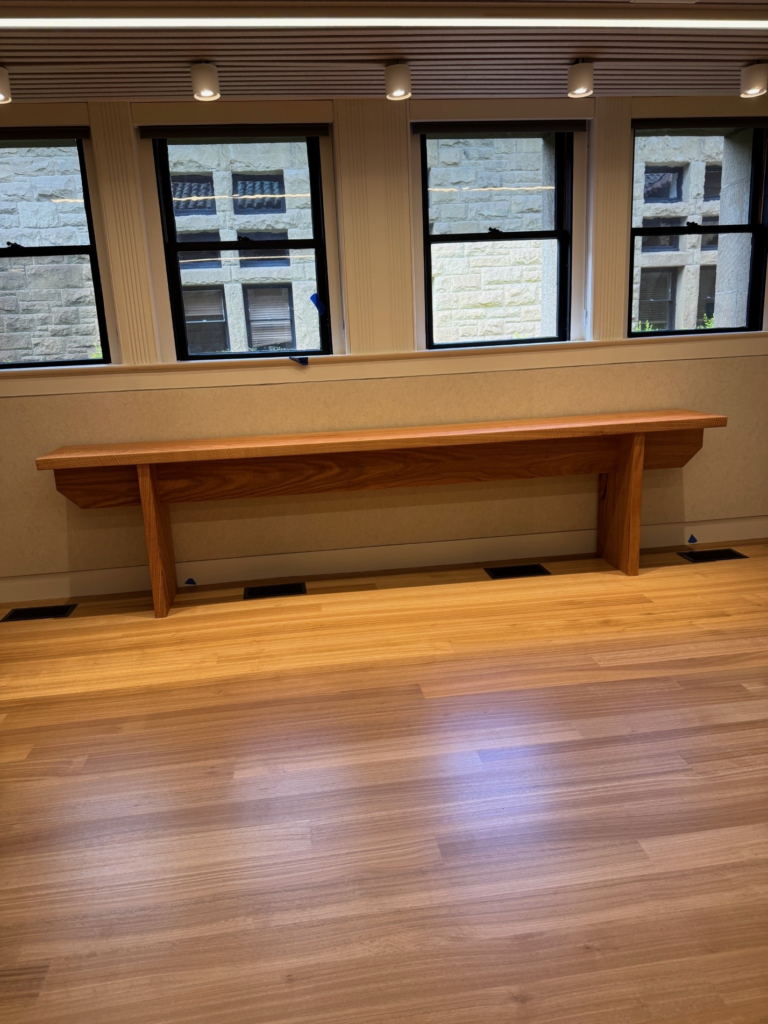
Tree removal is necessary for safety, damage control, or construction needs. A network of skilled staff ensures that these felled tree limbs are not wasted, but transformed into beautiful benches and sculptures for the Stanford community.
Recently, Stanford’s tree team has made the move to prioritize on-site mobile milling, rather than transporting felled lumber off campus for processing. This avoids the energy and financial costs associated with transporting large pieces of wood, plus avoids carbon release by chipping the wood into mulch, to be used to suppress weeds on campus.
The wood sourced from Stanford’s trees has been utilized across campus– fence posts for the Stanford Dish trail, benches placed around campus, and furniture used in buildings. Cathy Blake, Director of Campus Planning and Design emphasizes that there’s no need to import an antique bench from somewhere far away that will generate emissions when there is wood right on campus that can be reutilized.
Through a unique partnership, an oak in the Stanford Arboretum that fell due to natural causes was given a second life as Stanford-branded coasters. The process began with Carpenter Specialist Florin Ardel, who cut branches into 3.5” rounds and laid them on screens to air-dry gradually–moving the wood from a fresh, high-moisture state to a stable moisture content suitable for long-term use. Once cured, the coasters were delivered to Beline Falzon, Assistant Director of Events at Stanford’s Precourt Institute for Energy, who laser-engraved them with the Stanford “S” at the Product Realization Lab. With an electric chainsaw used for cutting and an electric vehicle to transport, the project kept emissions to nearly zero while turning a fallen campus tree into a lasting gift.
Students have used this wood too, in architectural projects and works of art. Bren Bartol, Executive Producer of the Stanford Shakespeare Company, a student-run theater group on campus, reached out to Architectural Trades Manager Tim Cain to utilize scrap wood for the set of this past spring’s production of Macbeth. Bartol reflects on the ease of the process.
“It was a quick and accessible way to access wood that we would’ve otherwise had to purchase.”
– Bren Bartol, executive producer of the Stanford Shakespeare Company
As the program continues to expand, the team is hopeful that more of the campus community can utilize the high quality, home-grown lumber for a myriad of university projects. Using on-campus wood saves an average of 60% compared to commercially available lumber– with a lower carbon footprints. Plus, unique wood scraps are often available at no cost.
To access local lumber from Stanford trees, contact Architectural Trades Manager Tim Cain at timcain@stanford.edu.
How one campus building manager is rethinking the supplies behind scientific discovery –helping labs be more circular.
There is no excerpt because this is a protected post.
There is no excerpt because this is a protected post.