
Greener Together: Alumni Show Up For Sustainability
Current and former Stanford students keep the university’s sustainability legacy alive at the All Alumni Day Farm Fest.

Current and former Stanford students keep the university’s sustainability legacy alive at the All Alumni Day Farm Fest.

This test event has every option on every category selected. Lorem ipsum dolor sit amet, consectetur adipiscing elit, sed do eiusmod tempor incididunt ut labore …

Californians are no strangers to wildfires. As the scientific community searches for answers to prevent fire before it happens, Stanford is testing a “BurnBot” that can create fuel breaks.

Stanford joined over 20 Ivy+ schools at the Ivy+ Sustainability Summit in Southern California.

Zander Opperman developed a fire management plan for the Jasper Ridge Preserve as part of his Living Lab Fellowship.
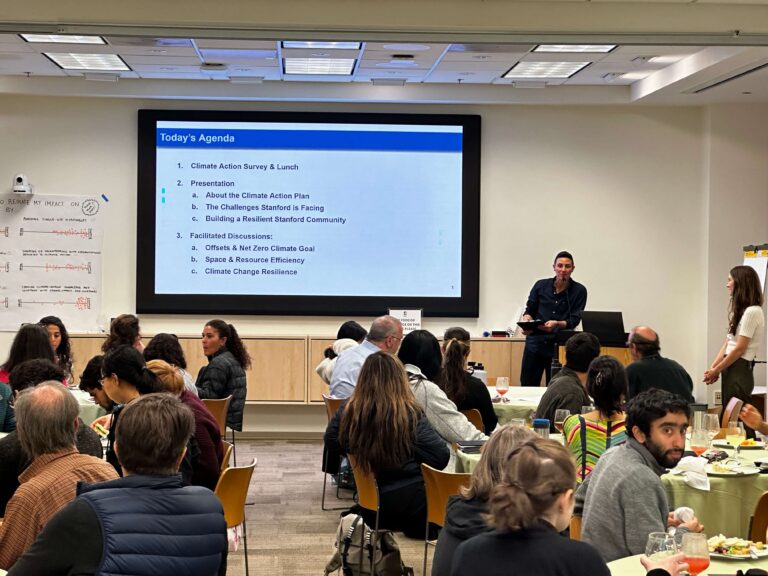
The Office of Sustainability hosted a Climate Action Plan Community Forum, bringing together over 60 participants to discuss Stanford’s climate initiatives and share feedback.

Campus water policies minimize waste and follow California guidelines for water efficiency.

The 2022 Annual Water Quality Report details sourcing, treatment, and contamination levels.

Stanford’s Water Conservation Program has reduced campus water use by 48% since 2001, with ongoing efforts to comply with drought regulations and explore sustainable water practices.

In accordance with emergency state regulations for water conservation, the university continues to prohibit wasteful water uses.