
Machine Learning Insights for Better Waste Diversion
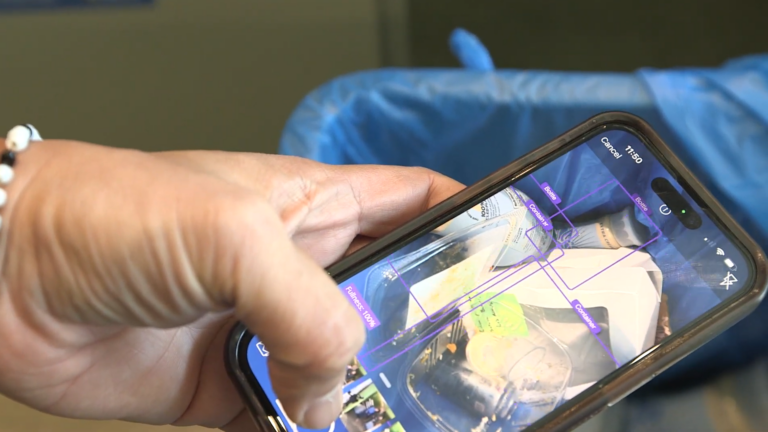
Stanford uses machine learning to translate routine waste-handling photos into information campus teams can act on.

Stanford joined over 20 Ivy+ schools at the Ivy+ Sustainability Summit in Southern California, sharing strategies and learning from experts. The summit featured a presentation by Allison Agsten, the inaugural director of the Center for Climate Journalism and Communications, whose mission is to train journalists, communication professionals, and students to effectively communicate about climate change and solutions. She emphasized the importance of tailoring content to specific audiences to establish buy-in for climate solutions.
Professors Will Berelson (USC) and Jess Adkins (Caltech) also presented, showcasing their ocean-based solutions for carbon removal, including technology for use on cargo ships and other vessels. Participants were given a sustainability tour of the Huntington Gardens in Pasadena, where the impressive and essential water conservation efforts were extensively highlighted.
Stanford uses machine learning to translate routine waste-handling photos into information campus teams can act on.

Info about the wide range of goods and services is spread across a number of sources, and machine learning helps Stanford make sense of this data.

Stanford is testing whether machine learning can close the gap on making lower-carbon design decisions during initial planning stages.