
How to Live Sustainably on Campus
Want to make a real difference on campus? From laundry habits to leftovers, every action you take helps move Stanford toward a more sustainable future.
The campus electric load is forecasted to exceed 80% capacity each day this week. Please reduce electricity from 2 to 6 p.m. this week to protect our overall campus power supply. (sustainable.stanford.edu/power-smart)

Want to make a real difference on campus? From laundry habits to leftovers, every action you take helps move Stanford toward a more sustainable future.

Stanford is piloting a food recovery initiative to donate excess food to the community.

Ideas to reduce the climate impact of your food choices on campus.

Donating excess edible food is required by California law. Explore ways to reduce food waste from the start and learn how to plug into campus food recovery efforts.

A year of setting up the foundation for the next decade of climate action, mitigation, adaptation, and resilience.

Stanford’s food research collaborative has increased its goal to a 40% cut in protein-related emissions by 2030 after already achieving a 23% reduction.

Stanford’s dining and residences have been celebrated for innovation in sustainability.

Current and former Stanford students keep the university’s sustainability legacy alive at the All Alumni Day Farm Fest.

Sixty-one Stanford students are driving real change in sustainability through the Living Lab Program, tackling real issues while gaining hands-on experience.
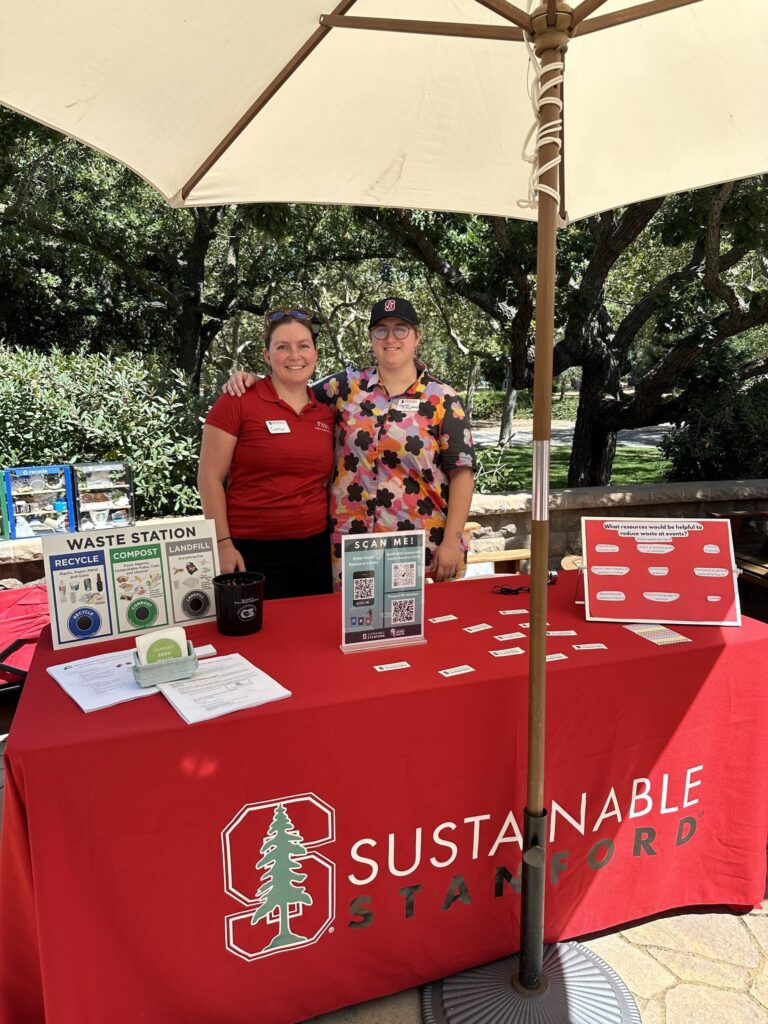
Sustainable Stanford showcased zero-waste event planning tips at the inaugural Event Planners Summit, offering expert advice on waste reduction and sustainable practices.