
61 Students Start Living Lab Internships & Fellowships
Sixty-one Stanford students are driving real change in sustainability through the Living Lab Program, tackling real issues while gaining hands-on experience.
The campus electric load is forecasted to exceed 80% capacity each day this week. Please reduce electricity from 2 to 6 p.m. this week to protect our overall campus power supply. (sustainable.stanford.edu/power-smart)

Residential & Dining Enterprises (R&DE)'s sustainability commitment is embedded in leadership, daily operations, and collaborations with students and faculty. R&DE leads pioneering food research, co-founding the Menus of Change University Research Collaborative and the R&DE Stanford Food Institute. The flagship “Give & Go” program diverts over 70 tons of reusable materials from landfills annually, supporting the student community and reducing waste.
Sixty-one Stanford students are driving real change in sustainability through the Living Lab Program, tackling real issues while gaining hands-on experience.

Stanford’s Give & Go move-out donation program collected 69 tons of items—26% more than last year—helping divert waste from landfills and support community partners in the process.

In its inaugural year, the Living Lab Fellowship Program fostered cross-campus collaboration, hands-on learning, and lasting impact through 16 student-led operational sustainability projects.

Stanford brought together over 160 leading experts to discuss climate-focused innovation and environmental justice in the food sector.
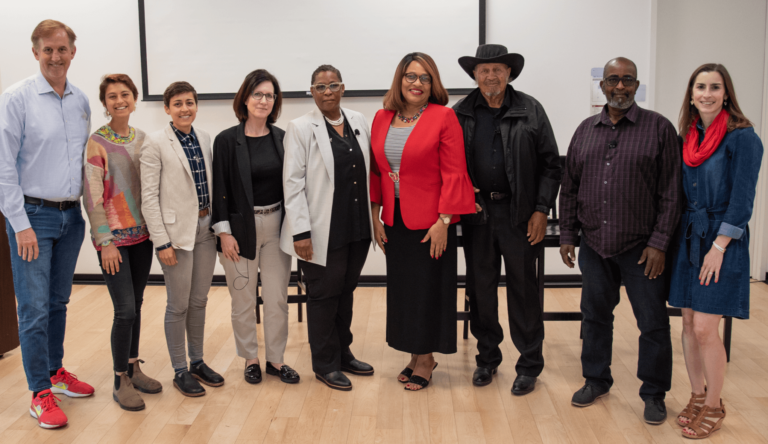
R&DE Stanford Food Institute is advancing diversity, equity, and inclusion by supporting Black farmers through direct purchasing and co-producing toolkits.

R&DE Stanford Dining set a public target to reduce food-related emissions by 25% by 2030, partnering with the Scope 3 Emissions Program to advance sustainable food sourcing.

R&DE Stanford Dining became the first campus dining organization in the U.S. to earn the James Beard Foundation’s Smart Catch Ambassador status.

The inaugural R&DE Stanford Food Institute Research Symposium showcased innovative food systems research from over 73 researchers and fostered collaboration.
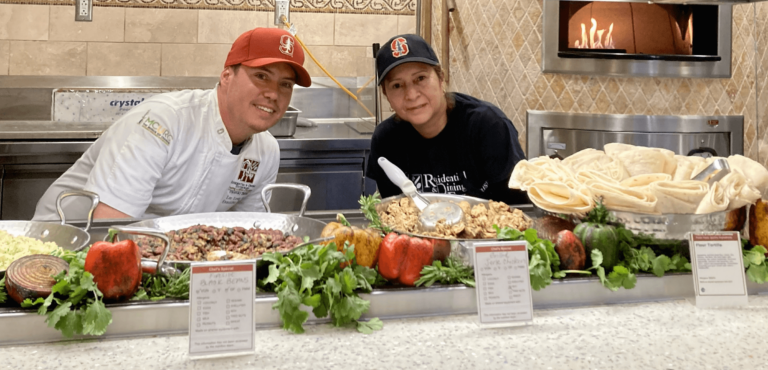
Stanford’s dining halls are living laboratories for innovative research on reducing food waste and promoting sustainable, plant-forward diets in collaboration with faculty.

Stanford is revolutionizing cleaning with its ozone-based Cardinal Clean system, reducing chemical use by 90% and preventing over 2,140 pounds of plastic waste annually.