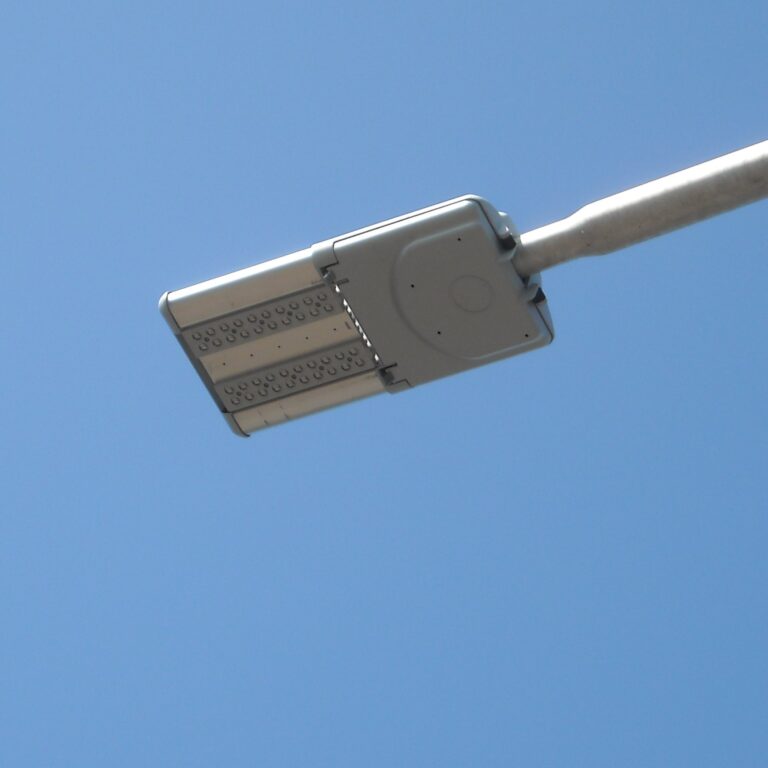
Color Me Bright: Softball Gets LEDs
Stanford’s Boyd & Jill Smith Family Stadium upgraded to energy-efficient LED lighting, reducing electricity costs by $5,000 annually while improving color for televised events.

Land, Buildings & Real Estate (LBRE) is the operational core of Stanford’s physical campus and home to many departments within Sustainable Stanford, including the steward of the Sustainable Stanford brand (the Office of Sustainability), Land Use & Environmental Planning, Transportation, Mail Package Services, Energy Operations, Water Resources & Civil Infrastructure, Buildings, Grounds, & Maintenance, and many more. These groups showcase how planning for sustainability, climate adaptation, and resilience is possible for long-term efficiency, performance, and financial health. Through its day-to-day operations, LBRE lays the groundwork for sustainability innovation to emerge and thrive.
Stanford’s Boyd & Jill Smith Family Stadium upgraded to energy-efficient LED lighting, reducing electricity costs by $5,000 annually while improving color for televised events.

Stanford’s Energy Retrofit Program is helping labs reduce energy use by offering rebates for energy-efficient ultra-low temperature freezers, saving 97,000 kWh in fiscal year 2022.

Stanford’s Water Conservation Program has reduced campus water use by 48% since 2001, with ongoing efforts to comply with drought regulations and explore sustainable water practices.

WaterSmart, a tool available to campus groups and homeowners, helped save 500,000 gallons of water in one year by providing leak alerts and enabling quick responses.

Through everyday actions, occupants of campus buildings directly impacted Stanford’s sustainability and bottom line.
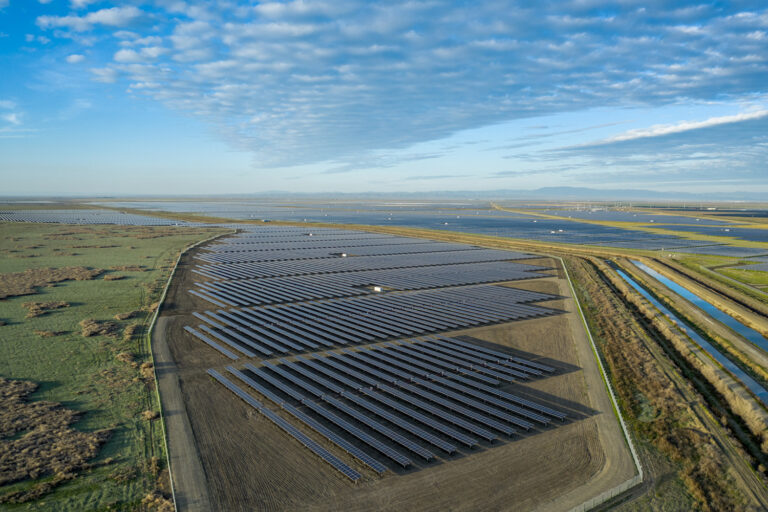
Stanford completed its transition to 100% renewable electricity as Solar Generating Station #2 began commercial operation.

In accordance with emergency state regulations for water conservation, the university continues to prohibit wasteful water uses.
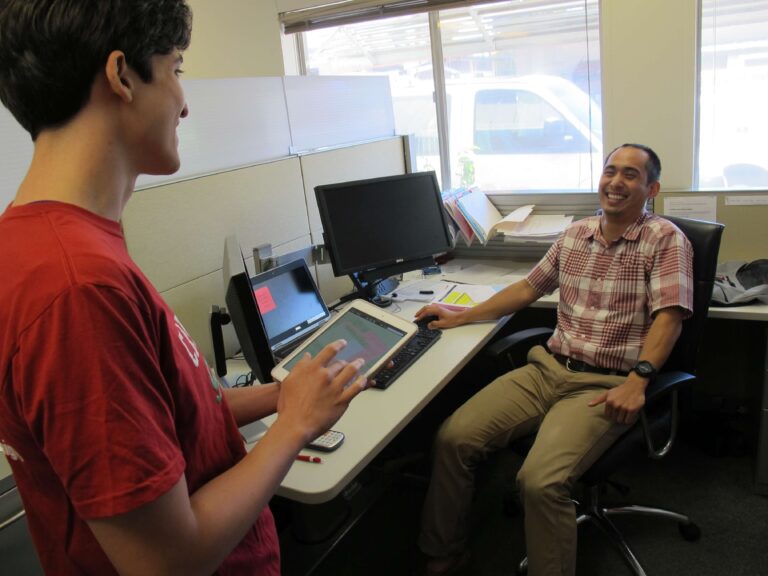
To better quantify electricity consumption and prioritize savings opportunities, Stanford launched an equipment inventory to collect data on plug loads across the Stanford campus.
Amid drought concerns and unusual water use patterns, Stanford remains committed to water conservation as a core value.

Stanford faculty monitor water quality during the pandemic.