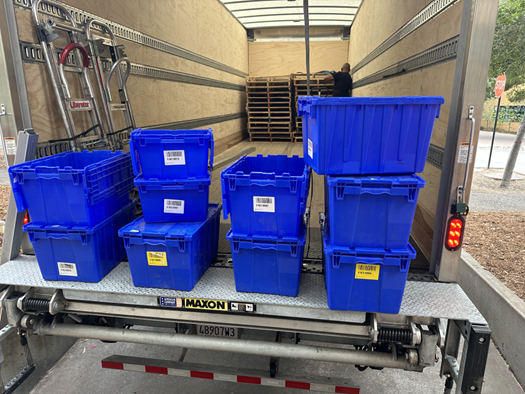
Same Supplies, Better Box: Closing the Loop on Campus Shipping
How one campus building manager is rethinking the supplies behind scientific discovery –helping labs be more circular.
The campus electric load is forecasted to exceed 80% capacity each day this week. Please reduce electricity from 2 to 6 p.m. this week to protect our overall campus power supply. (sustainable.stanford.edu/power-smart)

Sorting food scraps and other compostable material into compost bins is one of the easiest daily actions you can take to curb climate change. Together, the Stanford community diverts approximately 6,000 tons of compostable material away from the landfill every year—reducing emissions and building healthy soil. Join the campus community and cast your food scraps into the compost bin! Missing a compost bin in your area of campus? Contact us to let us know!
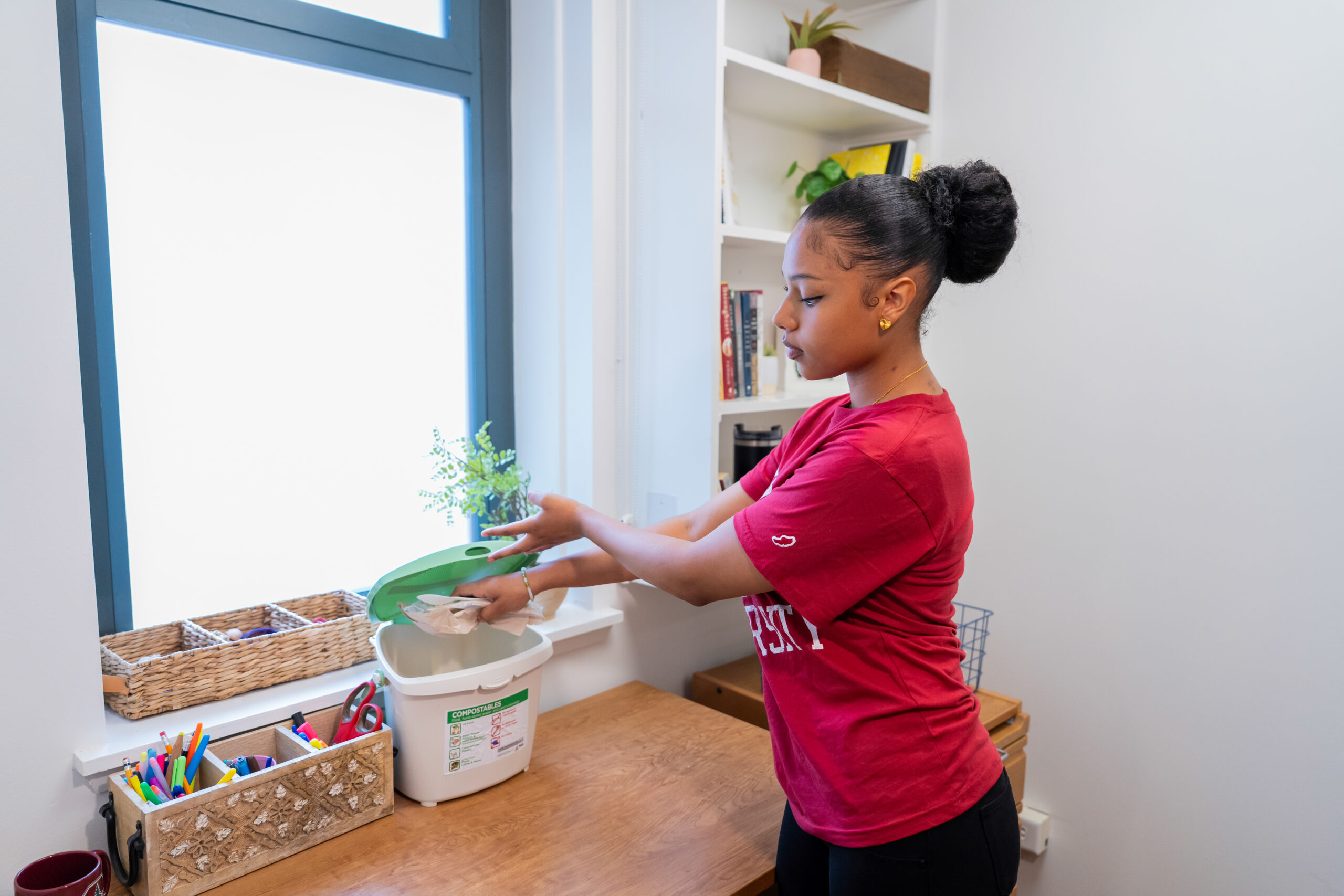
Don’t miss out on scoring a compost bin from your Housing Service Center. Supplies limited.
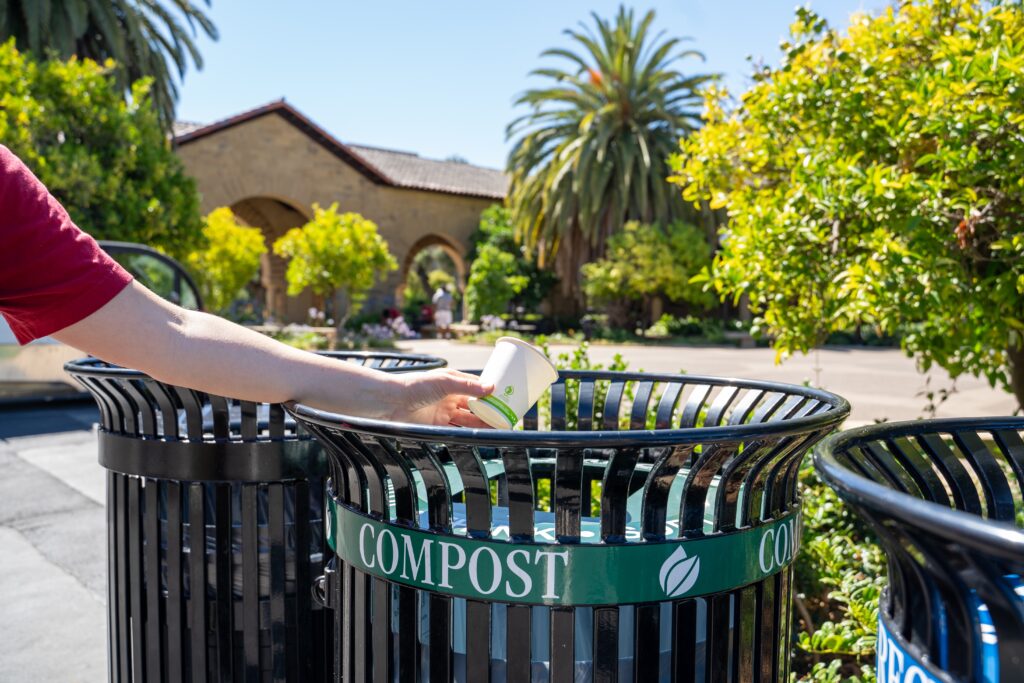
Compost your food scraps and your to-go ware at compost bins near campus eateries.

Clean up lunch and take your food scraps to the kitchen compost bins.
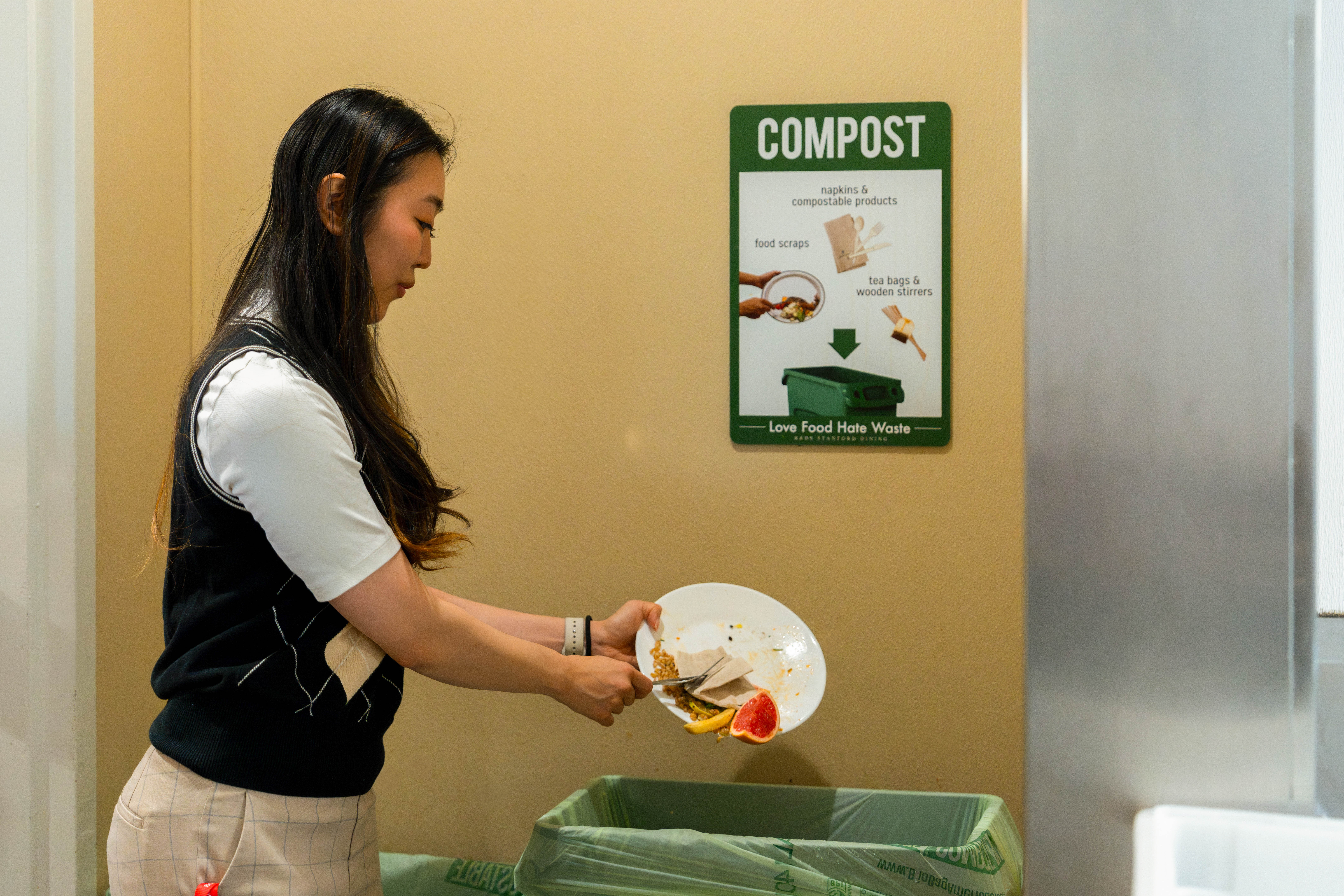
Scrape your plate before returning your dishes.

Stanford’s compostable material is sent to an industrial facility in Milpitas, California. Over the course of 90-180 days, the material breaks down into compost, a nutrient-dense soil amendment, sold for use in gardens and on farms.
Compost provides nutrients back to the soil, improving plant growth, reducing the need for synthetic fertilizers, conserving water, and sequestering carbon.
Have a question about what goes where?

How one campus building manager is rethinking the supplies behind scientific discovery –helping labs be more circular.
There is no excerpt because this is a protected post.
There is no excerpt because this is a protected post.