Health Is Wealth, Not Waste!
The Stanford Center for Continuing Medical Education promotes sustainable event practices, using tools like a regionally informed infographic to reduce the carbon footprint of medical education.

As a leading academic medical center, Stanford Medicine recognizes the impact of biomedical work on the environment and commits to carbon emissions reductions, energy use efficiency, and waste reduction.
A pioneer and innovator responsible for some of society's most important medical and technological advances, Stanford Health Care promotes the health and well-being of the people and communities they serve while safeguarding the environment for future generations. In the years ahead, SHC will continue to explore, identify, and pursue ways to further reduce carbon emissions and the environmental impact of its value chain.
Stanford Children’s Health promotes extraordinary care, continual learning, and breakthrough discoveries that help both people and the planet. It was the vision of its founder, Lucile Salter Packard, for which Lucile Packard Children’s Hospital Stanford is named, to nurture both the body and the soul of every child. She believed in the powerful healing ability of nature. Today, the Sustainability Program continues to advance her vision of meeting the needs of today without compromising those of tomorrow. The program works to reduce the hospital’s environmental footprint, greenhouse gas emissions, and operational costs.
The Stanford Center for Continuing Medical Education promotes sustainable event practices, using tools like a regionally informed infographic to reduce the carbon footprint of medical education.

Edward Florendo, animal care supervisor at the School of Medicine, partnered with Stanford’s Office of Sustainability to turn a hard-to-recycle plastic into a recyclable material.

In 2021, Stanford made history as the first university to issue climate bonds with both sustainability and social equity goals.
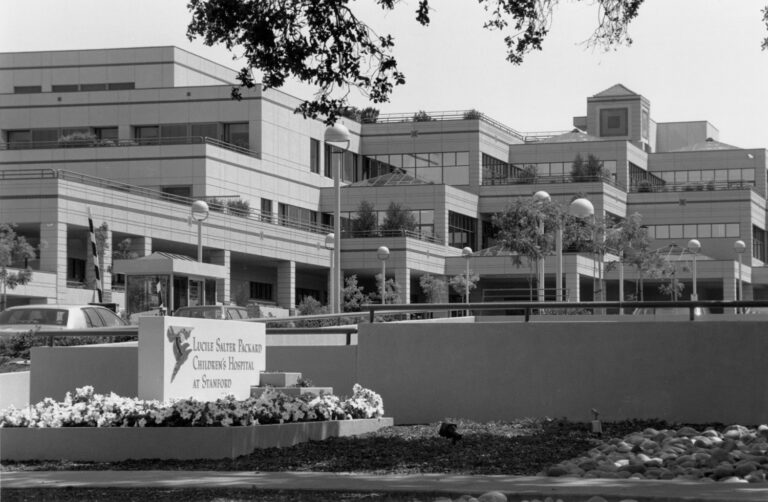
Lucile Packard Children’s Hospital is saving $500,000 annually by using outside air for cooling and upgrading to LED lighting, cutting energy use by 48%.

Stanford is reimagining energy solutions across campus, with updates to key buildings like Lucile Packard Children’s Hospital and Green Library.
All 14 buildings of the School of Medicine now have recycling bins in labs and compost collection in bathrooms, breakrooms, and kitchens.
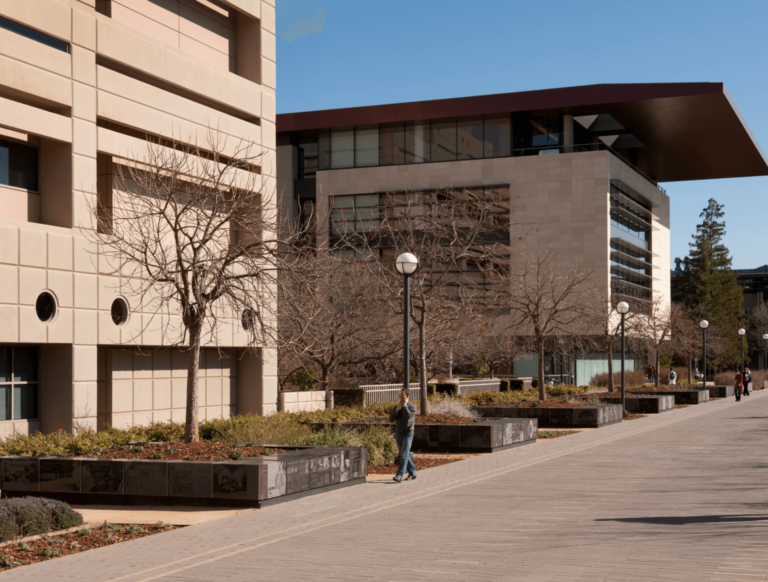
New LED lamps and fluorescent tubes save electricity and water for the School of Medicine.

Sustainability is a design and cultural cornerstone of the new, state-of-the-art facility.