
Test event 3
Mar 17, 2025 | 12pm–1pm
This test event has every option on every category selected. Lorem ipsum dolor sit amet, consectetur adipiscing elit, sed do eiusmod tempor incididunt ut labore …

The Stanford Doerr School of Sustainability formally launched in 2022 to catalyze solutions to the increasingly urgent environmental challenges of the 21st century. The school is designed to have impact in three broad areas - earth, climate, and society - by reimagining how academia can benefit the planet and humanity.
This test event has every option on every category selected. Lorem ipsum dolor sit amet, consectetur adipiscing elit, sed do eiusmod tempor incididunt ut labore …

The new Reusable Dish Pilot Program is turning donated dishware into a zero-waste success, making reusable options more convenient and helping shift campus culture.

In its inaugural year, the Living Lab Fellowship Program fostered cross-campus collaboration, hands-on learning, and lasting impact through 16 student-led operational sustainability projects.

Anna Gomes, a PhD candidate in earth system science, leads by example to embed sustainability into daily life at Stanford.
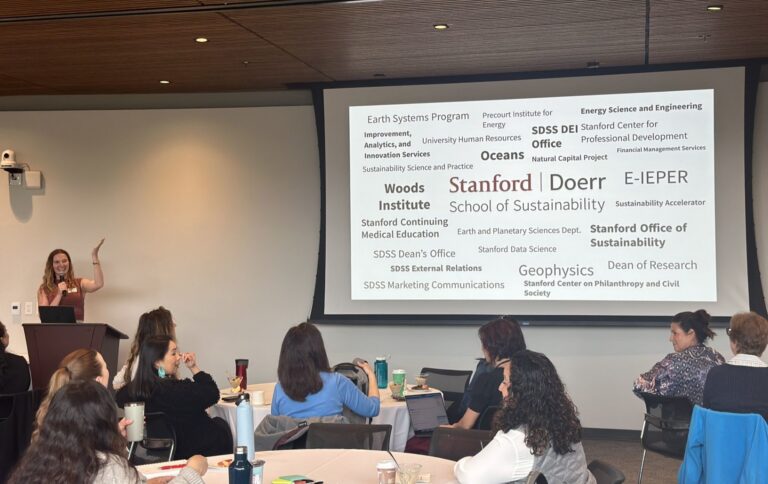
Living Lab Fellow Emily Blackwell and the Stanford Doerr School of Sustainability gathered campus event planners to launch new sustainable event resources.

Stanford student Justin Donohugh helped create zero waste videos with the Office of Sustainability, integrating operations into his academic capstone for earth systems.

In 2021, Stanford made history as the first university to issue climate bonds with both sustainability and social equity goals.

The inaugural R&DE Stanford Food Institute Research Symposium showcased innovative food systems research from over 73 researchers and fostered collaboration.
All 14 buildings of the School of Medicine now have recycling bins in labs and compost collection in bathrooms, breakrooms, and kitchens.

The Cooler Research Program offers data on chilled water management.