
Sustainable Transportation System Awards
Check out the numerous prestigious awards Stanford’s transportation system has earned for its commitment to sustainable transportation.

Land, Buildings & Real Estate (LBRE) is the operational core of Stanford’s physical campus and home to many departments within Sustainable Stanford, including the steward of the Sustainable Stanford brand (the Office of Sustainability), Land Use & Environmental Planning, Transportation, Mail Package Services, Energy Operations, Water Resources & Civil Infrastructure, Buildings, Grounds, & Maintenance, and many more. These groups showcase how planning for sustainability, climate adaptation, and resilience is possible for long-term efficiency, performance, and financial health. Through its day-to-day operations, LBRE lays the groundwork for sustainability innovation to emerge and thrive.
Check out the numerous prestigious awards Stanford’s transportation system has earned for its commitment to sustainable transportation.

Stanford’s commitment to sustainable design is evident in every corner of its campus.

Stanford has long been a leader in environmental stewardship, earning multiple prestigious awards for water conservation.

Explore what happens when waste leaves campus.
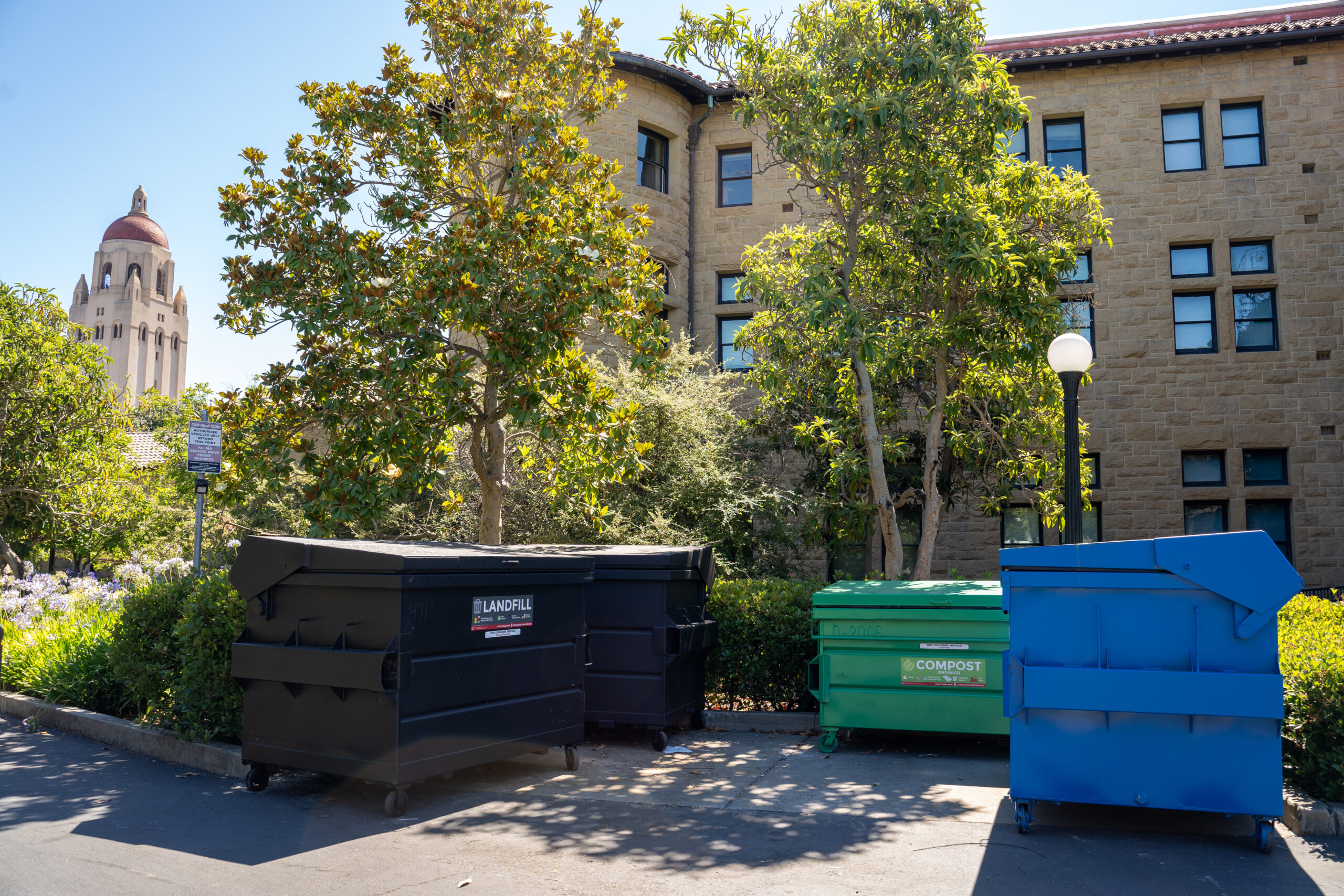
Tools to support facilities and building managers to responsibly fill their role in Stanford’s sustainable community.

Justin West ’25 piloted an occupancy-based HVAC scheduling system in the Gates building, aiming to reduce energy consumption by 20% through adjustments based on real-time data.

Transformational climate and energy projects at Stanford University have been at the center of attention for nearly a decade.

The SESI program receives recognition for its energy supply transformation from fossil fuel dependency to one predominantly powered by 100% renewable electricity.

Current and former Stanford students keep the university’s sustainability legacy alive at the All Alumni Day Farm Fest.

New water fill signs, installed in May 2024, acknowledge ancestral land and aim to foster greater awareness of the water’s origins and cultural significance.