
University Efforts Aid Water Conservation
Campus water policies minimize waste and follow California guidelines for water efficiency.

Land, Buildings & Real Estate (LBRE) is the operational core of Stanford’s physical campus and home to many departments within Sustainable Stanford, including the steward of the Sustainable Stanford brand (the Office of Sustainability), Land Use & Environmental Planning, Transportation, Mail Package Services, Energy Operations, Water Resources & Civil Infrastructure, Buildings, Grounds, & Maintenance, and many more. These groups showcase how planning for sustainability, climate adaptation, and resilience is possible for long-term efficiency, performance, and financial health. Through its day-to-day operations, LBRE lays the groundwork for sustainability innovation to emerge and thrive.
Campus water policies minimize waste and follow California guidelines for water efficiency.

The 2022 Annual Water Quality Report details sourcing, treatment, and contamination levels.
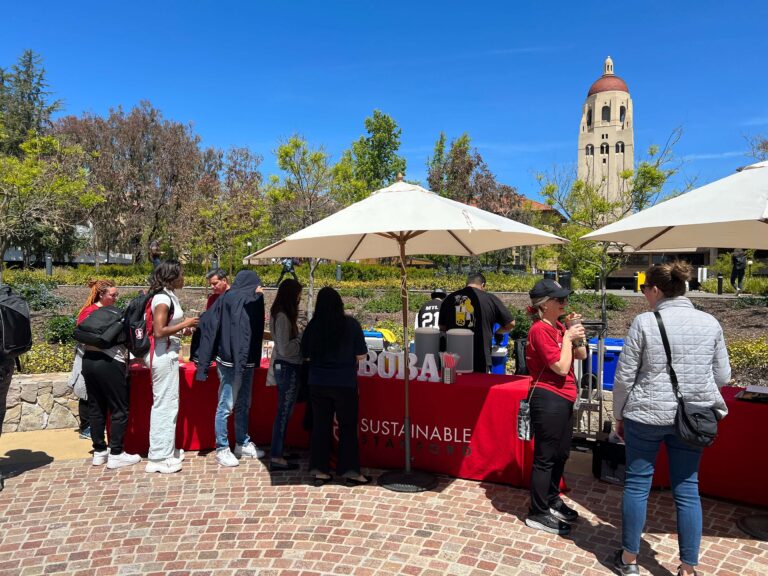
Earth Month 2023 was celebrated with many events, community gatherings, and educational opportunities for a more sustainable future.
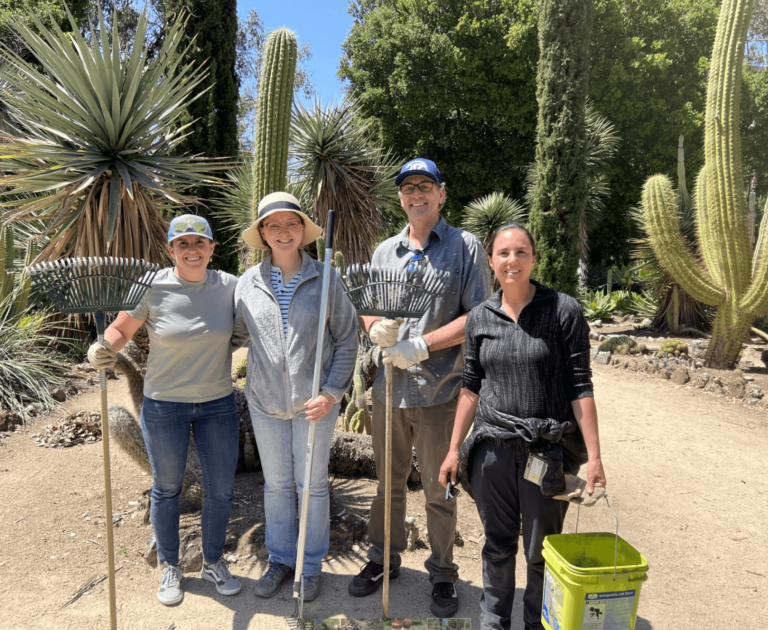
Stanford’s Water Planning & Stewardship team hosted a hands-on volunteer event at the Arizona Cactus Garden as part of Earth Month.

The Cooler Research Program offers data on chilled water management.
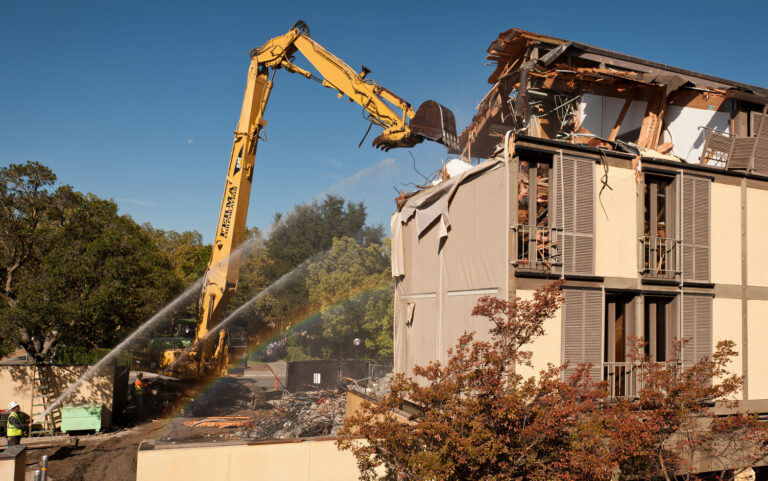
Stanford demolished Herrin Hall and Laboratory to make way for a new Data Science Complex, honoring William F. Herrin’s legacy.

The Mudd Chemistry Building has been demolished, with 90% of its waste recycled to reduce environmental impact.
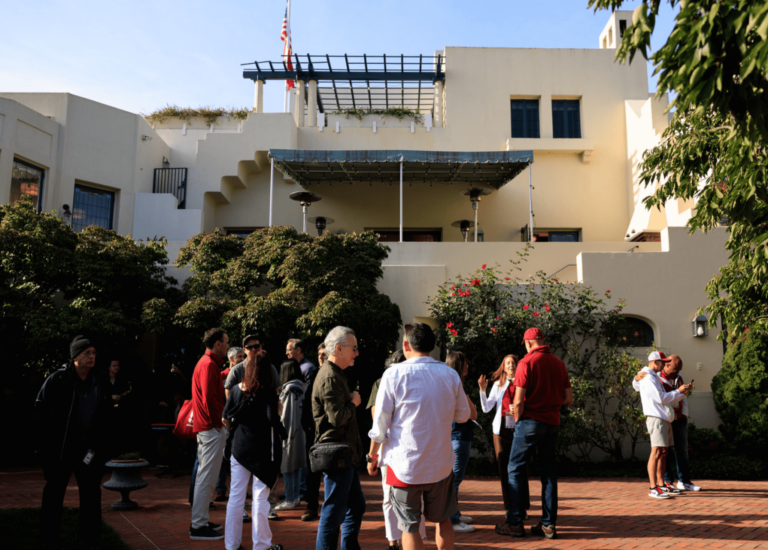
Stanford’s deconstruction of the Lou Henry Hoover Building diverted 2,400 tons of concrete for downcycling, while preserving Lou Henry Hoover’s legacy through two campus landmarks.

The Computer Science Building was remodeled to decrease energy usage.
New LED lamps and fluorescent tubes save electricity and water for the School of Medicine.