
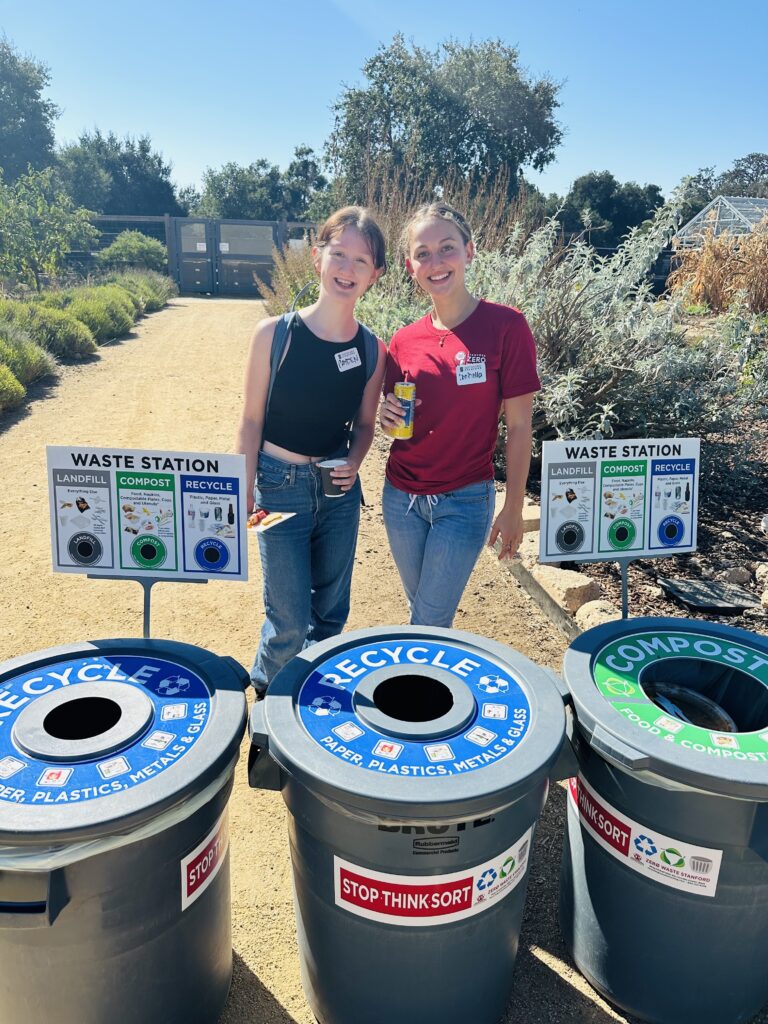
Become a Sustainable Events Student Ambassador
Want to make a real impact on campus while helping reduce waste at some of Stanford’s events? Whether you’re passionate about the environment, looking for …
The campus electric load is forecasted to exceed 80% capacity each day this week. Please reduce electricity from 2 to 6 p.m. this week to protect our overall campus power supply. (sustainable.stanford.edu/power-smart)

Stanford’s waste is sorted into three main waste streams: recycle, compost, and landfill. But what happens after you properly dispose of your waste?
Once items are properly sorted, custodians collect and dispose of the material in corresponding dumpsters. Stanford’s contracted waste hauler collects and transfers the material to one of three facilities to increase diversion and ensure the best use of materials.
Sorted, sold, and remade into new products
Stanford’s recyclables are sent to GreenWaste’s San Jose Material Recovery Facility and construction and demolition debris are sent to Greenwaste’s Zanker Resource Recovery Facility, local, award-winning facilities in San Jose, California, that use robotics, optical separation, and other technological advancements to achieve higher diversion rates and reduce the amount going to landfill.

Stanford’s recyclables have an increased value and secured place in the recycling market due to low contamination rates. On average 87% of recyclables coming from campus are classified as Grade 1, defined as having contamination of 10% or less.
Recycling relies on end markets, which means a company must be interested in using recycled material to manufacture its products. Purchasing items made with recycled material bolsters the recycling system.
Feeds animals and rejuvenates soil
Sorting food scraps and other compostable material into compost bins is one of the easiest actions you can take on a daily basis to combat climate change. Compostable material from office buildings, residence halls, cafes, and public compost bins is sent to Republic Services’ Newby Island Compost Facility in Milpitas, California. Over the course of 90-180 days, the compostable material breaks down into compost, a nutrient-dense soil amendment, sold for use in gardens and on farms. Compost provides nutrients back to the soil, improving plant growth, reducing the need for synthetic fertilizers, conserving water, and sequestering carbon.

Used cooking oil from dining halls – roughly 7,000 gallons a year – is converted to biodiesel, a renewable alternative to diesel fuel.
If all else fails, materials are disposed.
Despite efforts to reduce, recycle, and compost as much as possible, there are still items that belong in the landfill bin, such as chips bags, snack wrappers, gloves, and plastic utensils. Once you place an item into a landfill bin, your hand is the last to ever touch it. Contents destined for the landfill are not sorted; they are sent to Republic Services’ Newby Island Landfill in Milpitas, California.
Once items arrive at the landfill they are compacted down. This compaction prevents organic material from breaking down, which causes methane to be released. Methane is a climate super pollutant and is 84 times more potent than carbon dioxide. In California, landfills are responsible for 20% of the state’s methane emissions. Senate Bill 1383, California’s Short-Lived Climate Pollutant Reduction Strategy, aims to reduce methane emissions from landfills by increasing access to composting statewide.

Want to make a real impact on campus while helping reduce waste at some of Stanford’s events? Whether you’re passionate about the environment, looking for …

A new pilot program tests the newest in takeout innovation. Enjoy your meal, scan the container, and return it to collect your deposit.

Stanford’s new purchasing guidance helps departments save money while reducing waste through practical everyday actions.
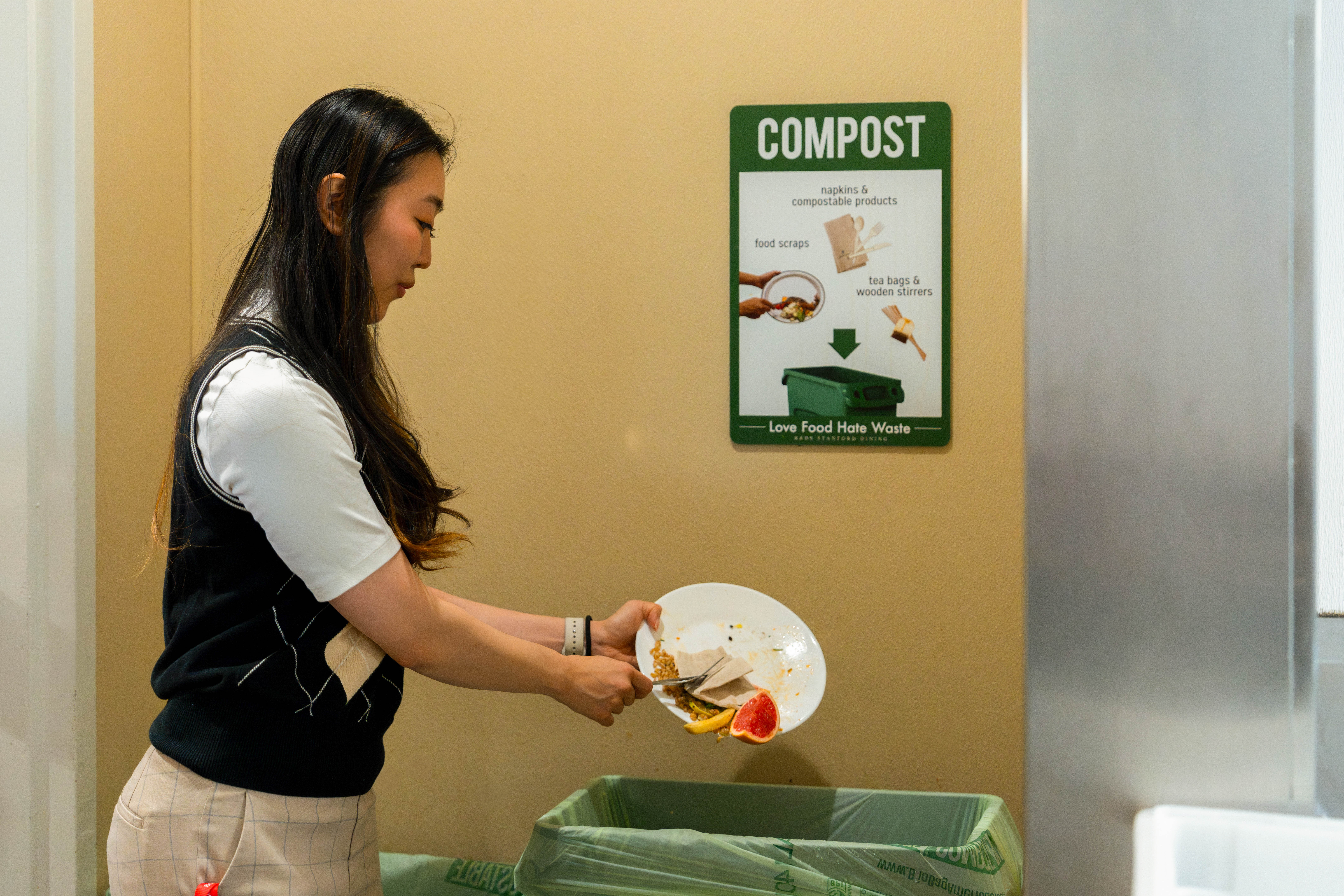
Do your part to reduce landfill waste and cast your food scraps into the compost.

Complete the new ten-minute waste sorting training to be entered to win $500!

Take the quick, online training to get the lowdown on waste sorting at Stanford. Our goal is to have 100% student participation!
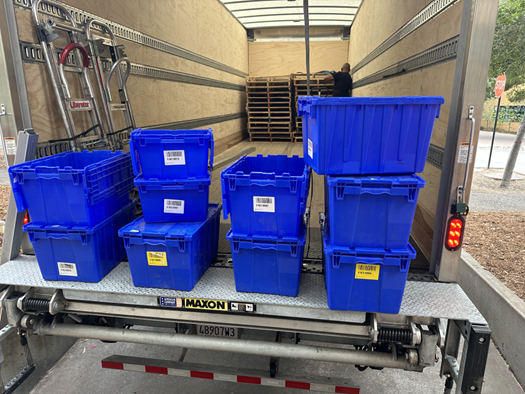
How one campus building manager is rethinking the supplies behind scientific discovery –helping labs be more circular.
There is no excerpt because this is a protected post.
There is no excerpt because this is a protected post.