Investment in Data Infrastructure Powers Smart Energy Management
Stanford’s Facilities Energy Management group integrates AI with a foundation of well-maintained data and its own experts.


As one of Stanford’s fastest-growing computational workloads, artificial intelligence relies on a diverse range of infrastructure and cloud environments. Stanford can more readily measure greenhouse gas emissions when it operates the computing infrastructure directly or influences where the computing occurs. When third parties control the infrastructure, those emissions are more difficult to measure and mitigate. Understanding that difference is the first step in how Stanford is approaching emissions accounting, infrastructure planning, and sustainable AI adoption.
Some AI workloads run on shared systems operated by Stanford Research Computing, including Sherlock, Carina, and Marlowe, which also support climate science, medicine, genomics, and physics. Most AI that faculty, staff, and students interact with day to day—enterprise tools, the AI Playground, personal AI accounts—runs on commercial cloud infrastructure operated by third parties, largely outside Stanford’s direct control.
.
Utility data, Renewable Energy Credits, and refrigerant records
Vendor-supplied emissions profile based on computing facility’s utility data. Facility located in a Stanford-selected, lower-carbon region
Total spend on AI services and industry-average emissions factors. Computing facility location not disclosed
No available data
Scopes 1 & 2
Scope 3
Scope 3
Not included
.
GREATER
Ability to measure and influence impact
Less
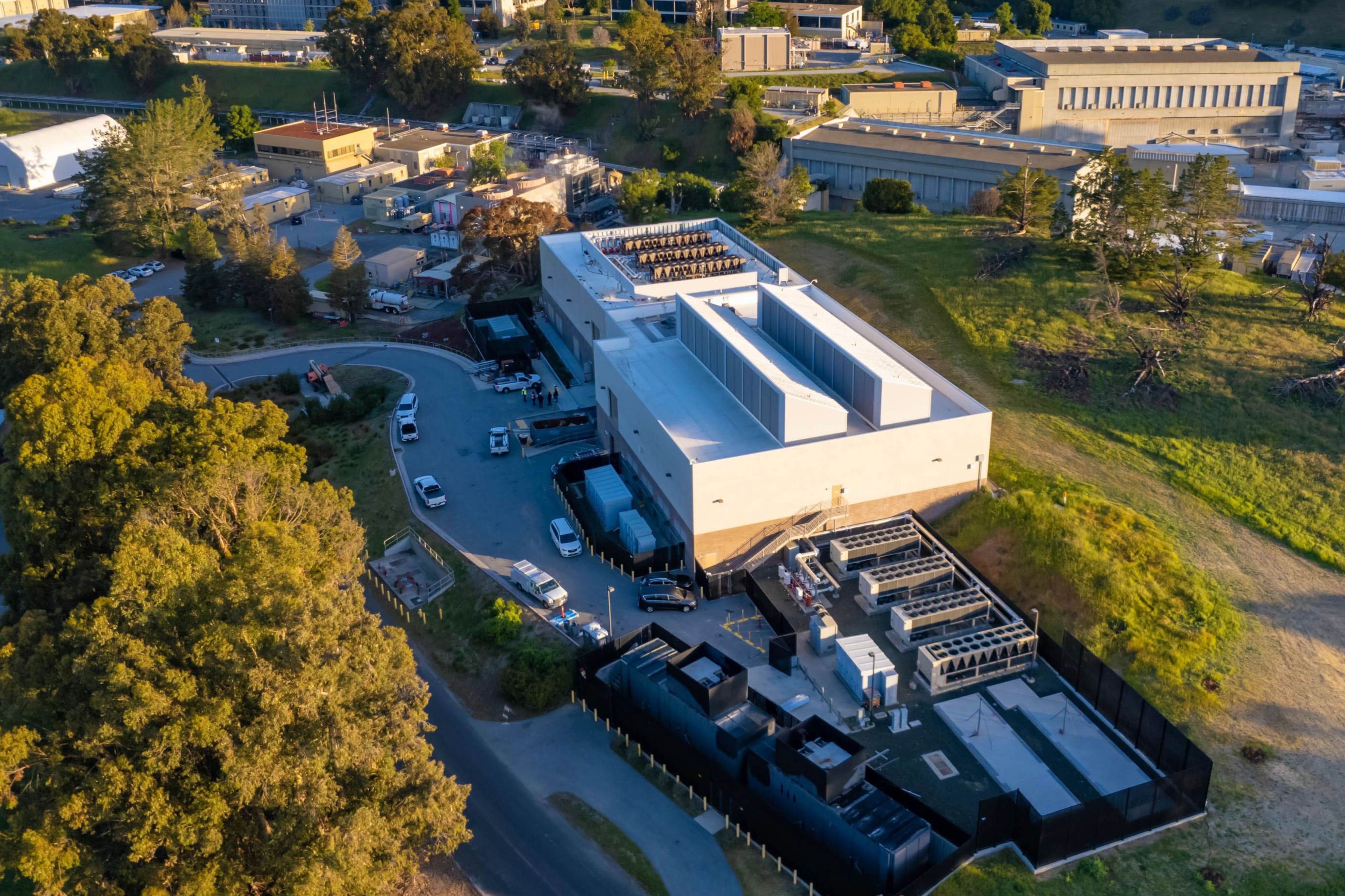
Stanford Research Computing provides shared high-performance computing resources that support researchers across many disciplines, including artificial intelligence, engineering, medicine, climate science, biology, and the physical sciences. The Stanford Research Computing Facility (SCRF), operated in partnership with SLAC and the School of Medicine, hosts high-performance computing (HPC) systems such as Sherlock, Carina, and Marlowe, which enable researchers to solve computational problems that would be impractical on individual workstations. More information on these platforms is further detailed in Sherlock facts, Carina facts, and Marlowe specifications. In addition, the SCRF hosts systems for individual researchers, providing a space tailored to the physical needs of research computing. The original Forsythe Hall Research Computing Facility also offers space for research computing equipment to research groups.
Operating shared research computing infrastructure allows Stanford to:
Stanford Research Computing Facility (SCRF)
Forsythe Hall
Explore how Forsythe Hall optimizes energy use and reduces operating costs.
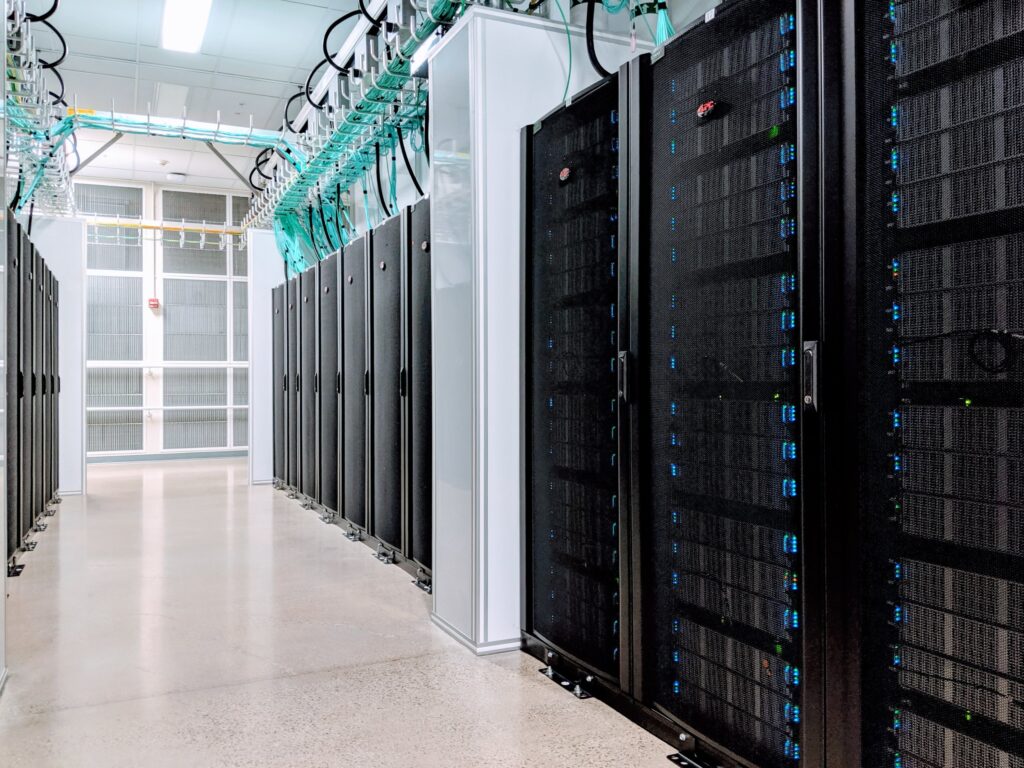
Stanford is exploring new approaches to make on campus research computing more sustainable. Current efforts include developing methods to estimate the energy and greenhouse gas impacts of computational workloads and evaluating opportunities for carbon-aware scheduling, which could allow flexible computing jobs to run when electricity has a lower carbon intensity. These efforts aim to provide researchers with better information about the environmental impacts of their computing while identifying opportunities to reduce emissions without compromising research outcomes.
By combining shared infrastructure, operational expertise, and ongoing research into sustainable computing, Stanford is working to support scientific discovery while reducing the environmental impacts of advanced computing.
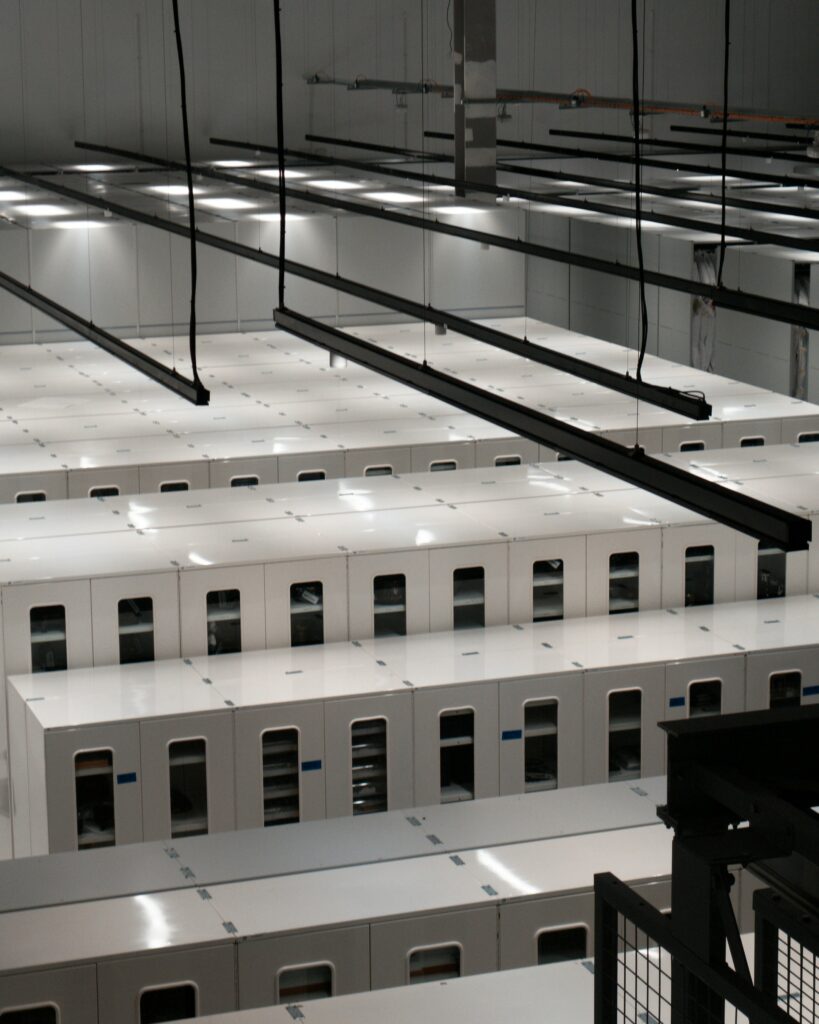
Stanford’s ability to measure and influence computing’s environmental and social impact depends largely on where computational workloads are hosted. Off-site computing runs on infrastructure that Stanford does not own, operated instead by outside providers. Off-site computing supports applications like cloud computing, cloud-based software services, and AI services, among others. Stanford may choose these services over on-premise infrastructure when it needs specialized capabilities, faster scalability, or services that aren’t practical to build in-house—but doing so means Stanford has less direct visibility into and control over the underlying infrastructure than it does with on-campus computing.
For third-party, Stanford-directed cloud services, including some AI Playground and API Gateway services, and some cloud services, the university selects the provider and region. This allows Stanford to consider factors such as the carbon intensity of the local electricity grid, select lower-carbon options, and obtain more complete emissions data.
For vendor-directed services—including Enterprise AI Services such as ChatGPT, Claude, and Gemini—the provider determines which models, data centers, and supporting infrastructure are used. Stanford therefore has less visibility into where and how the computing occurs.
For vendor-directed services purchased by the university, Stanford uses the best available information to estimate associated emissions within its Scope 3 purchased goods and services inventory. These estimates support university-wide emissions accounting, but often do not provide an accurate measurement of the environmental impact of a particular AI tool, workload, or request. Because of this, Stanford evaluates whether providers have set credible net-zero targets aligned with its goals and advocates for stronger targets and more transparent reporting.
Stanford continues to seek more detailed and consistent environmental reporting from AI providers. Better information would strengthen the university’s emissions accounting, inform procurement decisions, and support more reliable tools for helping individuals understand the impacts of their AI use.
Measuring those impacts remains difficult because an AI service may use different models and data centers depending on the task, and these systems change over time. Energy use, water consumption, and emissions also depend on local electricity sources, cooling systems, and equipment efficiency.
Providers often report environmental data in aggregate, if they report it at all. This makes it difficult to connect Stanford’s use of a service with a specific share of the provider’s energy use, water consumption, and emissions.
These reporting limitations also make it difficult to estimate the impact of an individual AI request. A reliable estimate would require which model handled the request, how much information it processed, where the computing occurred, and what systems supported it. Without these details, a calculator would rely on broad assumptions and could suggest greater precision that the available data supports. By continuing to call for greater transparency, Stanford is working to improve how AI’s environmental impacts can be understood and addressed.
Cloud Services: General-purpose cloud infrastructure supporting a wide range of university needs beyond AI.
AI Playground: Stanford’s own AI tool, built and hosted through the university’s cloud infrastructure.
Enterprise AI Services: Stanford’s contracts with AI providers
Personal AI Use: Personal services accessed independently by individuals outside of any Stanford agreement are not included in Stanford’s emissions reporting boundary.
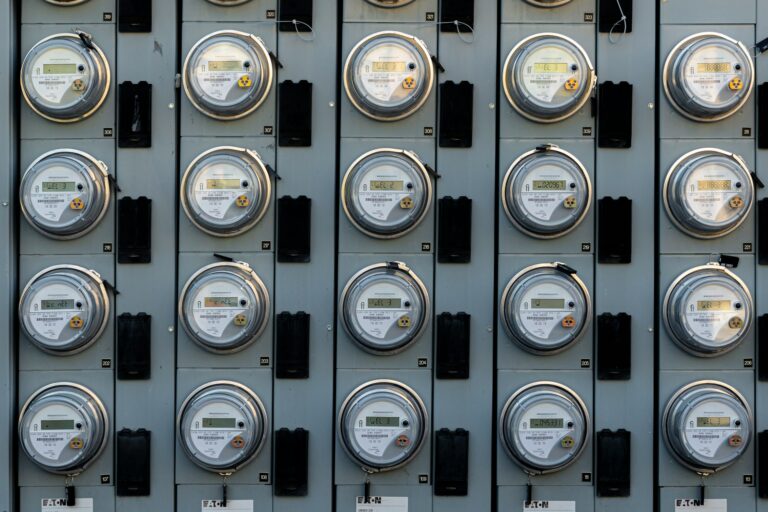
Photo by Tony Marinescu on Unsplash
Stanford’s Facilities Energy Management group integrates AI with a foundation of well-maintained data and its own experts.

Stanford is testing whether machine learning can close the gap on making lower-carbon design decisions during initial planning stages.

Info about the wide range of goods and services is spread across a number of sources, and machine learning helps Stanford make sense of this data.

Stanford uses machine learning to translate routine waste-handling photos into information campus teams can act on.
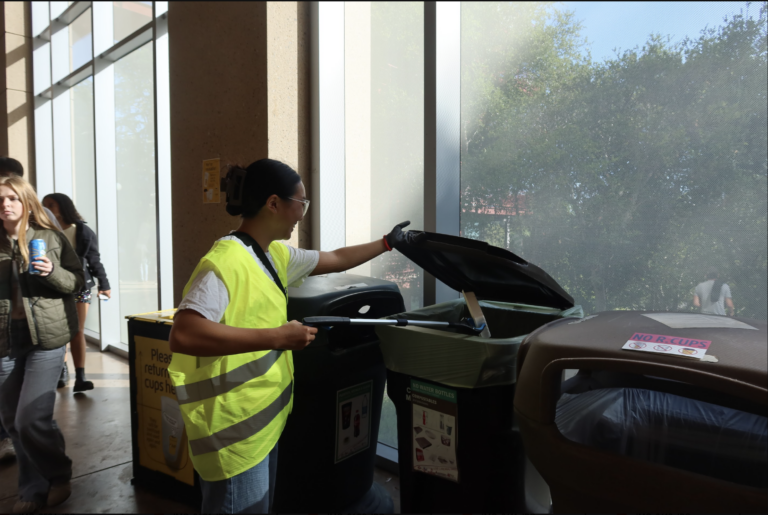
Sorting waste correctly can be a challenge due to varying guidance. Stanford is using AI to make that process simpler.
Incorporating artificial intelligence in your workflow has an impact on emissions.
