Same Supplies, Better Box: Closing the Loop on Campus Shipping
How one campus building manager is rethinking the supplies behind scientific discovery –helping labs be more circular.

When Sustainable Stanford Fellow Astha Bhandari ‘26 began visiting campus cafés to talk about reusable takeout, she did not arrive with a polished pitch or a ready-made solution. Instead, she led with humility and curiosity.
That openness became one of the important tools in her fellowship–and helped her launch a pilot this August to test the future of takeout on campus. In just seven weeks, the pilot has avoided 1,683 pounds of greenhouse gas emissions, 247 pounds of waste, and saved 4,074 gallons of water.
But the path was not always linear.
As a student entering a complex campus café ecosystem–with café operators, vendors, sustainability staff, and customers all bringing different priorities–Astha quickly learned that launching a sustainability pilot would require more than a good idea. It would require trust.
Her fellowship project set out to address an ongoing challenge on campus: the waste generated by disposable single-use takeout containers.
“Before this fellowship, I thought Stanford was making the most sustainable choice by using foodware that is compostable. But when I learned that more than 70% of our waste is mis-sorted, I knew there had to be a more sustainable solution out there.”
Before the fellowship, Astha was new to the sustainability field. As she learned about the impacts of single-use containers–including the energy required to produce them, the emissions generated throughout their supply chain, and the challenges of actually composting them–she began to see how reusable containers could offer a solution for campus cafés. Not only do they reduce waste and have less of an environmental impact, but their durability and portability better fit a student lifestyle–helping students carry their to-go meals to their next class.
The pilot explores if Stanford cafés can reduce single-use containers while still meeting the realities of food service operations: speed, cost, convenience, cleanliness, and customer expectations. For Astha, the work became both a sustainability project and a lesson in how change happens.
Rather than seeing her inexperience in the sustainability field as a disadvantage, she used it as a starting point. She asked café managers what they needed. She listened to their concerns–even if sometimes they were beyond the scope of her project. She took their questions back to the vendors and returned with answers, options, and new questions–gaining trust little by little along the way. She helped translate between the people who would operate the pilot and the companies hoping to support it.
“Stakeholder engagement was really important,” she said. “The way I talked to cafés was not at all the way I talked to potential vendors.”
Astha also learned how to balance competing priorities. The sustainability team needed measurable waste reduction. Vendors were eager to demonstrate their products. Students needed a system that was convenient enough to use. But to launch a successful pilot, cafés had to be at the center.
“One of the things that I love about the fellowship is that it was one of my first experiences at Stanford, where I feel like I actually had ownership–full ownership over a project. I’m kind of addicted to that feeling now. This has been the most impactful learning experience out of everything on my resume.” -Astha Bhandari ’26, Sustainable Stanford Fellow
As Astha reflected on what helped her be successful in the fellowship, she attributed it largely to her background. As an immigrant from Nepal, she became in charge of many things for her family at a young age as they navigated a new country, a new language, and a new culture. Those experiences forced her to take ownership at a young age to help her family adjust. It equipped her with a relentlessness that she carries with her to this day.
Once she received the problem, though daunted, she remembers thinking, ‘I’m going to solve this.’ She took every “no” or twist and turn as an opportunity to pivot and come up with a better solution. She never gave up, and even though the initial timeline had to shift, she is proud that she helped get the pilot off the ground this Summer.
“I didn’t know that this fellowship was going to give me this, but it gave me purpose–almost like a legacy that I’m leaving behind, even if the pilot doesn’t work out the first time.”
Astha is continuing her fellowship this school year and will continue exploring what a scalable, campus-wide returnable container system could look like—one that makes sustainable choices easier for students, staff, and faculty, and meaningfully contributes to Stanford’s climate and waste reduction goals.
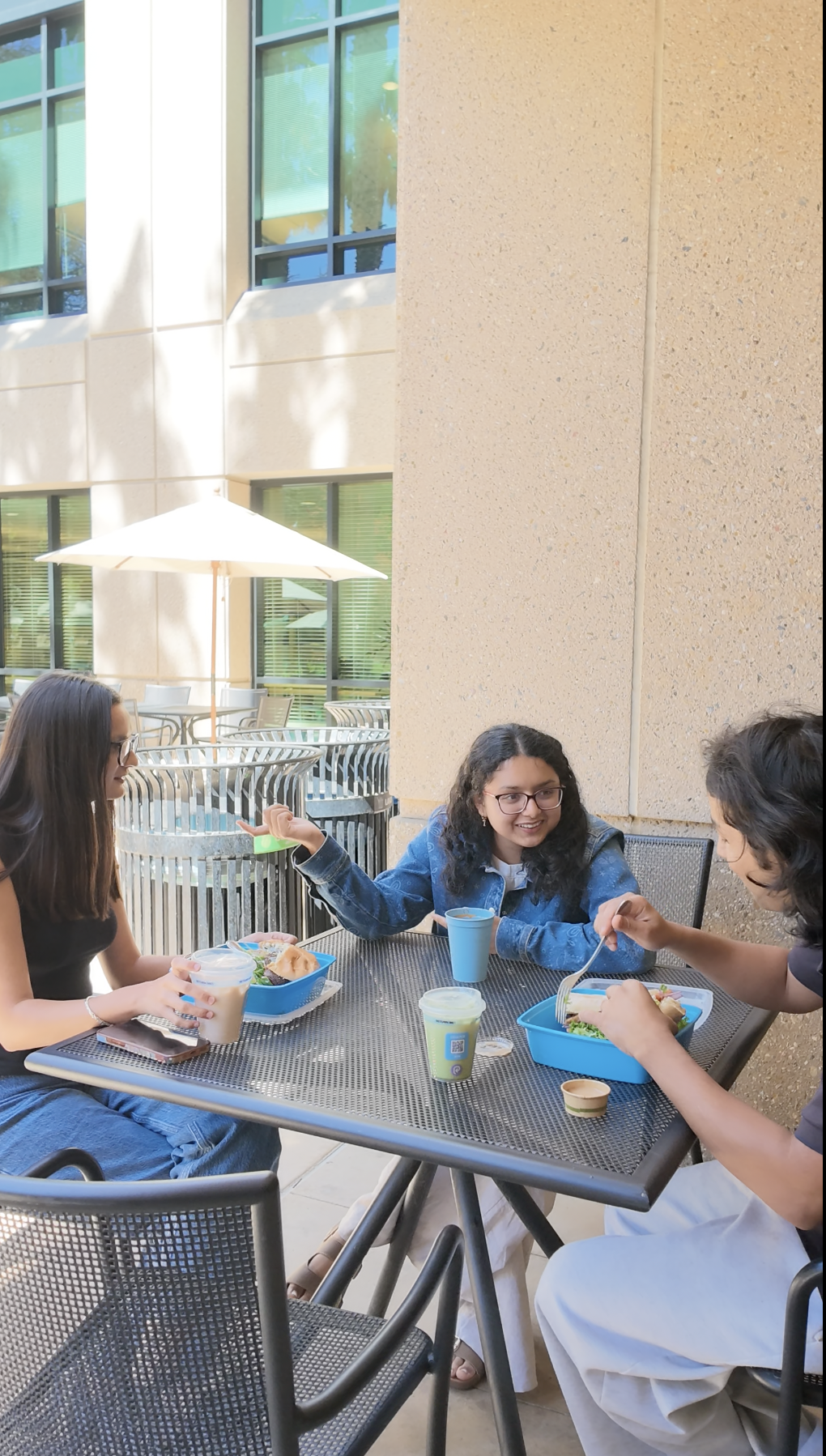
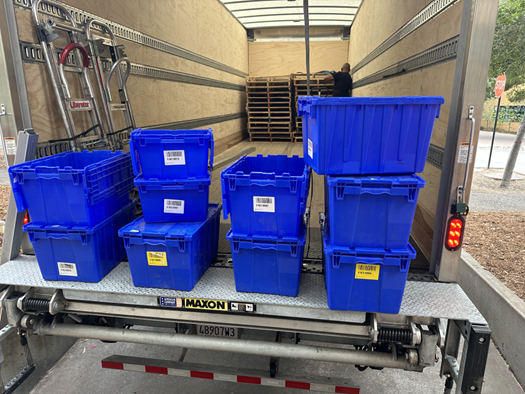
As part of the pilot, all to-go orders at CoHo Café (Tresidder and Alumni Center locations) are served in returnable containers. Each order includes a refundable deposit, which customers receive back after scanning the container and returning it to any reusable collection bin.

How one campus building manager is rethinking the supplies behind scientific discovery –helping labs be more circular.
There is no excerpt because this is a protected post.
There is no excerpt because this is a protected post.