Treasure Hunting at Campus Open Houses Attracts Hundreds
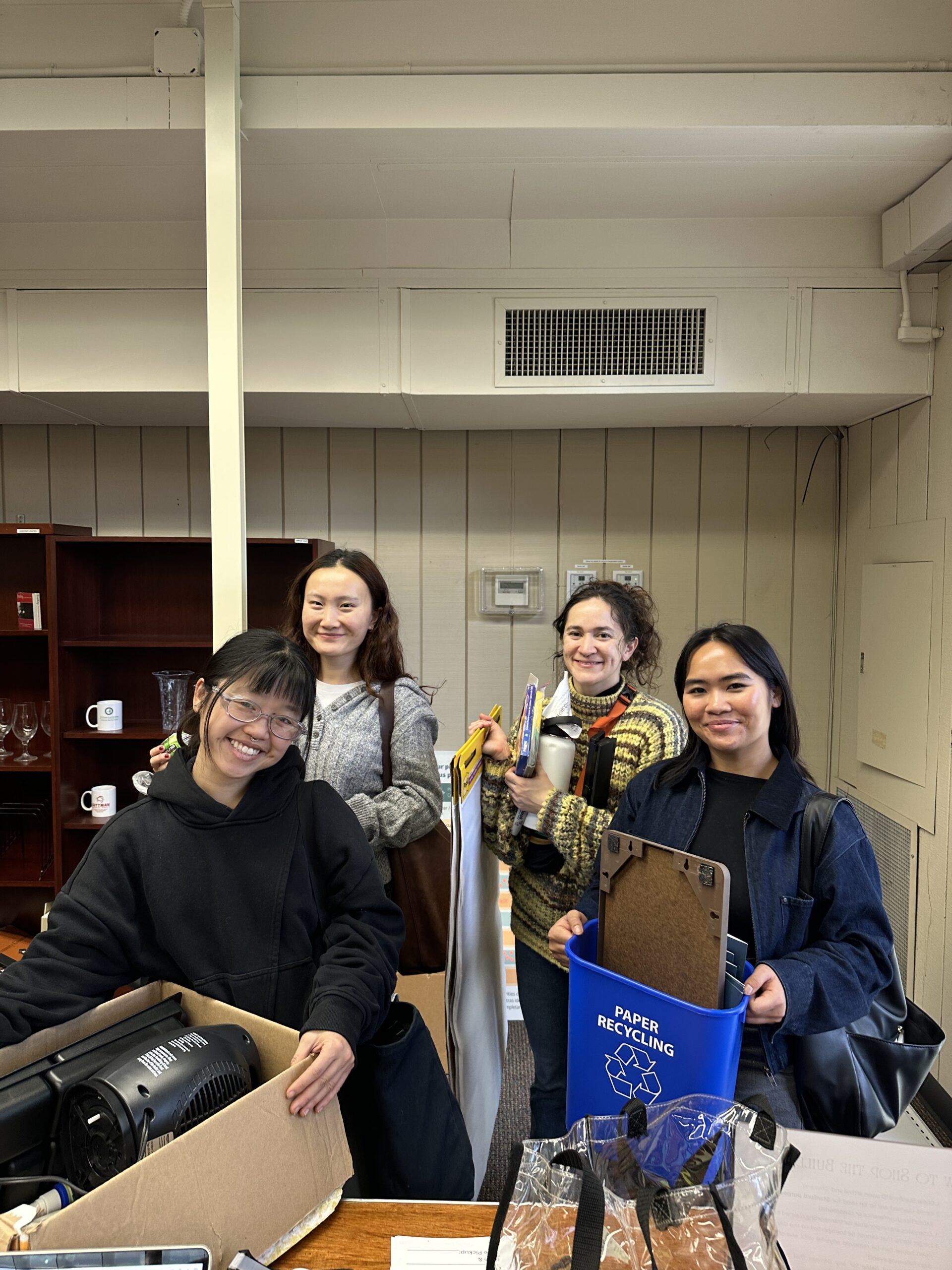
Stanford’s first open houses for decommissioned buildings keep over 3,500 items out of the landfill and back in circulation across campus.

When new construction begins, or a building renovation is underway, it’s easy to assume everything inside needs to be brand new. But across campus, departments are choosing pre-owned desks, chairs, and other essentials as a practical way to reduce costs and deliver on Stanford’s sustainability goals–without sacrificing function or comfort.
Lisa Denney, Director, Human & Animal Research Compliance Office, led a renovation project that included moving her team back to an on-campus location. After identifying what they could bring over from their previous space, Lisa worked with the Department of Project Management (DPM) to furnish the rest of the office.
As they were planning their move, a few other buildings were being decommissioned. Kharon Hathaway, Senior Project Manager from DPM, took advantage of this and asked if Lisa would be open to secondhand furniture; she jumped at the opportunity.
Lisa had used Stanford’s Surplus program before to source items like cabinets here and there over the years, but this was the first time relying on reuse at scale. In the end, the team sourced 37 high-quality sit-stand desks and 22 pedestal files, which were reupholstered to make them look cohesive in the space.
“I was genuinely surprised…the items we got were equivalent to what we would have bought new,” shared Lisa.
This approach dropped their furniture budget from $250,000 to $30,000. They also reused existing IT equipment, which can be difficult to do with limited warranties, saving additional money and resources.
Those savings proved crucial when an unexpected issue arose mid-project. Because the team had preserved budget on furniture, they were able to reallocate funds without reducing the project scope.
“If more people realized the quality available through the Surplus program and how much budget they can save, I think more departments would take advantage of it–and a lot less would end up in the landfill.”
– Kharon Hathaway, Senior Project Manager, Department of Project Management
Kharon emphasized that successful reuse depends on collaboration: a department willing to consider pre-owned furniture, and a project manager willing to do the extra legwork to find enough pieces that fit the space and achieve the right look–preserving the beauty of our campus spaces while embracing sustainability.
Sustainability is often about making smart use of what we already have, especially during construction, moves, and space changes. Stacey Yuen, a campus project manager, recently helped reuse more than 180 items across two projects for the Stanford Doerr School of Sustainability (SDSS), saving over $120,000. The rescued pieces, which would likely have been sent to the landfill due to storage space constraints, included adjustable-height desks, office chairs, whiteboards, and outdoor furniture.
Reuse does more than keep materials out of the landfill. By reducing the need for new products, it lowers greenhouse emissions throughout the supply chain–from extraction and manufacturing to transportation. This is especially important at Stanford, where purchased goods and construction are estimated to be the university’s two largest sources of greenhouse gas emissions.
“It’s a practical way to put our values into action and make thoughtful use of what we already have.”
– Marcella Martinez, Associate Director, Space Management & Planning, Stanford Doerr School of Sustainability
Facility managers, space planners, and project managers all play a key role in helping keep good items in circulation. The earlier reuse is considered in a project timeline, the easier it is to save what is already there and identify new sources of pre-owned items to avoid excess waste and stretch project dollars further.
Even if you aren’t amidst a new construction or renovation project, there are opportunities to keep good items in use on campus year-round. Stanford’s new Slack channel for Stanford property reuse has over 2,000 members and facilitated over 3,000 swaps in its first year.
Surplus Property Operations is also available year-round to help departments remove unneeded items for reuse and source pre-owned furniture, with listings traditionally available through the ReUse webpage (SU Net required).
Stanford’s first open houses for decommissioned buildings keep over 3,500 items out of the landfill and back in circulation across campus.

Through music, movement, and memorable lyrics, campus elementary school students discover how everyday choices impact the planet.
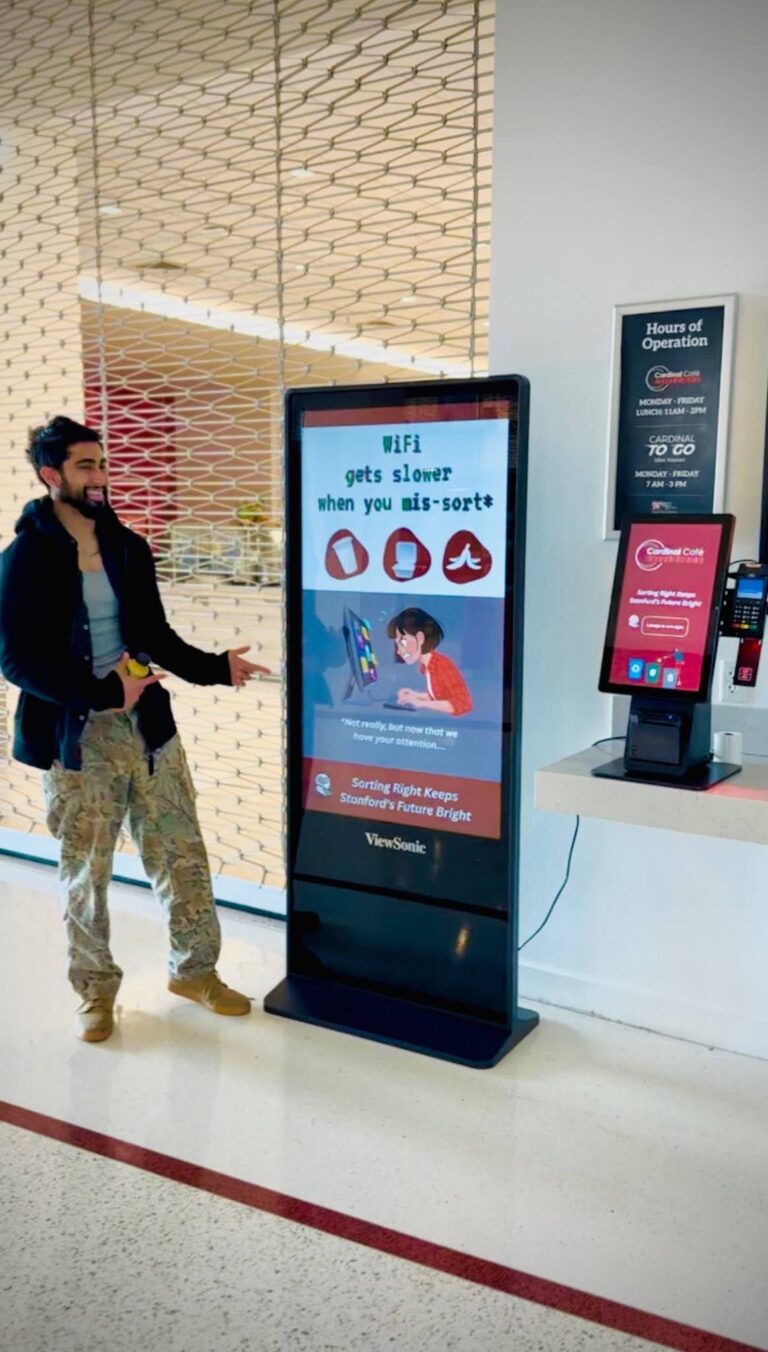
Humor-driven signs and a digital pledge cut Cardinal Café sorting mistakes by 10%.