
Protected: Measuring Emissions from Purchased Goods & Services
There is no excerpt because this is a protected post.
The campus electric load is forecasted to exceed 80% capacity each day this week. Please reduce electricity from 2 to 6 p.m. this week to protect our overall campus power supply. (sustainable.stanford.edu/power-smart)

With presentations at 5 minutes each, the largest cohort of Sustainable Stanford fellows and interns to date took to the stage at the annual student project symposium to share their accomplishments advancing operational sustainability on campus.
The Residential & Dining Enterprises (R&DE) fellows and interns opened the event with a powerful reminder that there is no better place to learn than where you live, hence the proven success of using Stanford’s campus as a living laboratory for sustainability. Two projects especially stood out to embody this sentiment. Josie Amoo examined how environmental art can make laundry rooms more engaging while encouraging students to choose lower-impact settings, noting that medium soil settings alone could save Stanford over $100,000 and 2 million gallons of water annually. Madeline Hodge created a roadmap to reduce R&DE’s operational waste by 10%, spotlighting practical shifts like replacing disposable breakroom cups with reusable mugs, reducing plastic cleaning bottles with the increased use of Cardinal Clean, and reducing cardboard packaging through consolidated delivery systems. The presentations showed how student research can create real, visible change where students reside and eat every day.
The first session of fellowship projects demonstrated that the pursuit of sustainability on campus nowadays has one consistent thread: sustainability is no longer about access, but rather relies on stakeholders’ willingness for trade-offs. For example, Astha Bhandari, when exploring the potential implementation of reuse in campus cafes, uncovered the issue that “every second counts” during food service operations, underscoring that operational costs weigh heavily when considering reusable container systems. In contrast, Kai Blakenship’s expansion of the Big Swap project exemplified that sustainable change is achievable by compounding community-building concepts, successfully mobilizing hundreds of participants in highly popular, large-scale swapping events.
Sustainable Community Interns (SCIs) take on a unique role in the sustainability landscape of Stanford. The SCIs illustrated their pilot year with an intergenerational panel and a handful of themed presentations. The program promotes education and awareness about personal and professional sustainability opportunities, utilizing a unique peer-based model to foster day-to-day connections. From an expansive, cross-platform social media presence, to in-person tabling, to events and initiatives within student communities in clubs, dorms, and athletics, the program has seen over 300,000 engagements on campus and beyond. Focusing on making sustainability accessible, SCIs work collectively to foster a both fun and inclusive sustainable culture for the Stanford community.
The second fellowship session showcased presentations around tackling sustainability change management issues through effective communication and targeted solutions to specific campus audiences. In her presentation, “Powering Sustainability: A Safe & Scalable Battery Recycling Pilot,” Katelyn Kramer helped to demystify e-waste for students, emphasizing that an effective recycling system requires more than just bins; it also necessitates clear guidance for proper recycling. To facilitate this, she designed a smart bin system at Stanford with a straightforward slogan to help students sort tricky items like AA batteries correctly. Similarly, Luke Fisher’s presentation, “Single-Use Plastic Water Bottle Reduction,” focused on the prevalent issue of plastic waste, highlighting the harmful impacts of single-use bottles and targeting the School of Medicine, which accounts for a significant portion of plastic bottle purchases. He helped install 12 new filtered water stations to promote proper hydration while addressing contamination concerns, thereby fostering a shift away from single-use plastics.
Sustainable Stanford’s 2026 Student Symposium came to a close with presentations from student interns working across campus on projects ranging from organic landscaping to Scope 3 emissions reporting. One noteworthy example is Anushka Vijay, who explored the budget and documentation of Stanford’s recently launched Climate Action Plan, helping to preserve institutional memory and ensure university goals are met while operating in a fiscally responsible manner. Another exciting project presentation was Haley Chu who honed in on Stanford Athletics as a key trendsetter in modeling concrete steps to transition to more sustainable operations through a “Green Game Plan.”
There is no excerpt because this is a protected post.
There is no excerpt because this is a protected post.
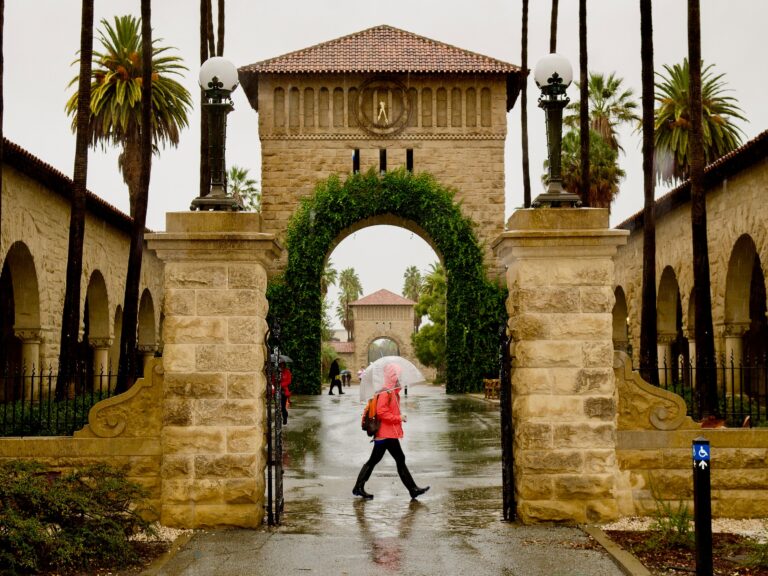
Past infrastructure enhancements for capturing and redirecting rainfall have strengthened campus readiness for winter storms.