
Same Supplies, Better Box: Closing the Loop on Campus Shipping
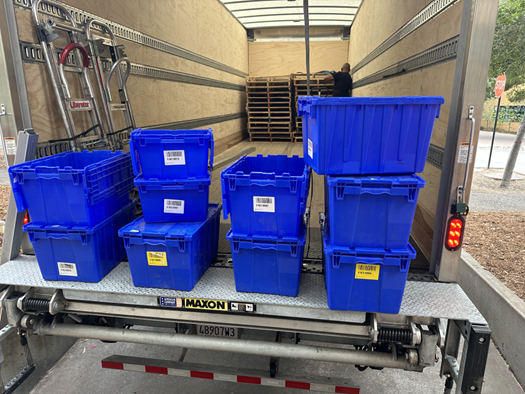
How one campus building manager is rethinking the supplies behind scientific discovery –helping labs be more circular.
The campus electric load is forecasted to exceed 80% capacity each day this week. Please reduce electricity from 2 to 6 p.m. this week to protect our overall campus power supply. (sustainable.stanford.edu/power-smart)

A new resource, Cost Savings for Common Purchases, is designed to help departments reduce expenses while supporting sustainability and responsible purchasing practices. Organized as a set of practical, easy-to-use tips, the guide highlights ways to cut costs across some of the university’s most common purchases, from lab supplies and software to office equipment and catering.
The cost-savings guide challenges the misconception that sustainability initiatives are always more expensive.
– Moira Zbella, Director of Responsible Purchasing
This resource is intended to show that financial savings and environmental responsibility are not mutually exclusive. In practice, many of the recommendations produce both cost and sustainability benefits. Developed by Stanford’s Responsible Purchasing Program within the Financial Management Services department, the resource aims to make smarter purchasing decisions easier. Zbella explains that the tips are meant to be highly actionable and tangible tips that people can readily implement.
The resource is part of the program’s broader framework, which focuses on sustainability, supplier inclusion, and spend management. Supplier inclusion centers on working with small and local businesses, while spend management is focused on improving cost effectiveness and spend visibility, both of which are supported by the new resource.
“Reuse is simpler than some people think,” Zbella said, pointing to tools like Stanford’s #stanford-property-reuse Slack channel, which allows departments and individuals to request or share supplies across campus. Additional programs support reuse at different scales, from the Surplus Chemical Program maintained by Environmental Health & Safety to the Stanford ReUse website, where employees can post or claim excess furniture and equipment.
Looking ahead, Zbella said the tool could eventually evolve into something more customized for individual campus business units. Feedback on the tool and on the recommendations themselves may also help improve procurement systems and reuse programs over time. For now, the emphasis is on simplicity and accessibility. “We really focused on keeping it very straightforward,” Zbella said, “with guidance that people can understand and implement easily.”
The new cost savings guide was also discussed at the “Making Your Funding Go Further” information session on May 14, 2026. The recording is available here, and community members can send comments or questions to responsiblepurchasing@stanford.edu.
How one campus building manager is rethinking the supplies behind scientific discovery –helping labs be more circular.
There is no excerpt because this is a protected post.
There is no excerpt because this is a protected post.