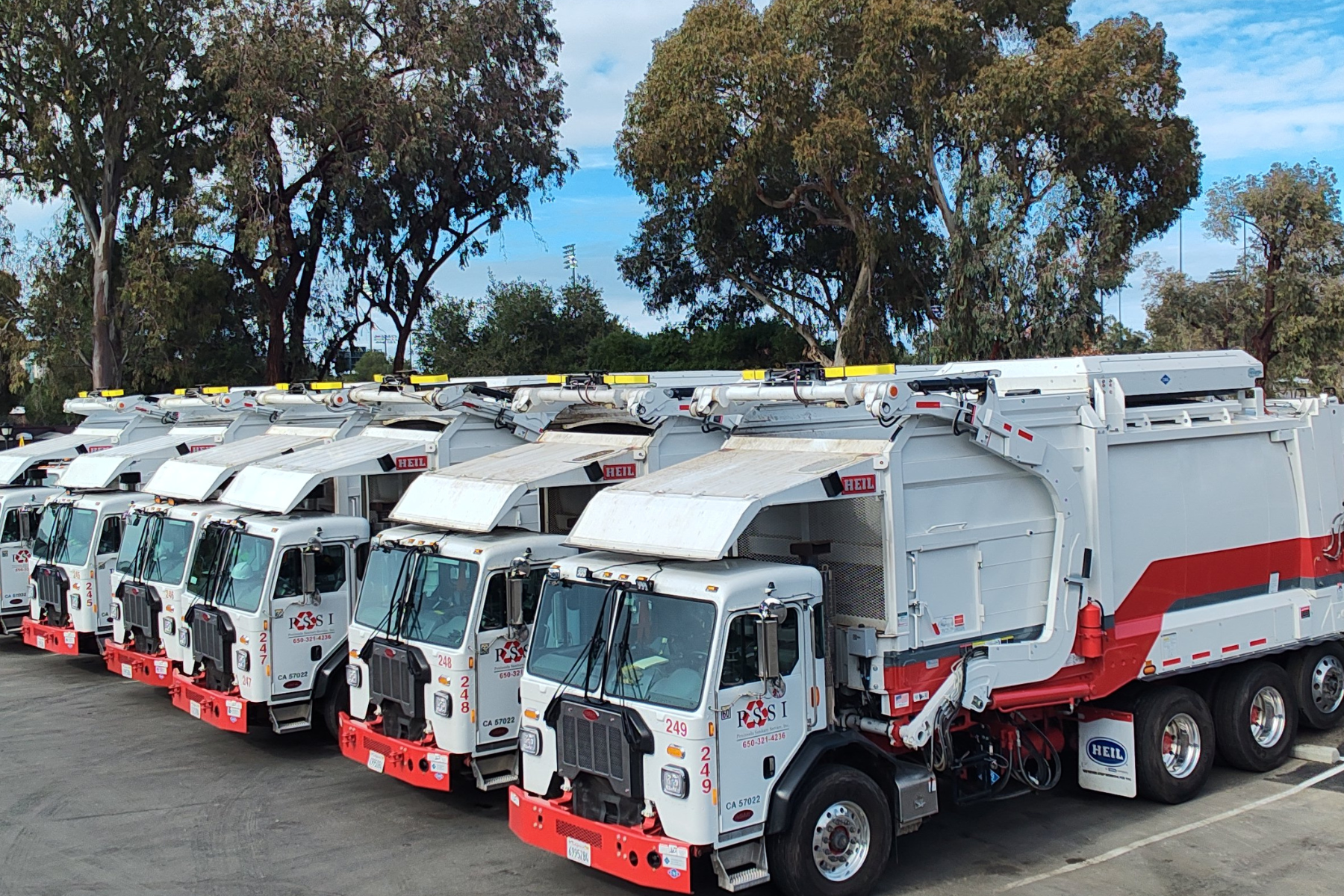
A new campus fueling station compresses natural gas to power our waste collection vehicles, making waste operations more sustainable and a lot quieter.
Stanford’s waste collection fleet has transitioned from diesel to 71% compressed natural gas (CNG). Fueling up on campus saves truck miles traveled, resulting in reduced emissions. Tanks go from empty to full in about seven minutes–instead of needing to be connected overnight.
“A cleaner fleet and on-site fueling are a big part of making our waste operations more efficient and sustainable.”
–Julie Muir, Associate Director of Zero Waste Systems
The CNG trucks also help improve local air quality and reduce excess noise—they are up to 10 decibels quieter than diesel trucks, keeping drivers comfortable and the campus quieter.