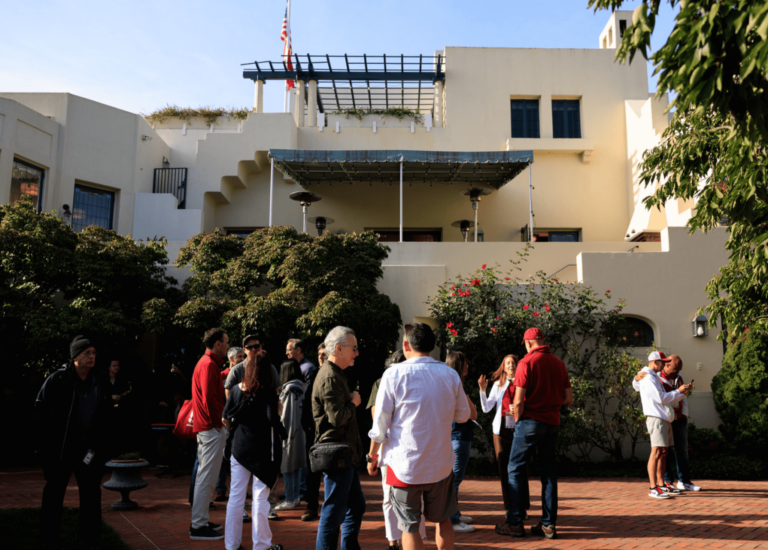
Embodied Carbon Brings Sustainability Champions Together
A new study on embodied carbon in construction materials led to new guidelines to help the university meet its net-zero emissions goal by 2050.

A new study on embodied carbon in construction materials led to new guidelines to help the university meet its net-zero emissions goal by 2050.

In its inaugural year, the Living Lab Fellowship Program fostered cross-campus collaboration, hands-on learning, and lasting impact through 16 student-led operational sustainability projects.

In 2021, Stanford made history as the first university to issue climate bonds with both sustainability and social equity goals.

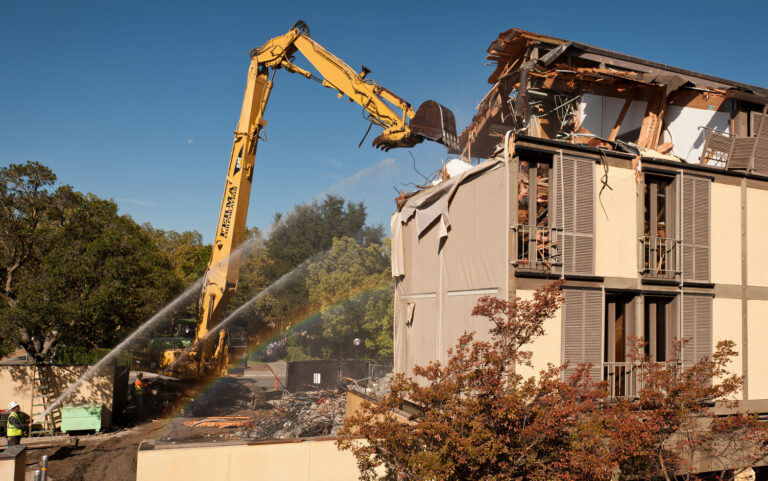
Stanford demolished Herrin Hall and Laboratory to make way for a new Data Science Complex, honoring William F. Herrin’s legacy.

The Mudd Chemistry Building has been demolished, with 90% of its waste recycled to reduce environmental impact.

Stanford’s deconstruction of the Lou Henry Hoover Building diverted 2,400 tons of concrete for downcycling, while preserving Lou Henry Hoover’s legacy through two campus landmarks.

Sustainability is a design and cultural cornerstone of the new, state-of-the-art facility.