
Greener Together: Alumni Show Up For Sustainability
Current and former Stanford students keep the university’s sustainability legacy alive at the All Alumni Day Farm Fest.
The campus electric load is forecasted to exceed 80% capacity each day this week. Please reduce electricity from 2 to 6 p.m. this week to protect our overall campus power supply. (sustainable.stanford.edu/power-smart)

Land, Buildings & Real Estate (LBRE) is the operational core of Stanford’s physical campus and home to many departments within Sustainable Stanford, including the steward of the Sustainable Stanford brand (the Office of Sustainability), Land Use & Environmental Planning, Transportation, Mail Package Services, Energy Operations, Water Resources & Civil Infrastructure, Buildings, Grounds, & Maintenance, and many more. These groups showcase how planning for sustainability, climate adaptation, and resilience is possible for long-term efficiency, performance, and financial health. Through its day-to-day operations, LBRE lays the groundwork for sustainability innovation to emerge and thrive.
Current and former Stanford students keep the university’s sustainability legacy alive at the All Alumni Day Farm Fest.

New water fill signs, installed in May 2024, acknowledge ancestral land and aim to foster greater awareness of the water’s origins and cultural significance.

Sixty-one Stanford students are driving real change in sustainability through the Living Lab Program, tackling real issues while gaining hands-on experience.

Over 1,700 new first-year students were welcomed with proper waste sorting tips as they moved into their dorms this year.

Stanford’s ambitious renovation of the Graduate School of Education blends sustainability with historical preservation, incorporating reduced waste and energy efficiency.
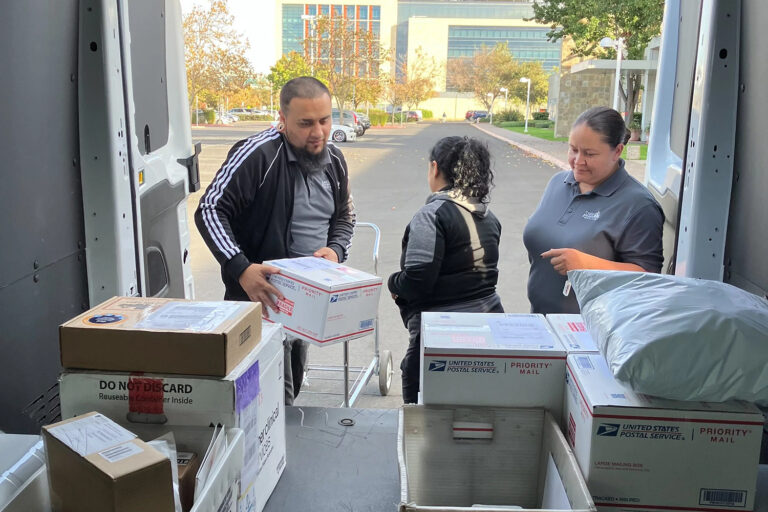
Mail and Package Services’ last mile program reduces emissions and traffic congestion, contributing to the university’s net zero emissions goal.

Proper sorting is now easier than ever, with over 9,000 new bins installed, thousands more reused, and over 30,000 new labels and signs added.
This test event is set for Mar 21 at 12:00 PM to Mar 22 at 1:00 PM to see how a multi-day event will appear. …

Californians are no strangers to wildfires. As the scientific community searches for answers to prevent fire before it happens, Stanford is testing a “BurnBot” that can create fuel breaks.

Doctoral student Eleni Alexandraki, B.S. ’19 and M.S. ’21, developed a set of Whole Building Life Cycle Assessment Guidelines for her Living Lab Fellowship Project.