

Sustainable Research Computing
Academics, Carbon, Community Engagement, Construction & Demolition, Efficiency, Emissions, Maintenance
Danica Sun ’28 explored smarter resource use for one of Stanford’s major computing clusters.

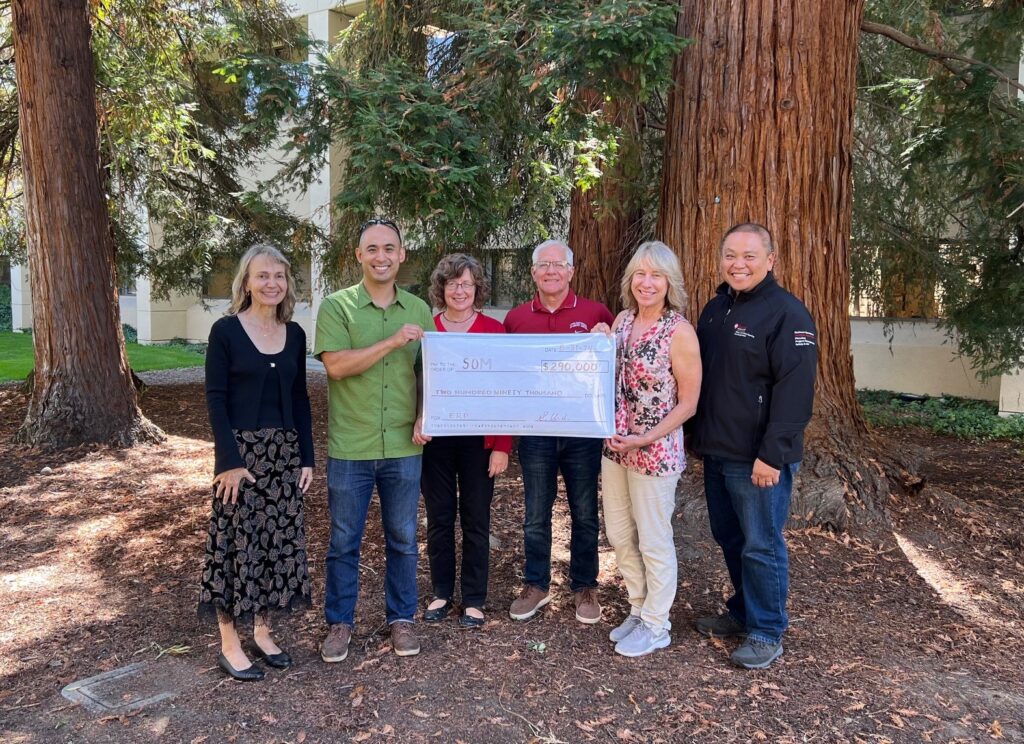
Last year, the School of Medicine’s (SoM) Office of Facilities Planning and Management (OFPM) kicked off a new tradition with the Facilities Energy Management team (FEM): an annual celebratory lunch recognizing the team’s achievements in energy efficiency. Over the years, FEM has also celebrated energy-saving achievements through handing off a symbolic “big check” — the check highlights the real financial savings their work brings to the university through the Energy Retrofit Program administered by FEM.
In collaboration with FEM, OFPM has implemented many energy efficiency projects over the years across School of Medicine buildings, saving the University over $2.7 million since the start of the program. These initiatives, focused on reducing energy usage in SoM buildings, are funded in part through rebates from FEM. These projects not only cut costs but reduce energy use across laboratories, classrooms, and office spaces. In the past two years alone, programs have included the installation of high-efficiency Ultra-Low Temperature Freezers in twelve SoM buildings, an upgrade to LED lighting in Li Ka Shing Learning and Knowledge Center, and conversions to Direct Digital Control systems in the Medical School Lab Surge and the Center for Clinical Sciences Research, which helps to intelligently control the HVAC systems to save energy.
“We’re grateful for OFPM’s dedication to managing complex HVAC and lighting projects — and to saving energy,” Leslie Kramer, associate director of Energy Retrofit Programs, shared at the celebration.
Energy efficiency continues to be a major focus at Stanford. Upcoming projects include LED lighting upgrades at the Lokey Stem Cell Building, converting several buildings to Direct Digital Control systems, and adding a dedicated fan to the kitchen at the Center for Academic Medicine so supply air temperature can be increased for the entire building.
As these teams continue progress towards sustainability, it’s important to take a moment to celebrate achievements and milestones. This annual event helps to recognize the technical work behind these upgrades and honors the people who make Stanford’s energy-efficient future possible.
Danica Sun ’28 explored smarter resource use for one of Stanford’s major computing clusters.

Rachel Porter, PhD candidate, investigated alternatives for reducing reliance on Stanford’s natural gas-fired steam plant.

Stanford’s world-class golf course is making water management a priority, teeing up golf to be a sustainable sport.