In Baja, no food scraps go to waste: every peel, stem, and leftover is repurposed for stocks and sauces. In France, award-winning chefs cook with ingredients harvested just steps away in kitchen gardens. And on some of Stanford’s expedition cruises, banana peels are transformed into vegan bacon and potato skins become gourmet chips.
It’s not just about flavor—it’s about climate impact. And in 2025, Stanford Travel/Study made food sustainability a central part of its global programs.
According to the 2025 Sustainability Survey, Stanford’s alumni travel programs have made measurable progress:
The push toward sustainability began with simple questions: Where is this food coming from? How is it prepared? And what happens when it’s left uneaten?
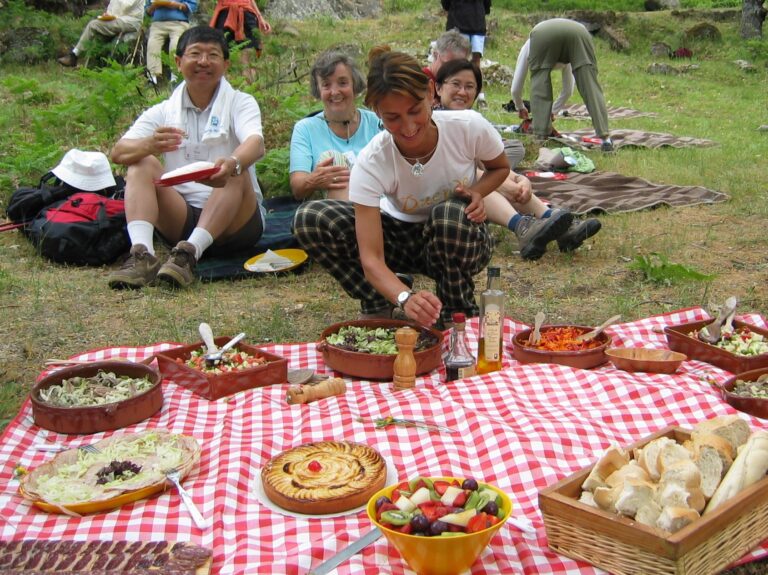
Travel/Study’s partners across six continents responded with creative, culturally tailored solutions. In Spain, midday picnic programs achieve near-zero waste. In Baja and Alaska, chefs follow a “heads-to-tails” mindset—extending the life of ingredients through pickling, preserving, and cross-utilization. As one senior conservation leader involved in trip planning explained, “our kitchen team is trained to follow low-waste prep practices, including using vegetable peels for broths and repurposing trimmings. Guests are encouraged to only take what they can finish.”
Feedback from travelers has been overwhelmingly positive—many praising the creativity of these low-waste meals and requesting similar options across more land-based trips.
In the Dordogne, groups dine at Michelin-starred restaurants and family-run bistros that grow their own produce. On Stanford’s Panama and Costa Rica cruise, all food scraps are recycled onboard and guests can opt for half portions to reduce waste. In New Zealand, travelers visit farm-to-table restaurants and wineries that embrace zero-waste practices.
While food systems contribute just 1% of total trip-related emissions, they offer one of the most visible, tangible, and scalable ways to embed sustainability into travel—shaping culture, reducing waste, and deepening local connection. “A low-waste meal served on a farm in Spain may not move the global emissions dial,” said Travel/Study Director Elizabeth Player Jones, “but it might move someone’s understanding of sustainability forever.”
On the 2023 Basque, Spain trip, travelers shared a plant-based meal at a local farm, reinforcing not only the environmental benefits of vegetarian dining, but also its cultural and educational power. That single meal saved an estimated 65 kg of CO₂e—equivalent to 3 metric tons per year if implemented across more trips. Experiences like this turn sustainability into a shared story, showing that climate action can also be delicious, memorable, and deeply rooted in place.
Because in educational travel, every bite tells a story. And increasingly, it’s a story of stewardship, partnership, and progress.