
The Giving Trees
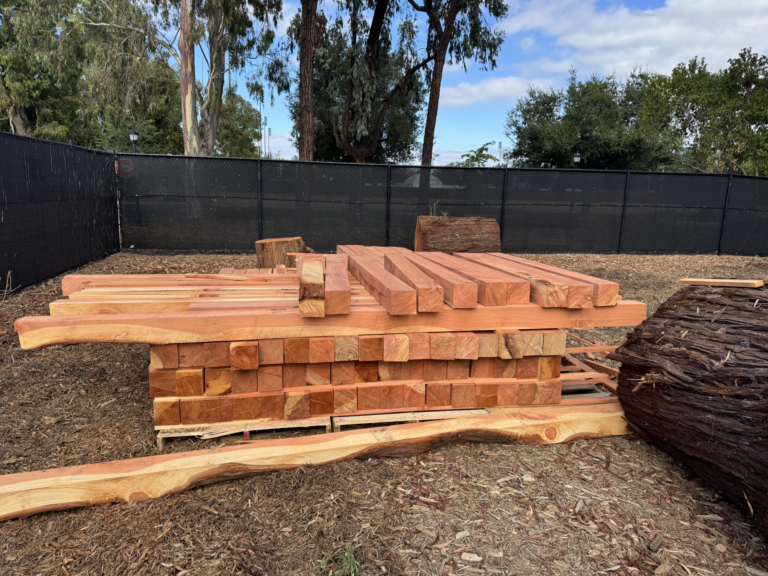
Stanford’s on-site milling program transforms fallen limbs into campus benches and student art–providing the campus community a sustainable alternative to imported lumber.
The campus electric load is forecasted to exceed 80% capacity each day this week. Please reduce electricity from 2 to 6 p.m. this week to protect our overall campus power supply. (sustainable.stanford.edu/power-smart)

Stanford’s water-wise demonstration garden, established in 2003, has a new addition: a native pollinator garden! In 2024, A group of graduate students from the Stanford Doerr School of Sustainability and the Hasso Plattner Institute of Design worked together with the Stanford Grounds team to create a garden that will have flowers year-round for important pollinators. This new addition supports the Water-Wise Garden’s goal of using beautiful and ecologically friendly alternatives to high water use landscaping.
The garden is filled with plants native to California such as Penstemon, Common Yarrow, Black Sage, Woolly Sunflower, Showy Milkweed, California Fuchsia, and Sunset Manzanita. These species grow well in full sunlight and little water, while attracting key pollinators like butterflies, bees, and hummingbirds. There’s even an insect hotel, which serves as a home for many of these pollinators, particularly bees. These native pollinators are crucial for maintaining healthy ecosystems, but face threats from habitat loss, climate change, and invasive species. Gahl Shottan, the university’s horticulturist, shares the importance of insect hotels to maintaining a healthy native pollinator garden: “Insect hotels are associated with better soil quality, increased pollination, and better ecological diversity.”
If you visit the garden this summer, you can learn more about lawn alternatives, mediterranean plants which thrive in Australia’s dry climate, and the Native Plant section, which are scattered across California’s coastal ecosystems.
The Water-Wise Garden demonstrates that beauty and ecological function can go hand in hand. By planting native, drought tolerant plants, you can support a healthy ecosystem for key pollinators while reducing water usage this summer.
Stanford’s on-site milling program transforms fallen limbs into campus benches and student art–providing the campus community a sustainable alternative to imported lumber.
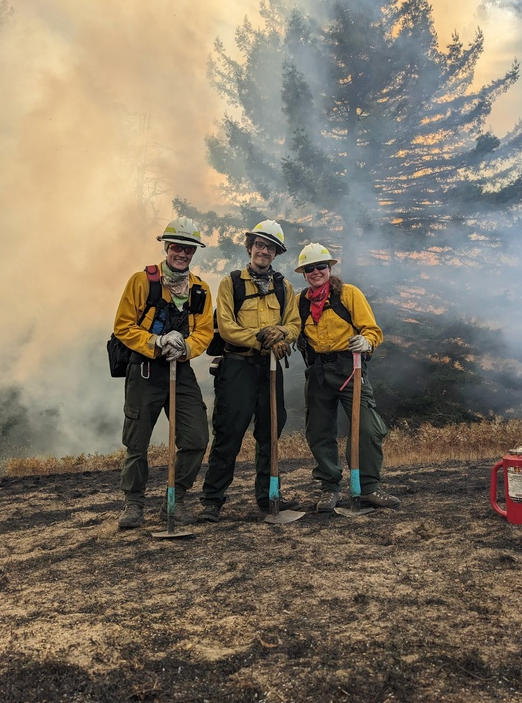
Stanford’s wildfire resilience program is recognized as one of the most impactful wildfire preparedness initiatives in the country.
Support campus conservation initiatives with your next service milestone award. Adopt a salamander, or sponsor a tree, and leave your legacy on Stanford’s lands.