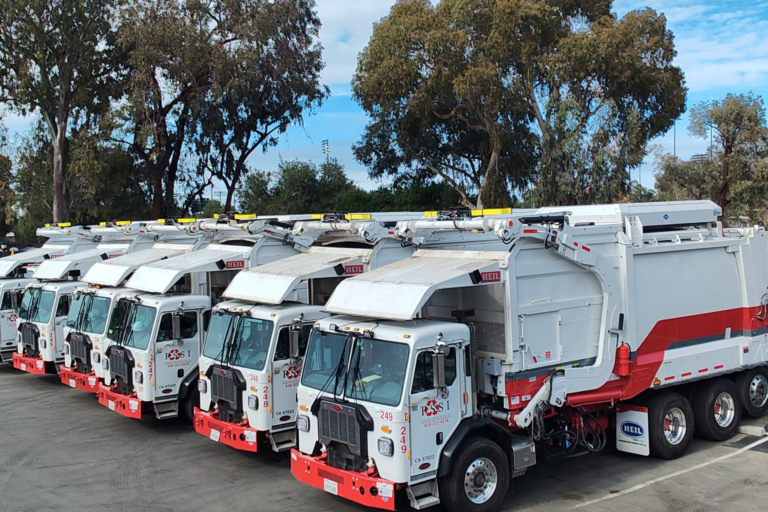
Stanford’s Quiet Leap Towards Sustainable Waste Collection
New campus fueling station makes waste operations more efficient and sustainable.

Every load of laundry uses water and energy — use this tool to lighten the load on campus resource for more sustainable laundry days.
Save time, energy, and water by saving laundry day for when you have a full load.
In R&DE Student Housing’s HE washers, use just ¼ cup of detergent—more isn’t better and can actually make clothes less clean. Smart laundry habits help maximize efficiency and reduce your environmental impact.
Choose the cold water setting when doing laundry—it cleans just as effectively and helps your clothes last longer. Since heating water accounts for about 90% of the energy used in a wash cycle, switching to cold is an easy way to save energy and reduce your carbon footprint.
Save energy and extend the life of your clothes by air-drying whenever possible. If you use a dryer, combine loads and avoid over-drying by checking clothes regularly. These simple habits reduce energy use and make your laundry routine more sustainable.

New campus fueling station makes waste operations more efficient and sustainable.

The School of Medicine turns smart energy projects into lasting savings, with the help of energy rebates offered through Stanford’s Facilities Energy Management team, leading to over $2.7 million in annual savings for the university.

The SESI program transformed the university’s energy system into one that’s safe, sustainable, and resilient and serves as a model for the world.