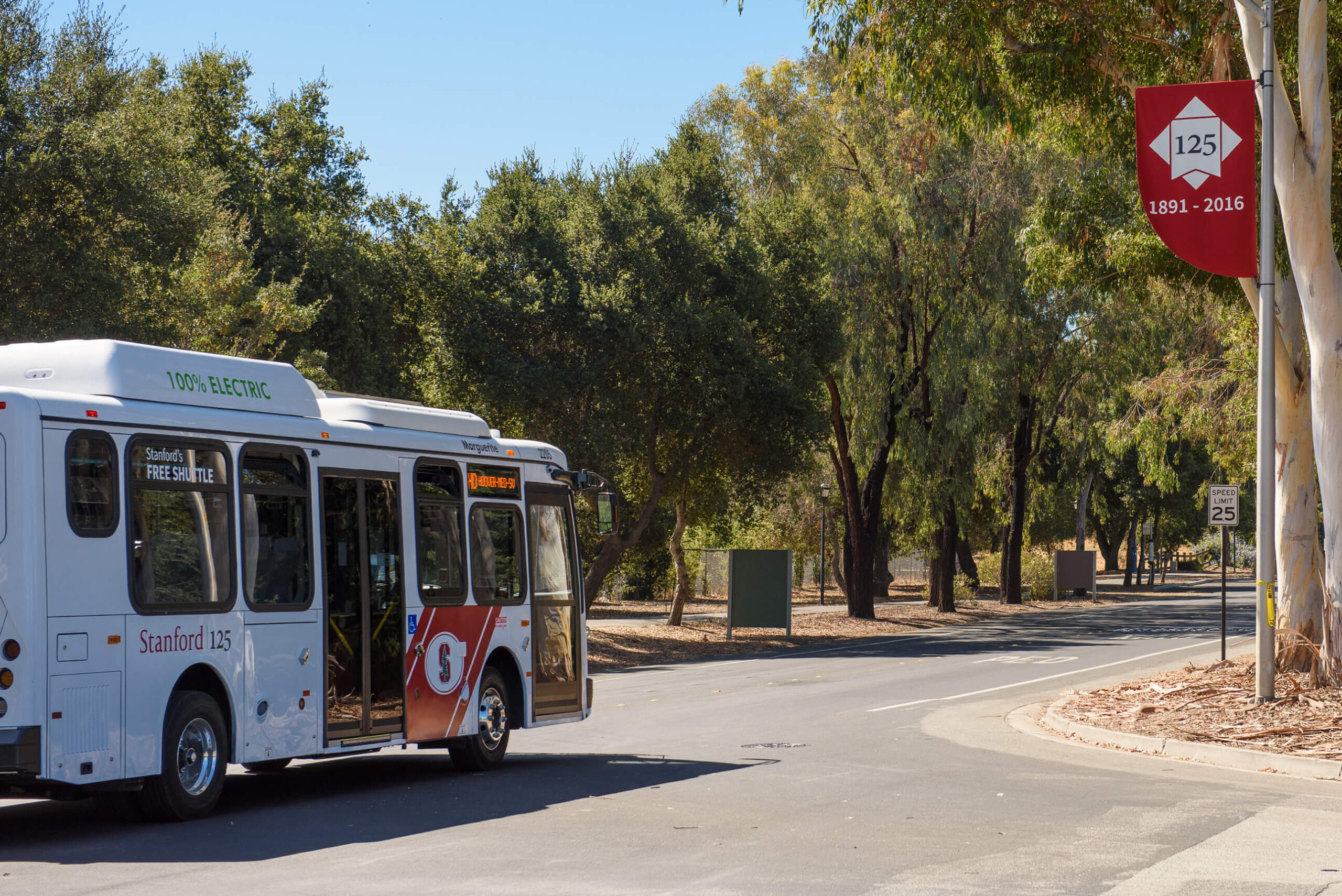
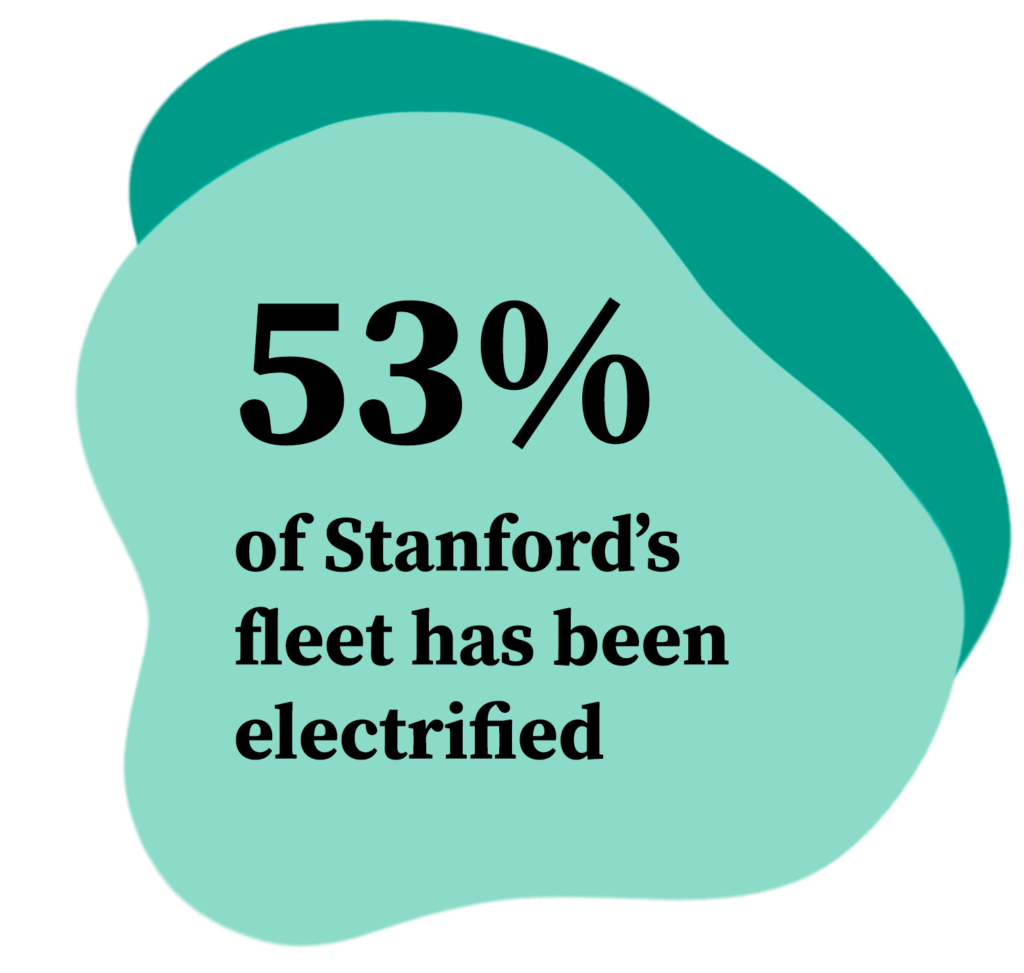
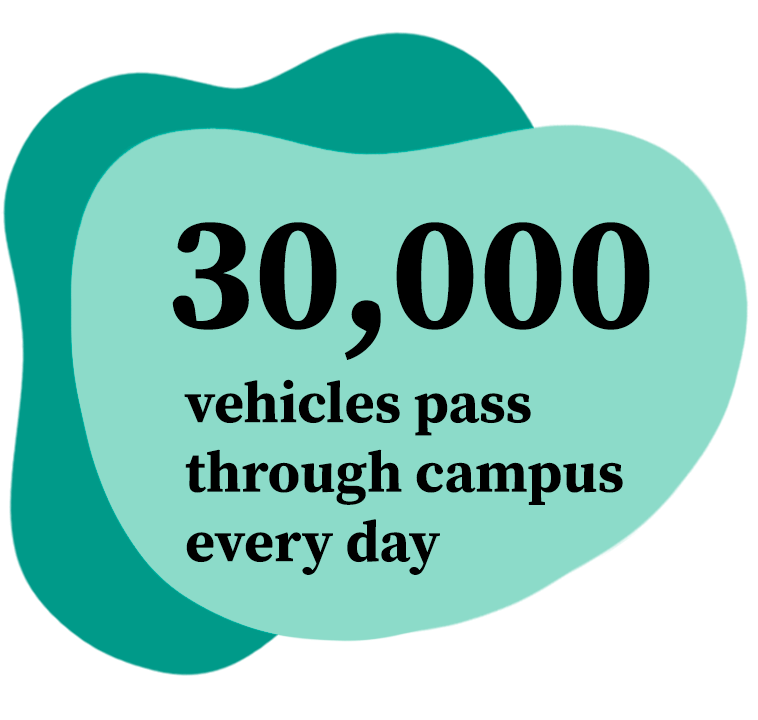
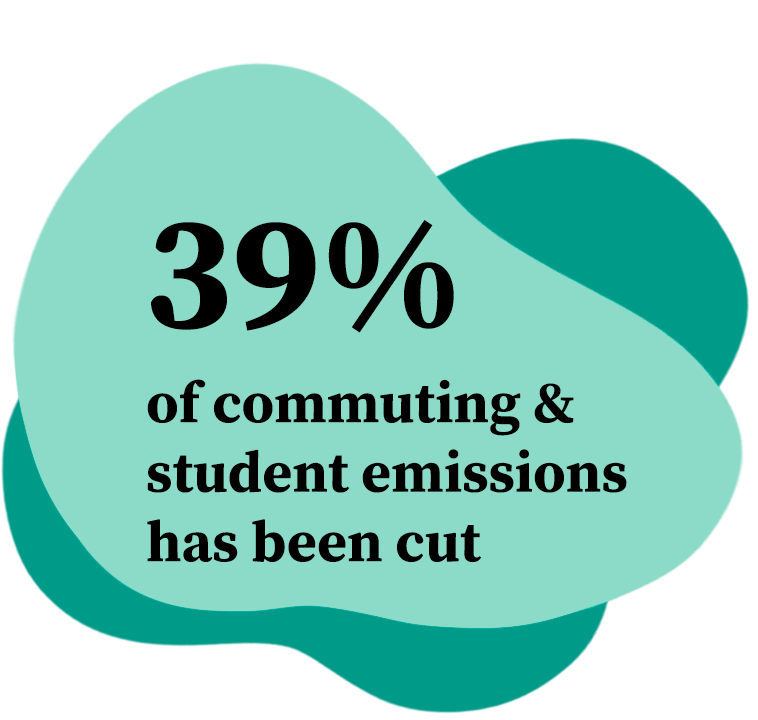
Stanford is uniquely positioned to set the standard of EV readiness in academia. Placed in the heart of the Bay Area, the university is home to the nation’s largest residential campus. Thirty thousand vehicles pass through campus every day. Stanford Transportation has already made significant strides in reducing emissions and traffic from these vehicles. Since 2009, Stanford has cut commuting and student emissions by 39% and electrified 53% of its fleet.
With California’s 2035 EV sales mandate, which will phase out the sale of all combustion vehicles from 2026 until 2035, and Stanford’s 2050 net zero target, it becomes imperative to master plan the future of EV Infrastructure on campus.
Project Goals
The EV Master Plan Living Lab Fellowship Project introduced the university’s first ever EV Infrastructure Plan, beginning the process towards a cleaner transportation future.
Project Achievements
The project identified that Stanford qualifies for the IRA Alternative Fuel Vehicle Refueling Property Credit, allowing the university to receive up to $100,000 per EV charger installed, with potential to secure millions in tax credits for future infrastructure.
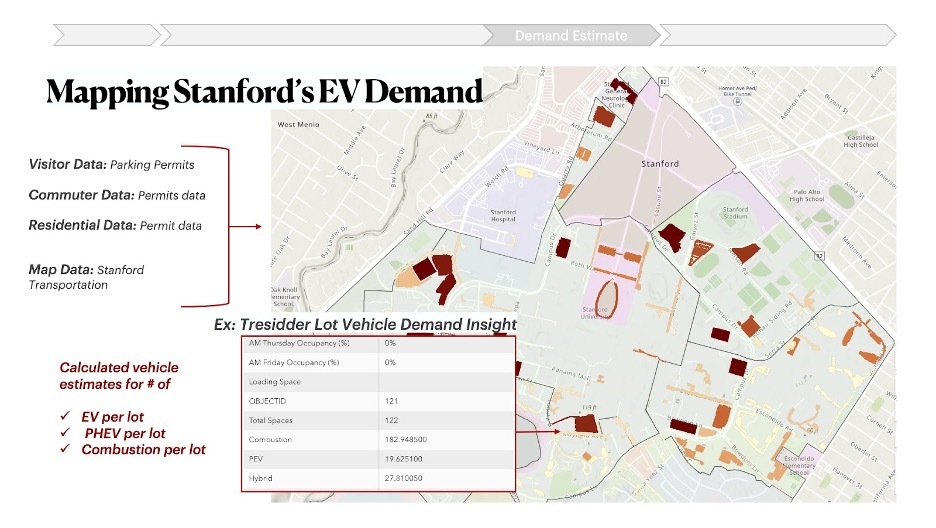
Additionally, a campus-wide mapping of EV, PHEV, and combustion vehicles was conducted, providing data on parking lot occupancy and vehicle types. This map will be used to project future EV infrastructure needs and guide strategic development on campus.
Project Photos
Project Takeaways
Through this project, I recognized the urgency of the sustainability transition. Entering college in 2020, sustainability efforts focused mainly on setting Net Zero targets, but now, with 90% of global GDP under national climate commitments, the challenge has shifted to meeting those targets. The EV Infrastructure Master Plan is just one of many efforts required to achieve a Net Zero future, and this project taught me invaluable lessons in project management, relationship-building, and balancing the demands of both the university and the planet.
What’s Next?
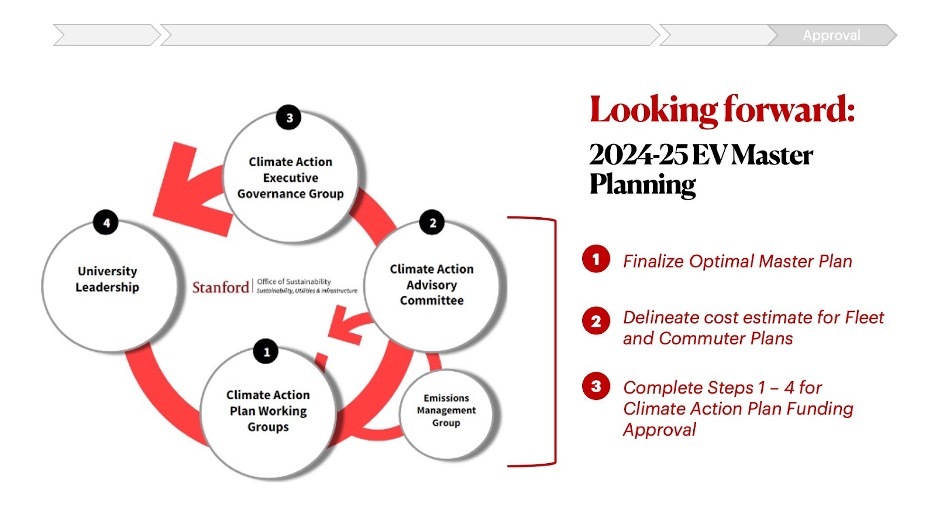
In the coming months, the Master Plan will be completed and cost estimates obtained. The project will then move through the Climate Action Plan proposal process to secure long-term funding from university leadership, focusing on commuter/student EV charging infrastructure and fleet infrastructure.
Project Team
PRIMARY PARTNER: Stanford University Office of Sustainability
student felow
Nikita Salunke
Nikita Salunke (she/her) is a M.S. candidate in Sustainability Science and Practice with a B.A. in Economics. After witnessing the negative effects of wildfires in her hometown, Nikita grew committed to design sustainable and equitable solutions for communities most affected by climate change. As a Schneider Fellow, she worked with the Natural Resources Defense Council to identify renewable energy siting challenges to reach the 2030 emissions reduction targets domestically. On campus, she has worked with R&DE’s Zero Waste team to redesign the external waste enclosure system to reduce costs and achieve zero-waste goals. With Stanford’s Scope 3 Team, she spent the last year developing a dynamic carbon pricing program to achieve net-zero emissions from University air travel. As a Living Lab Fellow this year, she’s excited to help build out the University’s EV charging infrastructure plan, in accordance with recent policy orders at the state and federal level. Nikita loves finding ways to spend time outdoors; for the past three years, she has led SPOT–camping trips for incoming frosh/transfers. If not outside journaling or folding a crane for a friend, you can find her learning to play the piano at Braun.
mentor
Kristen Parineh
Director, Office of Sustainability
mentor
Sam Lubow
Climate Action Manager/Associate Director, Office of Sustainability