

Sustainable Research Computing
Academics, Carbon, Community Engagement, Construction & Demolition, Efficiency, Emissions, Maintenance
Danica Sun ’28 explored smarter resource use for one of Stanford’s major computing clusters.

Set against scenic mountain and bay views, The Stanford Golf Course, established in 1930, is a delight for golfers and visitors alike. It is well known for its excellent play and responsible turf management. While golf courses may be frequently associated with high levels of water consumption, Stanford Golf Course Management has worked to significantly reduce their water usage over the last decade, especially during the summer months. One of the Course’s gold standards lies in not using potable water. Instead, it utilizes water from Stanford’s Lake Water system, sourcing water from creeks, groundwater wells, and stormwater runoff.
A golf course’s water conditions impacts players’ experiences. To achieve this reduction in water usage, Stanford Golf Course retrofits cut the total irrigated area on the course in 2015. In 2022, the installation of soil sensors on the course and in the Siebel Varsity Training Complex enabled precise monitoring of soil moisture, salinity, and temperature, optimizing water usage. The 2022 upgrades allowed staff to gain a more precise understanding of conditions throughout the greens and adjust water levels as needed. Though the golf course’s water demand fell, the new system wasn’t efficient enough to provide information for the entire course. With only two sensors per green added to cover 80 acres, a need arose for more data points that would give course managers more accurate information.
In 2023, the Stanford Golf Course worked with an external company to install water sensors on fairway mowing equipment that collects soil data seven times per second as mowing occurs, yielding high-resolution moisture maps. The data yields 18,000 data points over a two-acre fairway, which is integrated into the irrigation controls and has led to a significant decline of overwatering in relation to the estimated needs of the course. Associate environmental engineer with the Water Planning and Stewardship team at Stanford, Zach Leherr, compiled data on the water consumption of the golf course before and after the introduction of the new sensors. “With the addition of the sensors, the instances of overwatering have greatly reduced, especially in the summer months,” Leherr shares. This latest addition showcases Stanford Golf Course’s ongoing commitment to resource optimization and sustainability.
“Reducing overwatering improves playing conditions for our golfers while meeting Stanford’s ongoing commitment to sustainability. Golf courses are known for excessive water use, but that doesn’t always have to be the case.”
-Mathew Dunmeyer, Director of Golf & Varsity Turf
If other golf courses were to follow in Stanford’s footsteps, water conservation as a management priority, and its substantial reductions, would be par for the course.
Danica Sun ’28 explored smarter resource use for one of Stanford’s major computing clusters.
Rachel Porter, PhD candidate, investigated alternatives for reducing reliance on Stanford’s natural gas-fired steam plant.
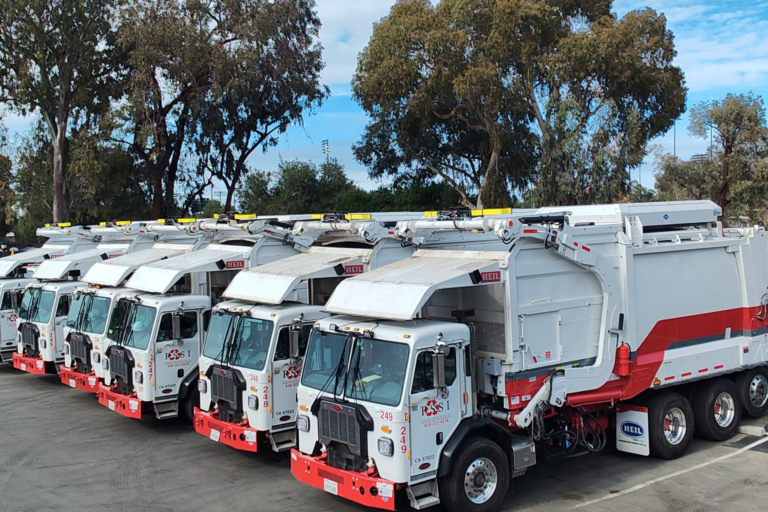
New campus fueling station makes waste operations more efficient and sustainable.