Protected: Improving Waste Sorting
There is no excerpt because this is a protected post.
The campus electric load is forecasted to exceed 80% capacity each day this week. Please reduce electricity from 2 to 6 p.m. this week to protect our overall campus power supply. (sustainable.stanford.edu/power-smart)

Four Sustainable Stanford interns and fellows were among the students recognized this Spring through various prestigious awards for their leadership, scholarship, and community-building.
Among this year’s honorees is Anushka Vijay, a member of the Class of 2026 and recipient of the Award of Excellence, one of Stanford’s highest undergraduate recognitions.
At Stanford, Anushka has focused on climate adaptation and marine conservation, combining research with community engagement. Her work has explored how coastal communities can better respond to climate risks, while also advancing conversations around sustainability and environmental stewardship on campus. Beyond her academic work, she has been actively involved in building spaces for dialogue and collaboration, helping connect students around shared environmental goals.
Looking back on her Stanford career, Anushka said, “Some of my most formative experiences at Stanford came through Dr. Sibyl Diver’s Introduction to Environmental Justice and Shades of Green courses.” She added, “Dr. Diver has encouraged me to think critically about whose voices must be empowered in conversations on sustainability and what it means to use research and education as tools to amplify their perspectives, concerns, and wisdom. This lens has carried into my continued work, including collaborating with the SIRGE Coalition on Indigenous rights in the mining sector since initially working with them in Shades of Green.”
The Award of Excellence, awarded by the Stanford Alumni Association, is given to roughly 10% of the graduating class and honors students who have consistently shown up for their communities. Anushka’s recognition speaks not only to her academic focus, but to the way she translates that work into action. Reflecting on what she’s most proud of, she shared, “I’m most proud of the approach I’ve developed toward my work. I’ve intentionally sought out spaces where I can engage with institutions while helping to elevate voices that are often underrepresented, and to do so in a way that builds sustained relationships rather than one-off engagement. Experiences like integrating community perspectives into Stanford’s Climate Action Plan with the Stanford Office of Sustainability, working on gender equity in small-scale fisheries in Indonesia with the Stanford Center for Ocean Solutions, and supporting community-informed marine policy with the California Ocean Protection Council have all reinforced this approach.”
Her recognition speaks to a broader mission embraced by the alumni community: celebrating students who actively make Stanford a more inclusive and engaged place.
The Stanford Alumni Association also honors graduate students through the Community Impact Award, recognizing those who strengthen the graduate experience through leadership and initiative.
This year, Sustainable Stanford intern and fellow (respectively), Sou Min Shin and Bailey Ann Selfors, are among the recipients.
Sou Min’s work exemplifies how graduate students can shape community culture beyond the classroom, building spaces that connect and uplift peers across disciplines. Reflecting on the range of communities she has engaged with, she shared, “My work has touched a lot of different communities — from coastal harvesters and fishing communities in Half Moon Bay as a Haas Center Graduate Public Service Fellow, to the broader Stanford community through my communications work with Sustainable Stanford. But the thread running through all of it is that I’ve always tried to show up as a whole person, not just a researcher or a policy person.”
When asked about what impact in the context of sustainability means to her, she said, “Impact to me is really about presence, whether the people most affected by environmental harm feel seen and heard in the solutions we build. I grew up moving between countries and cultures, and that shaped my instinct to always ask: whose story is being told here, and whose isn’t? Sustainability without that question feels incomplete to me.”
In addition to community leadership, Stanford also celebrates academic excellence. Anna Tavakolian has been awarded the J.E. Wallace Sterling Award for Scholastic Achievement, one of the university’s most prestigious and selective academic honors.
Each year, the award is given to just 25 seniors in the School of Humanities and Sciences, recognizing not only outstanding academic performance but also sustained intellectual curiosity and contribution throughout their undergraduate careers. Named after former Stanford president J.E. Wallace Sterling, the award reflects the university’s enduring commitment to rigorous scholarship, academic distinction, and the cultivation of future leaders who pair excellence with impact.
Reflecting on her academic journey, Anna shared, “Econometrics courses with Professor Hunt Allcott exposed me to applied technical work that I became really interested in, helped me understand how rigorous quantitative analysis can be applied to environmental challenges, and I have since applied to many subsequent projects.”
“My two years interning with the Office of Sustainability have also really brought it all together, translating technical skills into visible impact, whether helping improve Stanford’s emissions accounting or contributing to the university’s #1 AASHE STARS recognition.” – Anna Tavakolian, ’26
This combination of technical rigor and real-world application is grounded in a broader sense of discipline and commitment. As she noted, “Rather than any single achievement, I think I’m most proud of my consistency in everything I do and the sustained commitment to showing up and doing meaningful work.”
All four students were recognized at campus receptions. From building community to advancing scholarship, this year’s awardees demonstrate what it means to contribute fully to campus life and to leave Stanford better than they found it.
There is no excerpt because this is a protected post.
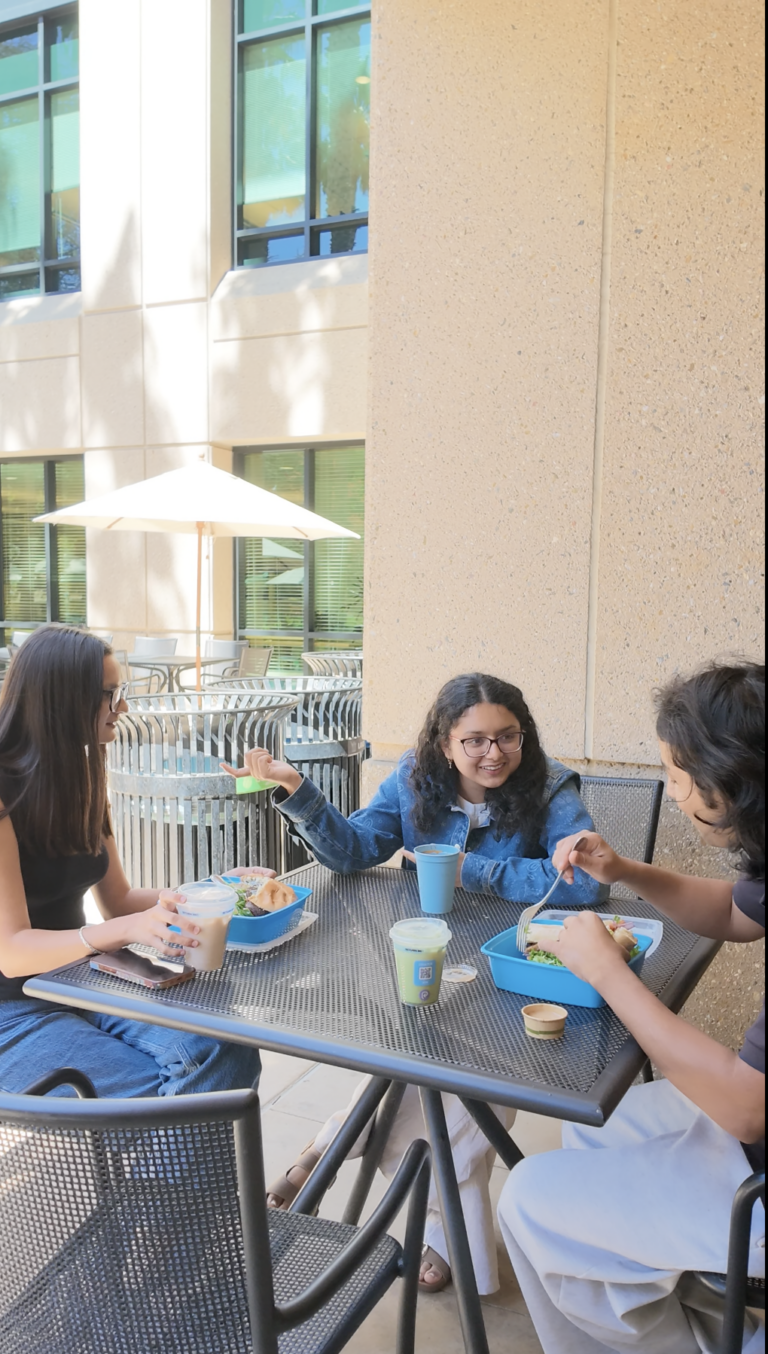
Meet Astha Bhandari ‘26, the Sustainable Stanford fellow getting campus cafés to rethink takeout.
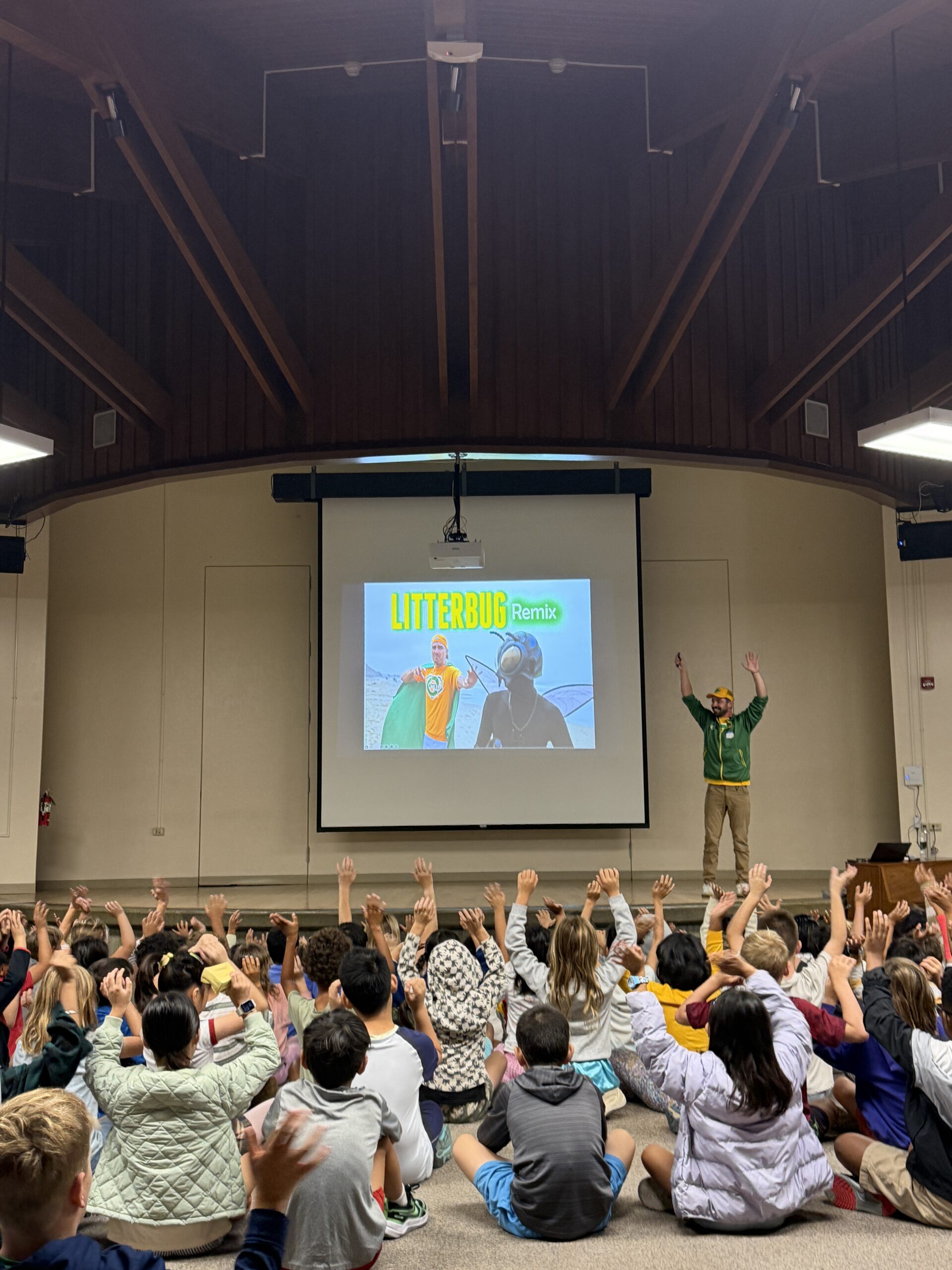
Through music, movement, and memorable lyrics, campus elementary school students discover how everyday choices impact the planet.