Protected: Leave Your Legacy by Supporting Stanford’s Conservation Program
There is no excerpt because this is a protected post.

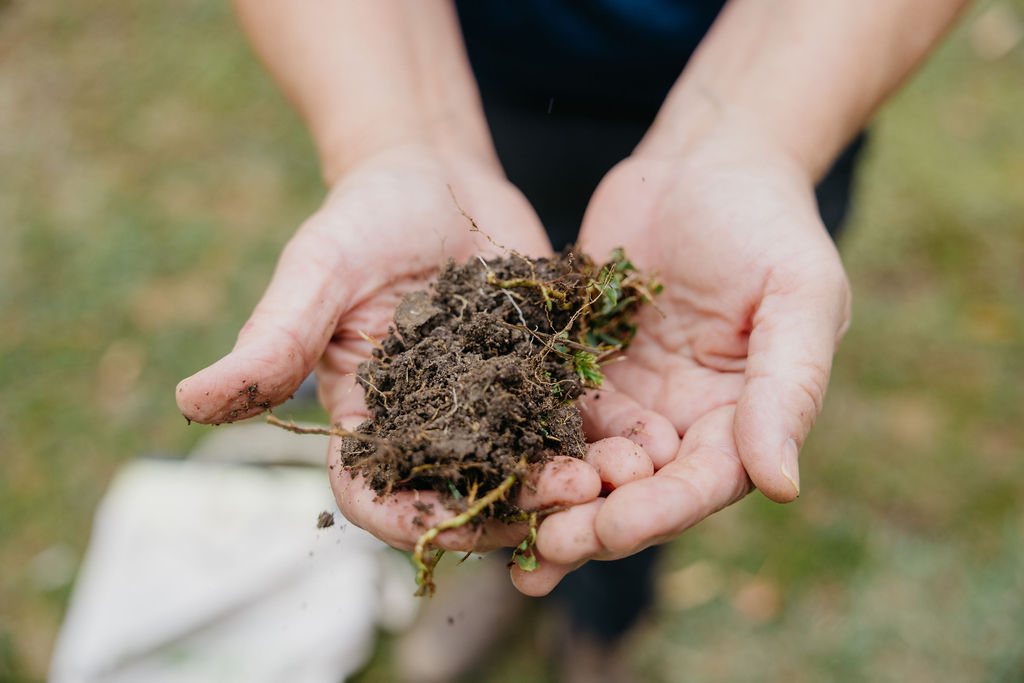
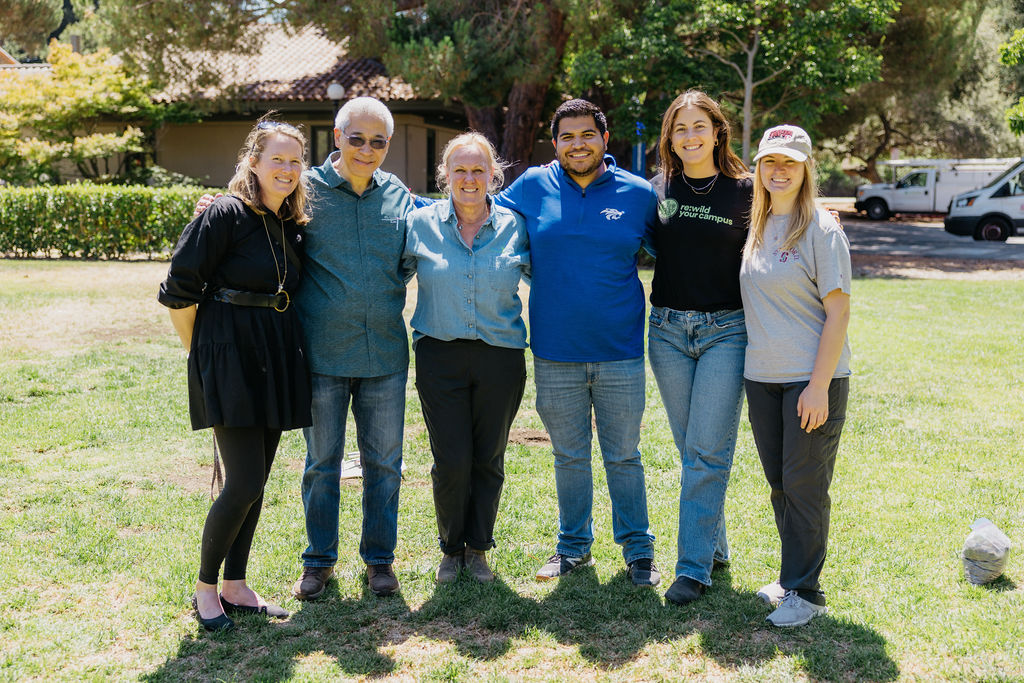
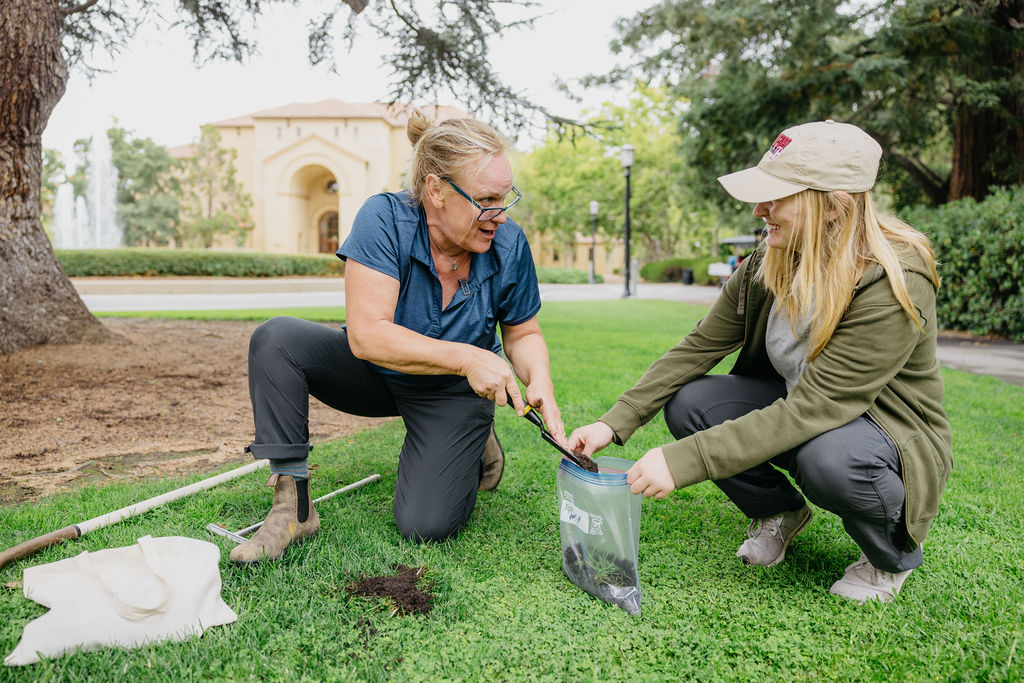
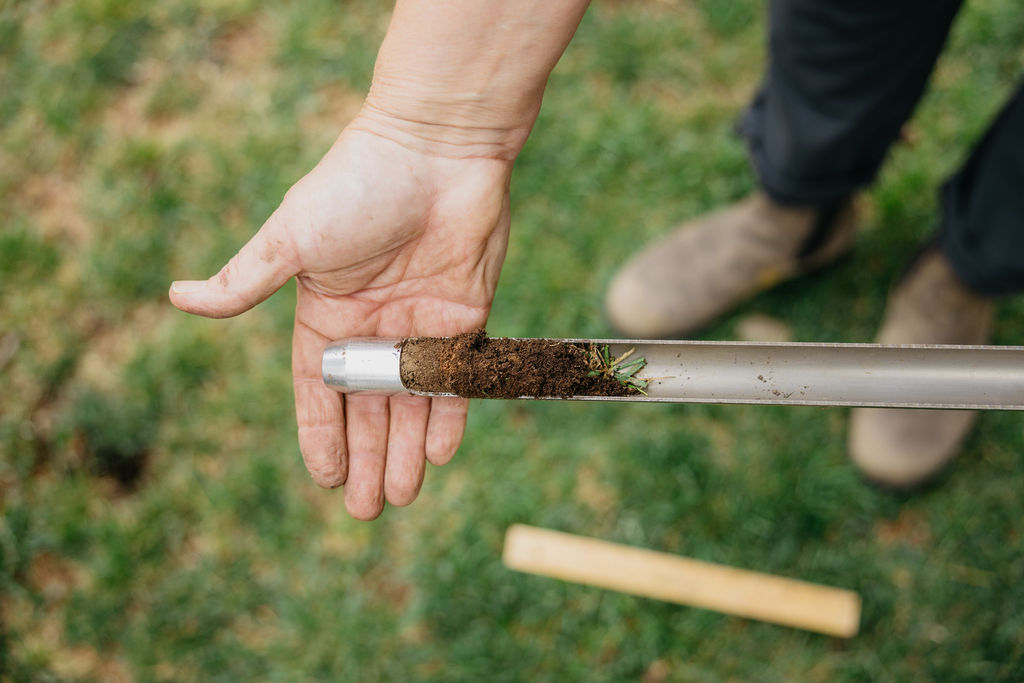
For the first time, three major Stanford groups – Residential & Dining Enterprises (R&DE), Land, Buildings & Real Estate (LBRE), and the Department of Athletics, Physical Education, and Recreation (DAPER) – are joining forces to reimagine how the university cares for its iconic landscapes. This August, Stanford launched a new organic landscape management pilot to bolster healthy campus ecosystems. Using science-based approaches like soil sampling to understand composition and nutrients, broader field data collection to track environmental conditions, and targeted strategies to enhance soil biodiversity, the departments will implement and monitor organic practices designed to nurture resilient landscapes, protect local wildlife, and promote the well-being of the campus community.
Hailey Demars, a Stanford data science student, was inspired to work on this project as part of her research in the Sustainable Stanford Living Lab Fellowship Program. “We found that organic landscape management could be a solution that focuses on preventative approaches to address potential problems, like insects or weeds. Organic landscape management involves building up soil health and addressing root causes of issues,” Hailey shared.
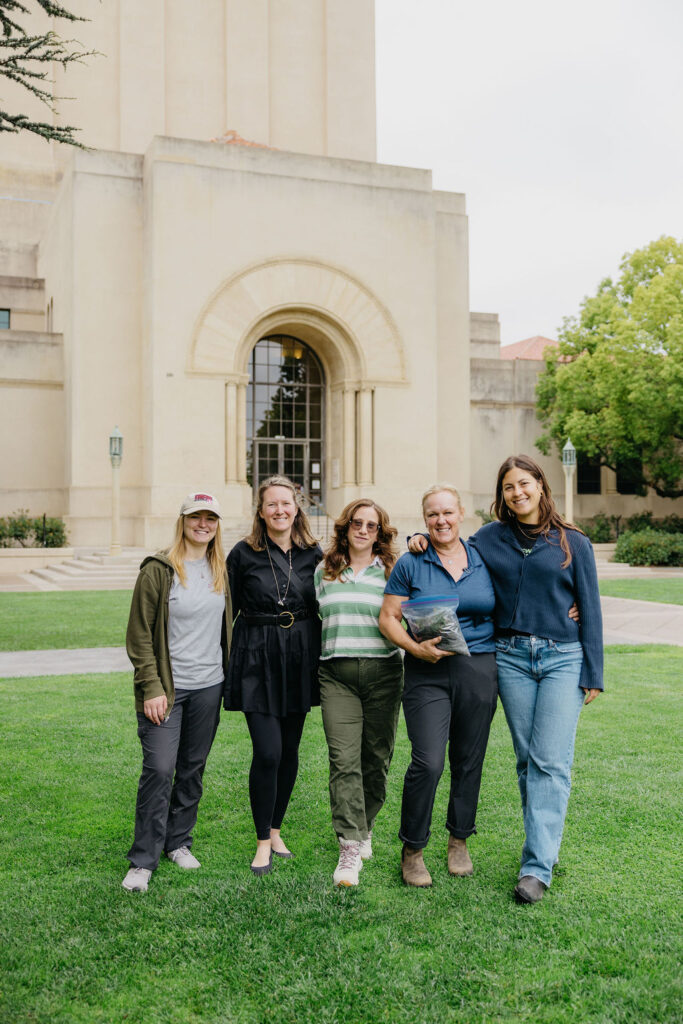
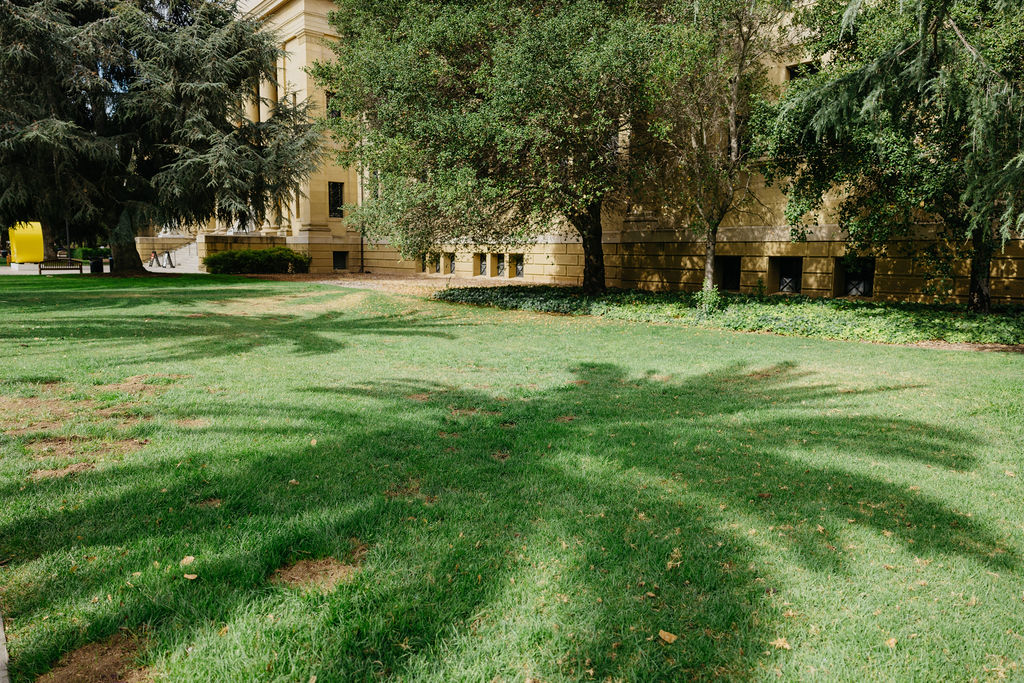
The soil testing process kicked off this summer at Stanford’s Cantor Arts Center, the Archery Field, Hoover Tower, and the Cowell Cluster. To assist with the project, the university is working with Re:Wild Your Campus, a non-profit that has demonstrated proven success in collaborating with fifteen higher education institutions to implement organic landscape care practices, with two completed projects at UC Berkeley and Drexel and pilot projects currently in progress at three other institutions.
This cross-departmental collaboration reflects the university’s commitment to sustainability and planning for a healthier future on campus – for animals, humans, and plants. Results from the pilot study around improved soil health indicators like healthy root systems and increased soil biological activity will help Stanford continue to care for its land. Stay tuned for more updates in the spring as the pilot project progresses.
There is no excerpt because this is a protected post.
From sustainable beats and food recovery leaps, the year 2025 set a new standard for Stanford traditions and operations.
The university earns STARS Platinum in version 3.0, the highest score under the sustainability rating system.