
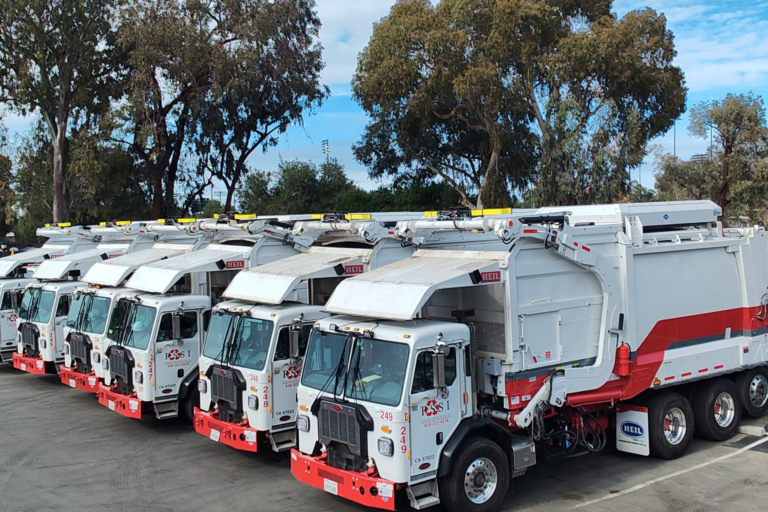
Stanford’s Quiet Leap Towards Sustainable Waste Collection
New campus fueling station makes waste operations more efficient and sustainable.

At Lucile Packard Children’s Hospital, free cooling is now provided by pulling in outside air when the temperature is less than 65°F. By using fresh air economizers and updating ventilation rates to match new healthcare code standards, the hospital was able to reduce energy demands and save around $500,000 a year.
The hospital is also replacing all lighting with LED fixtures, a project that was 70% complete by June 2023. This initiative is expected to save at least 730,000 kilowatt-hours of electricity – creating a 48% reduction in use – in the first year alone.
New campus fueling station makes waste operations more efficient and sustainable.

The School of Medicine turns smart energy projects into lasting savings, with the help of energy rebates offered through Stanford’s Facilities Energy Management team, leading to over $2.7 million in annual savings for the university.

The SESI program transformed the university’s energy system into one that’s safe, sustainable, and resilient and serves as a model for the world.