
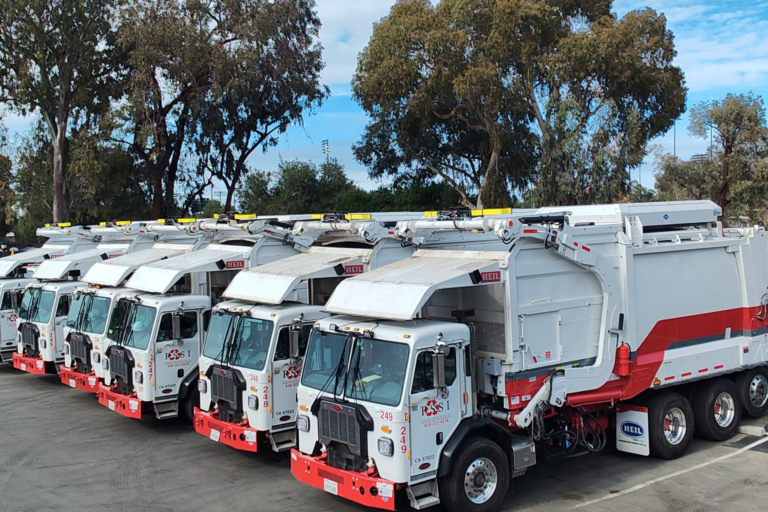
Stanford’s Quiet Leap Towards Sustainable Waste Collection
New campus fueling station makes waste operations more efficient and sustainable.

The east Green Library energy system has been updated through the Return Temperature Optimization Program (RTOP). This historical building utilized old-fashioned, pneumatic-controlled heating and cooling valves, and these were replaced with sustainable, pressure-independent electric control valves. Pressure-dependent systems lead to both excessive and insufficient space conditioning, given that the incoming pressure varies. Using pressure-independent valves in this renovation saves energy and increases thermal efficiency for hot and chilled water distribution to and from the Central Energy Facility.
New campus fueling station makes waste operations more efficient and sustainable.

The School of Medicine turns smart energy projects into lasting savings, with the help of energy rebates offered through Stanford’s Facilities Energy Management team, leading to over $2.7 million in annual savings for the university.

The SESI program transformed the university’s energy system into one that’s safe, sustainable, and resilient and serves as a model for the world.