
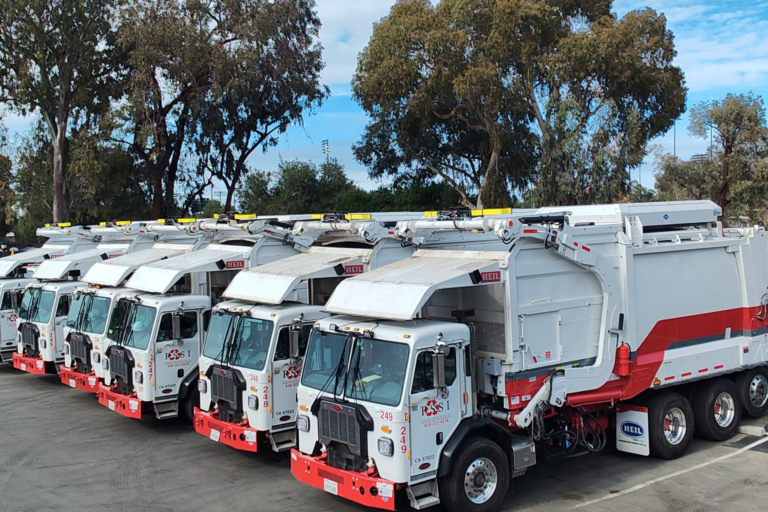
Stanford’s Quiet Leap Towards Sustainable Waste Collection
New campus fueling station makes waste operations more efficient and sustainable.

When it comes to energy, the little actions make a big difference. That’s why this year Stanford focused on updating, optimizing, and reimagining energy demand solutions at every level. The university has made improvements to reduce energy use in Lucile Packard Children’s Hospital, Green Library, Forsythe Hall, and the Wallenberg, Thornton, Havas, and Varian buildings. These exciting new developments offer opportunities for sustainability benefits and economic savings.
As community members, it is important to remember that individual choices can add up to have large effects. Students and faculty alike can positively contribute to the university’s energy-reducing efforts by staying aware of their individual footprint and promoting sustainable change.
New campus fueling station makes waste operations more efficient and sustainable.

The School of Medicine turns smart energy projects into lasting savings, with the help of energy rebates offered through Stanford’s Facilities Energy Management team, leading to over $2.7 million in annual savings for the university.

The SESI program transformed the university’s energy system into one that’s safe, sustainable, and resilient and serves as a model for the world.