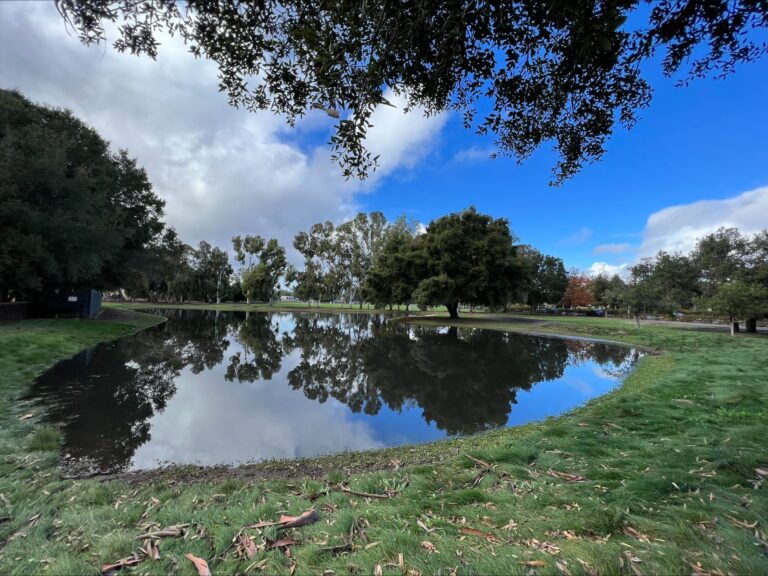
How Stanford Transforms Rain into 120 Million Gallons of Opportunity
Stanford’s stormwater capture system increases resilience, using open spaces as part of a regional water management network.

Taking care of yourself is essential to sustaining your work and wellbeing. This tool connects Stanford faculty and staff with resources, tips, and opportunities to support mental, physical, and emotional health. From managing stress or eco-anxiety, to finding community and balance, explore practical ways to care for yourself while contributing to a thriving and sustainable campus.

Destress, reflect, and reconnect with nature when climate concerns feel overwhelming at spaces including the Windhover Center, the Papua New Guinea Sculpture Garden, and Lake Lagunita.

Participate in free yoga and meditation sessions every Monday to Thursday designed to help you center yourself and offer practical tools for navigating climate emotions.
From harvesting fresh produce, to planting new crop rotations and composting, these spaces are great hands-on learning opportunities for you to meet like-minded environmentalists, develop practical farming skills, and support Indigenous-led agroecological practices. Getting outdoors and volunteering with others is a great way to contribute to your wellness practice and give back to the land!


CIRCLE (Community-minded Interventions for Resilience, Climate Leadership, and Emotional Well-being) at Stanford Psychiatry develops mental health interventions to improve resilience against climate distress and to grow networks of trained practitioners who can support climate-mental health intersections.

Receive a personalized “arts prescription” connecting you with campus arts activities tailored to your interests and well-being needs. Strengthen your capacity for climate resilience while improving your sense of belonging and community through cultural engagement.
Stanford’s stormwater capture system increases resilience, using open spaces as part of a regional water management network.

Jasper Ridge Biological Preserve unites science, research, culture, education, and stewardship.

Stanford’s first-ever Climate Week brought together over 40 events, uniting students from all seven schools to tackle the climate crisis.