Power Smart Practices
On hot days, review campus conservation best practices to help outsmart hitting peak power.


Outsmart hitting our peak power by reducing electricity on weekdays from 2 to 6 p.m. on hot summer and early autumn days.

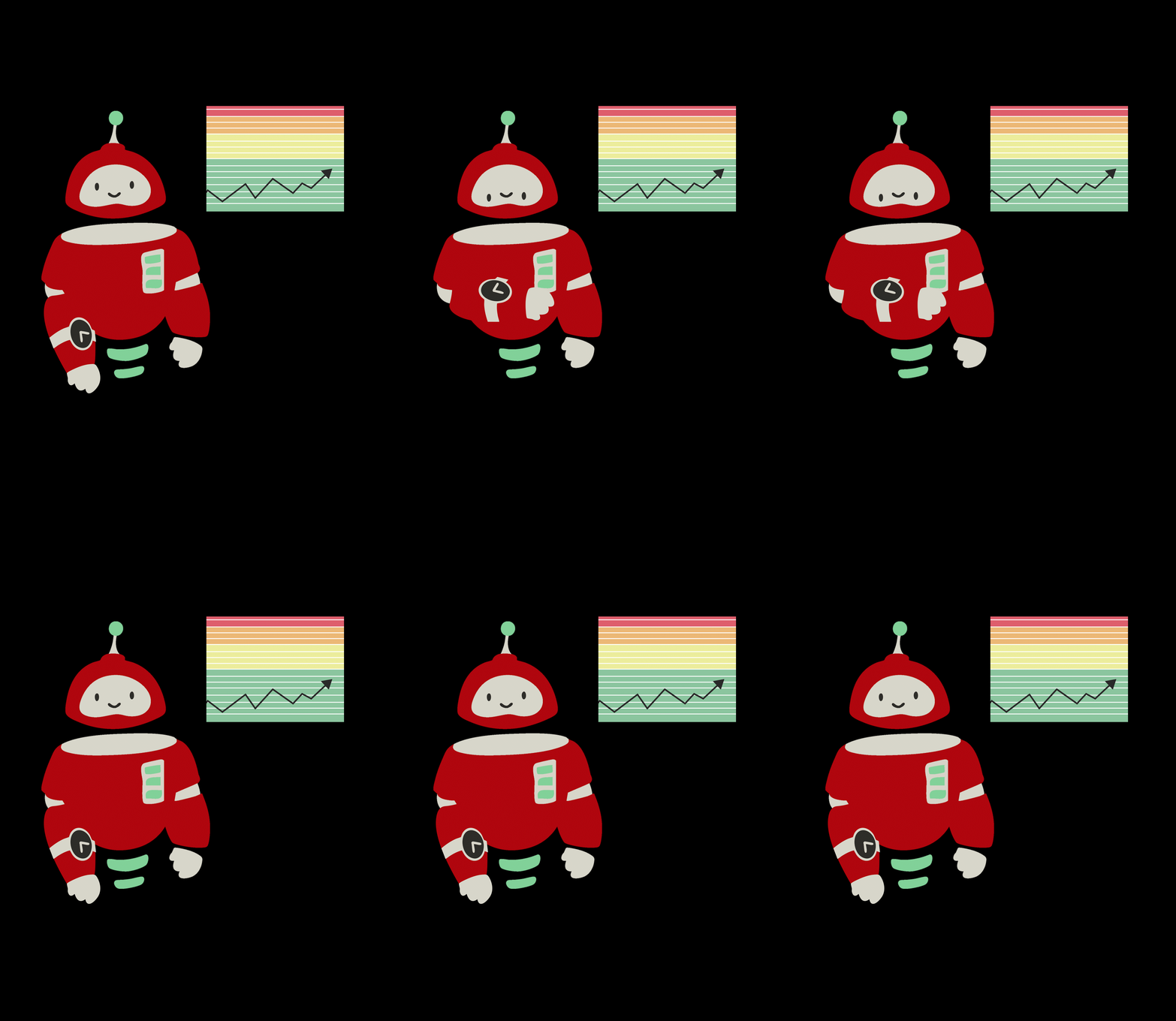
Electric Load Status: Stanford Power is in the green zone and operating under normal conditions. Please continue to follow typical conservation best practices.
Enjoy outdoor, summer activities and minimize heavy electricity use during peak hours: 2 to 6 p.m.
Set AC to 78 degrees or higher, if health permits.
Smartly time laundry machine, stove, and oven usage outside peak hours.
Charge electric vehicles outside peak hours.
Shut window coverings before the sun rises high in the sky.
Take the stairs instead of the elevator.
Turn off or unplug any unnecessary lights, small appliances, monitors, computing devices, and other office equipment.
In labs, shut the sash on fume hoods.
Over the last decade, campus growth, increasing electrification, and more extreme heat events have increased Stanford’s electricity demand from its transmission line.
On hot days in the summer and early fall, electricity consumption increases significantly. The closer the electricity load gets to the campus’s transmission capacity, the more likely the campus will need to implement curtailment to avoid outages.
Critical teaching and research happens on campus, and it is home to over 15,000 students. We need to protect our power supply by reducing electricity usage on hot days between 2 and 6 p.m.
Reduce electricity usage from 2 to 6 p.m. on hot weekdays to keep our collective electrical load at or below 80%.

Prepare for Power Smart Alerts on weekdays with over 90 degree temperatures. These alerts will show up through the Sustainable Stanford website, Stanford Report, and various Slack channels. Whether you see or receive an official “Power Smart Alert” or not, please respond by reducing electricity usage during 2 to 6 p.m.
Power outages are unplanned and can impact everyone with little to no notice. Curtailment refers to planned outages, where the campus can strategically turn off lower-priority uses in order to maintain power to critical needs. Curtailments can prevent system-wide power outages.
If Stanford Power electrical load exceeds capacity, there will be a need for curtailment. In a curtailment situation, electricity feeders at the Central Energy Facility (CEF) substation will be manually shut down, and feeders to certain buildings or facilities will be turned off. This action requires highly trained individuals wearing the highest levels of personal protective equipment to manually turn off high-voltage switches to these CEF substation feeders.
Stanford is actively working with PG&E to replace its single transmission line (known as the Jefferson Line) with a modern, redundant connection that provides the capacity and reliability for the university needs into the future. The upgrade will take into account normal campus growth as a result of retrofits and building renewals, specific future projects that include data centers, increasing electric vehicles (both fleet and personal), as well as the growing need for additional cooling that comes with both campus growth and increasing regional temperatures. This additional cooling nee will be met by an expansion of the Central Energy Facility in two phases, the first phase starting in 2026 and the second phase in 8-12 years. The engineering, permitting, and construction of this new transmission connection is expected to be completed over the next decade, so Stanford will need to be “Power Smart” for the next several years.
Do you know of high electric loads on campus? Share with Sustainable Stanford opportunities to be Power Smart where you live or work for a chance to win a campus café or bookstore reward for your electric prowess!

On hot days, review campus conservation best practices to help outsmart hitting peak power.

As a facility or building manager, reduce energy consumption and cut costs with these strategies.

Discover tools and rebates for conservation in the most energy-intensive spaces at a research institution.