
Protected: Leave Your Legacy by Supporting Stanford’s Conservation Program
There is no excerpt because this is a protected post.

While this year’s rainfall has partially helped California recover from years of extreme drought conditions, water conservation remains a critical issue and a key component of sustainability. Stanford University, in compliance with the state of California, continues to minimize water waste through prohibiting irrigation during and within 48 hours of rainfall, restricting spray irrigation between 7 am and 7 pm, reducing potable water use for fountains and decorative water features, and more. Thanks to these efforts, domestic water use trends on campus remained consistent in 2022 with data from previous years. The Stanford Water Planning and Stewardship team appreciates the community’s commitment to water conservation and encourages students, faculty, and staff to prioritize water efficiency.
There is no excerpt because this is a protected post.
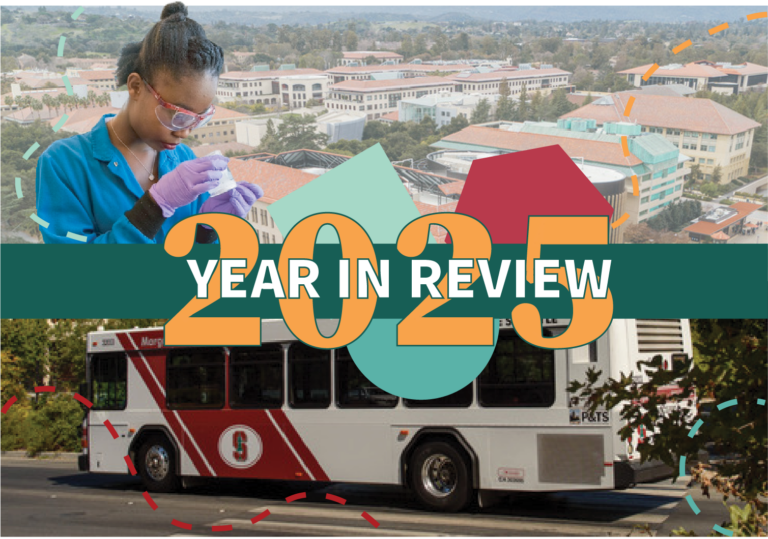
From sustainable beats and food recovery leaps, the year 2025 set a new standard for Stanford traditions and operations.
The university earns STARS Platinum in version 3.0, the highest score under the sustainability rating system.