
Building Energy Demand
Building energy demand has reduced by 41% since 2011 despite campus growth
Stanford’s main campus includes more than 600 buildings powered by low-carbon heating and cooling from the Central Energy Facility, with 100% of electricity used on campus matched with renewable energy credits (RECs). While these RECs neutralize annual emissions from purchased electricity, reducing overall energy demand remains essential to reducing emissions. Lowering demand reduces peak loads, strengthens grid reliability, and supports the university’s transition toward 24/7 carbon-free electricity while freeing capacity for electrification of heating, cooling, and transportation.
The university’s top 27 most energy-intensive buildings, many of them research laboratories, represent roughly 60 percent of total campus energy use. Laboratory buildings consume three to five times more energy per square foot than offices or residences due to ventilation, equipment, and continuous operation needs. Recognizing this, Stanford is driving efficiency improvements in labs and across all campus buildings, advancing deep retrofits, optimizing low-temperature hot-water systems, and expanding smart building controls. Ongoing efforts focus on integrating new technologies into legacy systems, maintaining performance through data-driven monitoring, and collaborating with academic and industry partners to scale proven strategies university-wide.
Advancing Smart, Low-Carbon Buildings Through Research and Operations
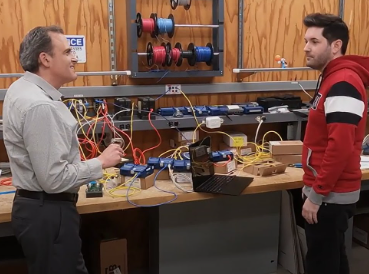
Stanford’s Benson Lab has teamed up with the university’s facilities experts to turn the campus into a living laboratory for energy efficiency. By combining academic research with real-world operations, they’ve launched the Scheduling for Sustainabilityinitiative.
This project uses smart sensors and predictive data to rethink how we heat and cool our buildings. Instead of running HVAC systems on a fixed timer, new “occupancy-based” controls adjust in real-time based on who is actually in the room. Early tests show this can cut HVAC energy use by 20% to 30%, making our buildings smarter and our carbon footprint smaller.