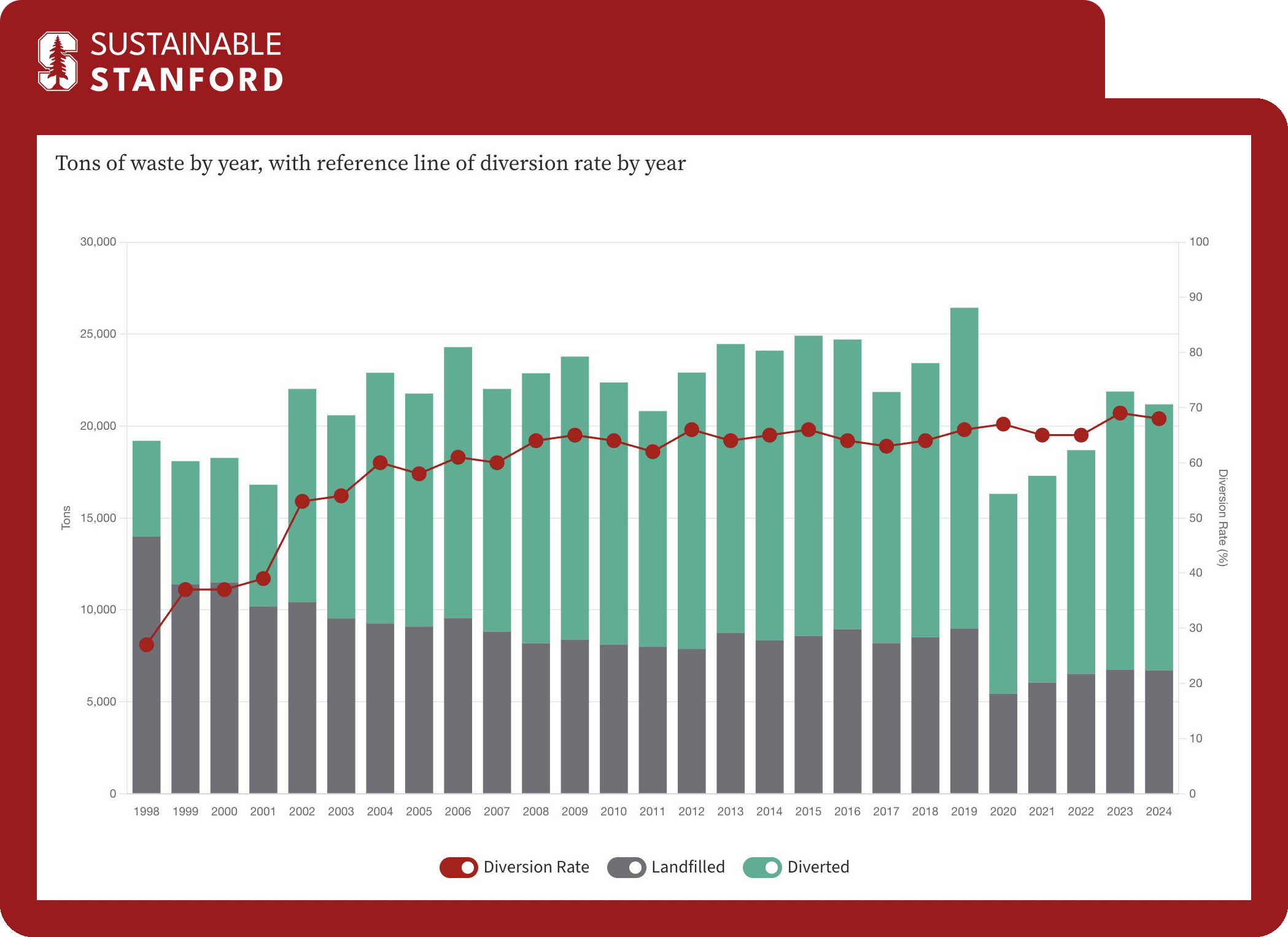
Stanford has a goal to achieve zero waste through waste reduction, reuse, recycling, and composting. Both culture and systems change will be necessary to achieve this goal and to create a wasteless campus community. The university has consistently achieved a 60% diversion rate from landfill and continues to reduce waste despite population growth. Stanford continues to monitor diversion rates, waste trends over time, and the amount and types of materials generated on campus.

Tons of waste by year, with reference line of diversion rate by year
Loading…

Tons of waste by type for 2025

Loading…

Tons of waste by year, filtered by type

Loading…

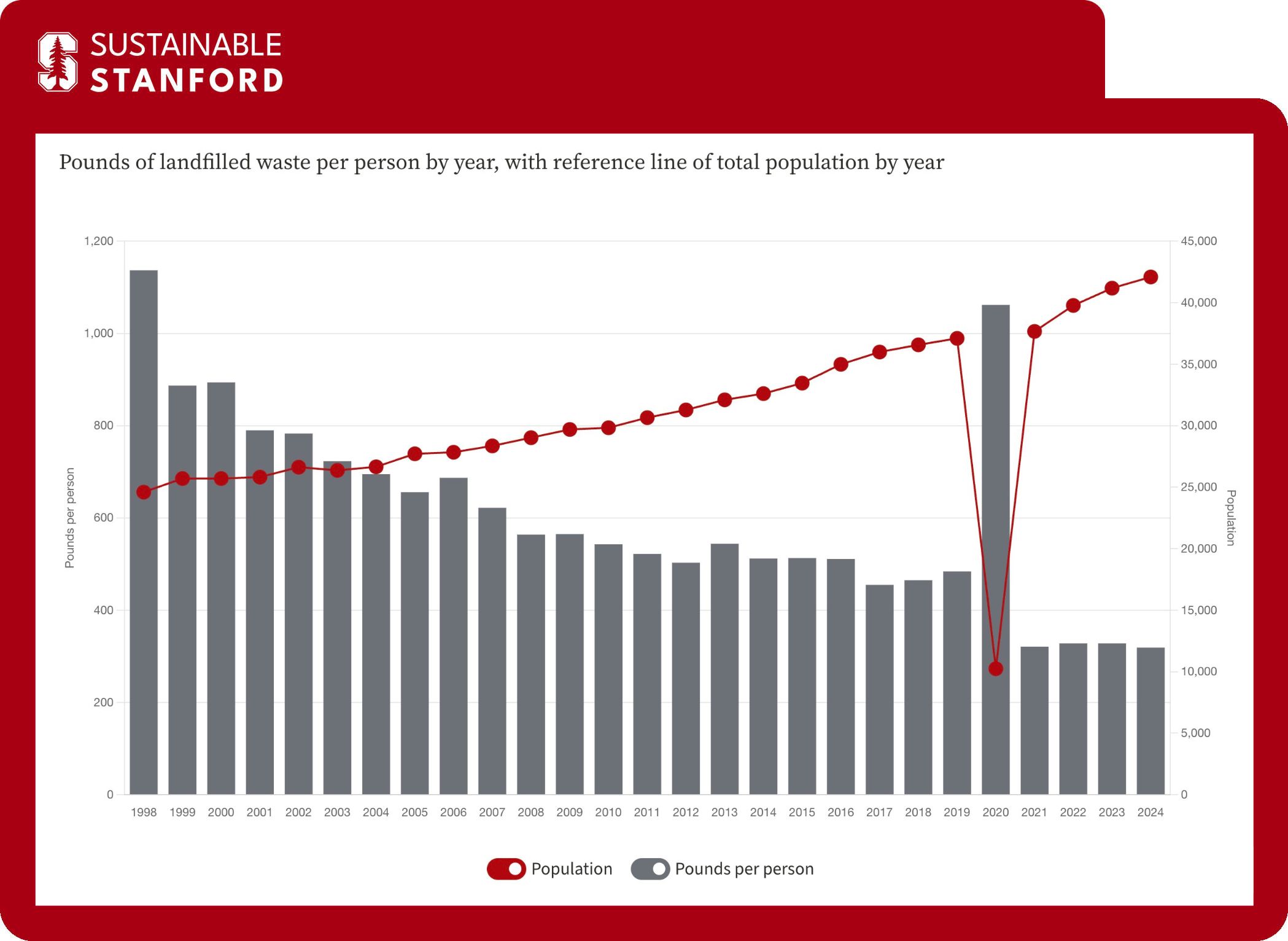
Pounds of landfilled waste per person by year, with reference line of total population by year
Loading…

1. In 2020, the campus population declined due to the COVID-19 pandemic, leading to a significant increase in the tons of landfilled waste per person.

2. In 2025, categories were modified in order to more accuratly represent the material and its use. For example, Reduction and Reuse was introduced in 2025 to capture edible food leftovers, which was previously categoried under Organics. Additionally, Other Recovered Material was removed and the items were reclassified under Recyclables. Lastly, wood chips, logs, brush-to-chips, and grasscycling have been reclassifed from Organics to Reduction and Reuse because that material is repurposed to some areas on campus.

Diversion Rate – The percentage of material diverted away from landfill through reduction, reuse, recycling, and composting

Diverted – The amount of material diverted from landfill through reduction, reuse, recycling, and composting

Construction and Demolition – Include material such as concrete, sheetrock, construction reuse, and mixed debris

Recyclables – Include items such as mixed recyclable material (plastic, glass, metals) in addition to items such as bicycle tires, mattresses, lab gloves, and miscellaneous and bulky items

Electronics – Includes computers, monitors, printers, copiers, phones, and lab equipment

Landfilled – The amount of material sent to landfill

Organics – Includes food scraps, food-soiled paper, compostable serviceware, landscape/plant debris, yard trimmings, wood, and stable waste. Organic materials listed in this category are destined to be composted.

Reduction & Reuse – Include logs to chips, brush-to-chips, grasscycling, general items (small furniture, dishes, sports gear, etc.), surplus furniture, books, and food donations

Explore Stanford’s progress towards zero waste.