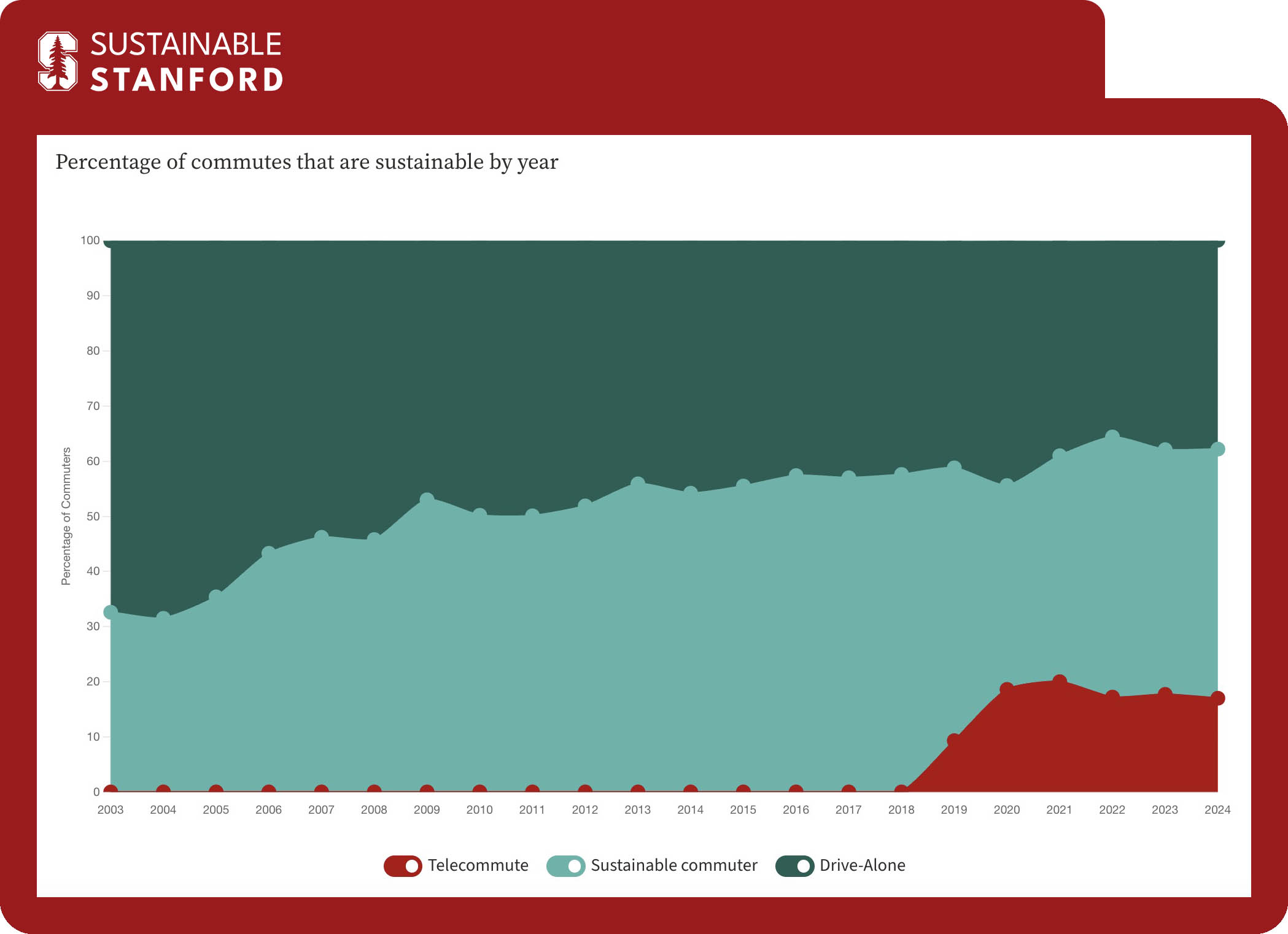
The success of Stanford Transportation’s sustainable commute programs including vanpools and free public transit, along with the recent surge in telecommuting, contributed to the university reaching an all-time low drive-alone rate. The percentage of drive-alone commuting students, faculty, and staff decreased from 67% in 2003 to 38% in 2024. Bike commuting climbed from 9% in 2002 to 19%.

Transportation

Percentage of commutes that are sustainable by year
Loading…

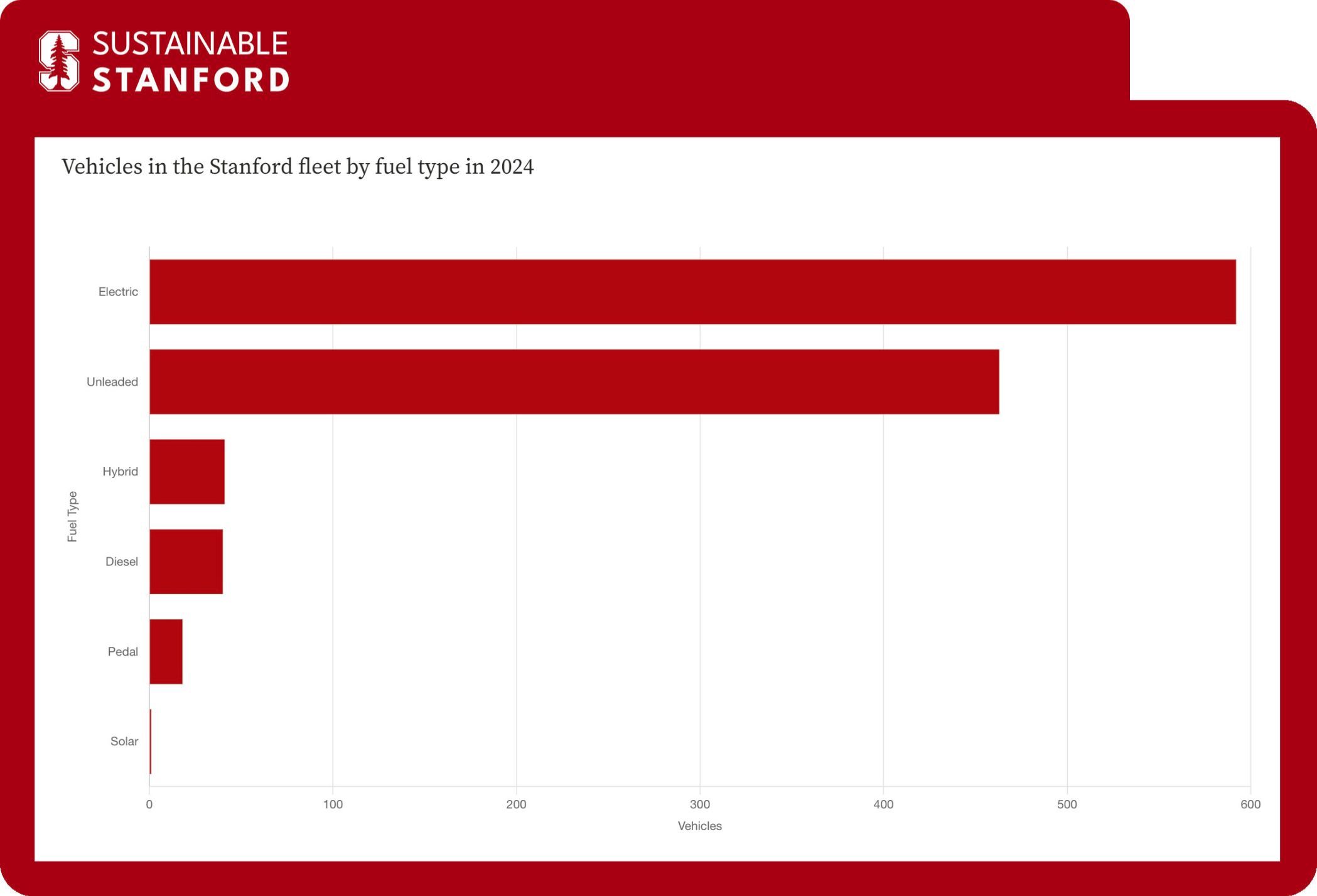
Vehicles in the Stanford fleet by fuel type in 2024

Loading…

1. Before 2019, a sustainable commuter was defined as someone who travels to work via bicycle, bus, Caltrain, carpool, Marguerite, vanpool, walking, or “other,” which includes motorcycles, telecommuting, personal mobility devices, ride-hailing, and more.

2. In 2019, a new mode split methodology using daily commuter diary responses was used, and telecommuting became a separate category. After 2019, a sustainable commuter is defined as someone who travels to work via bicycle, bus, Caltrain, carpool, Marguerite, vanpool, walking, or “other,” which includes motorcycles, personal mobility devices, ride-hailing, and others.

For more details about Stanford’s sustainable commute programs, visit Stanford Transportation.