Through the energy facility conversion to hot and chilled water distribution, as part of the Stanford Energy System Innovations (SESI) project, and the university’s 100% renewable electricity procurement, the university has the ability to more efficiently manage its electricity or power needs. Stanford can select the time of day for usage, work with the California grid, and more accurately forecast campus load.

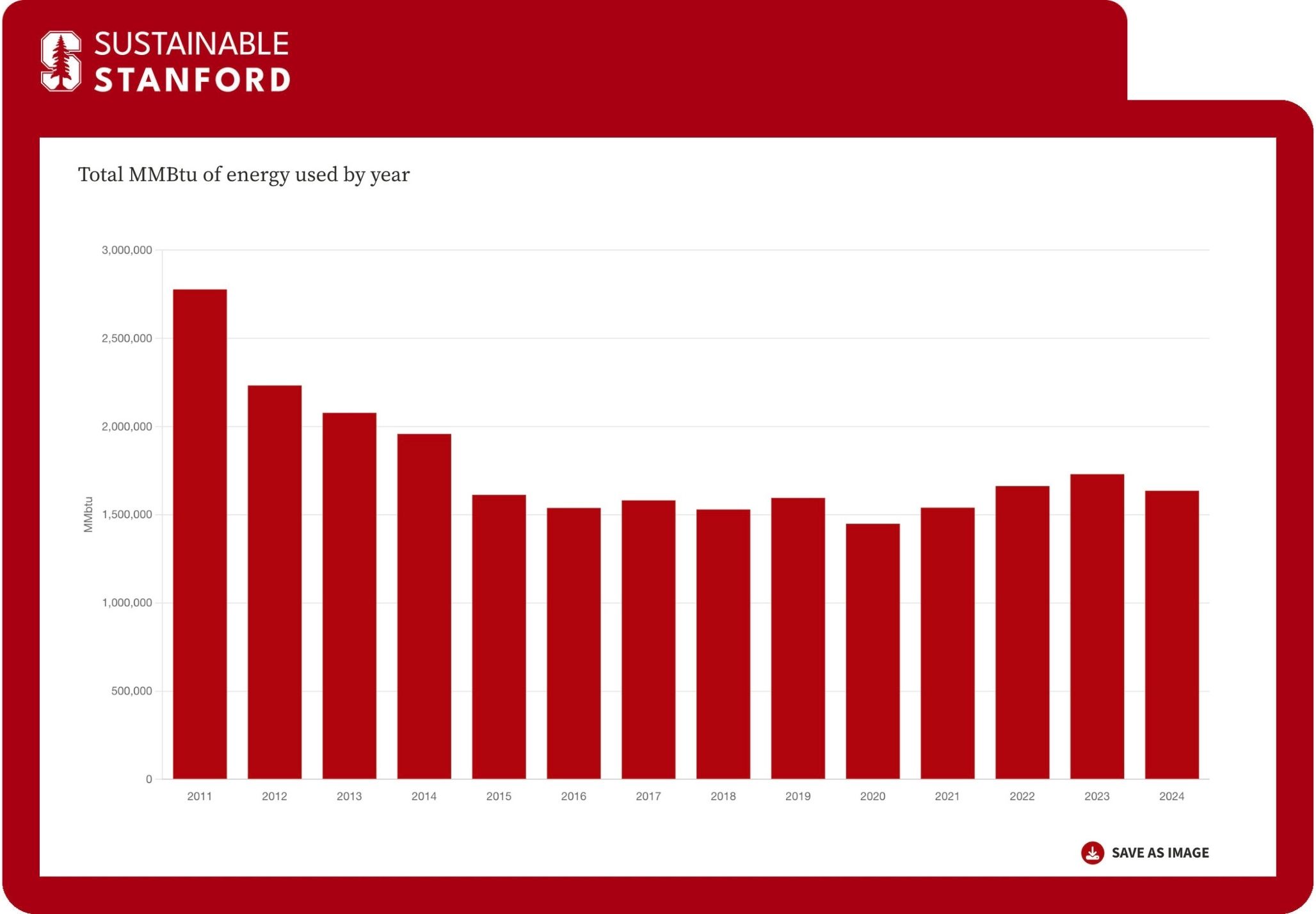
Total MMBtu of energy used by year
Loading…

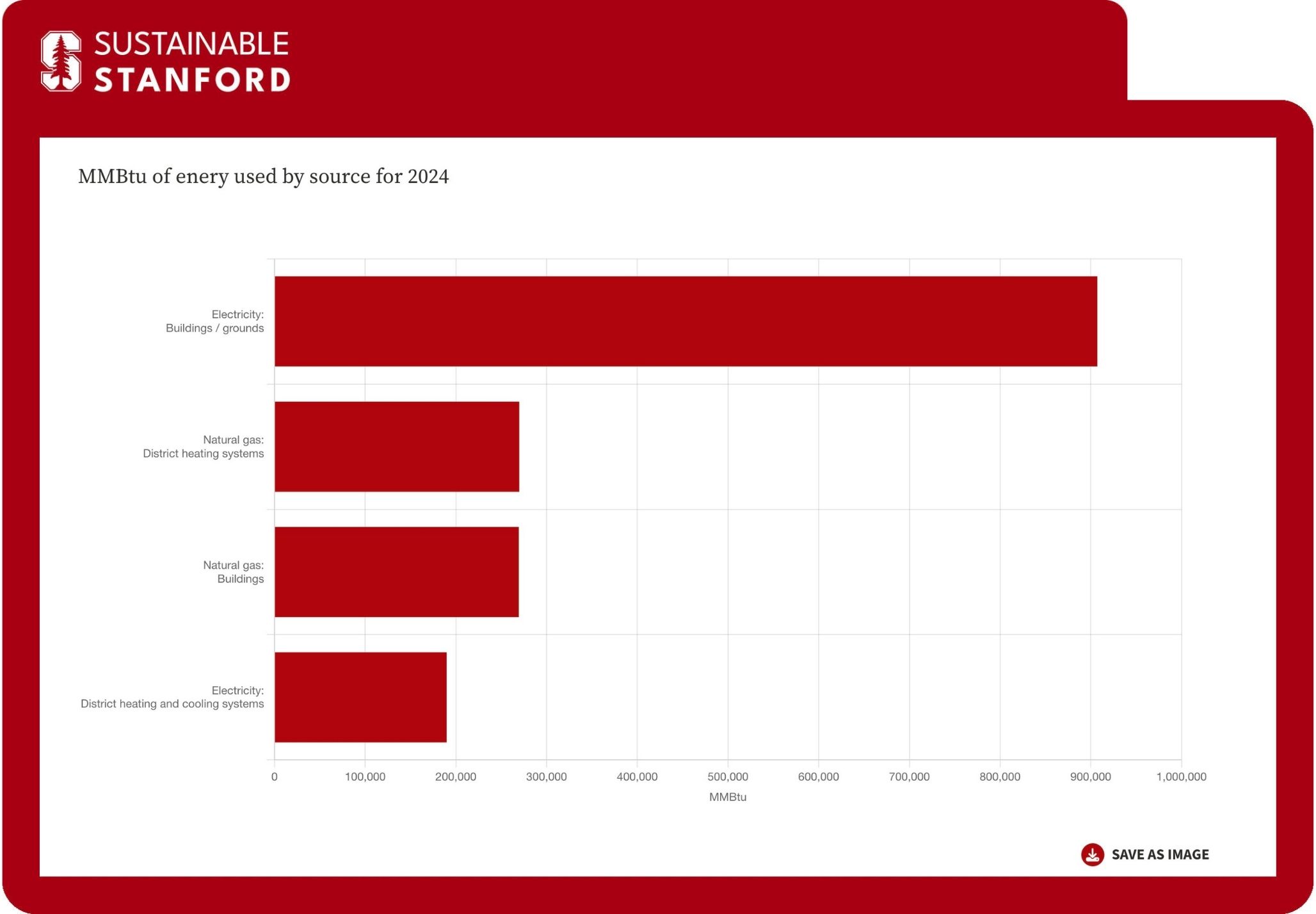
MMBtu of enery used by source for 2024
Loading…

MMBtu of energy used by year, filtered by source

Loading…

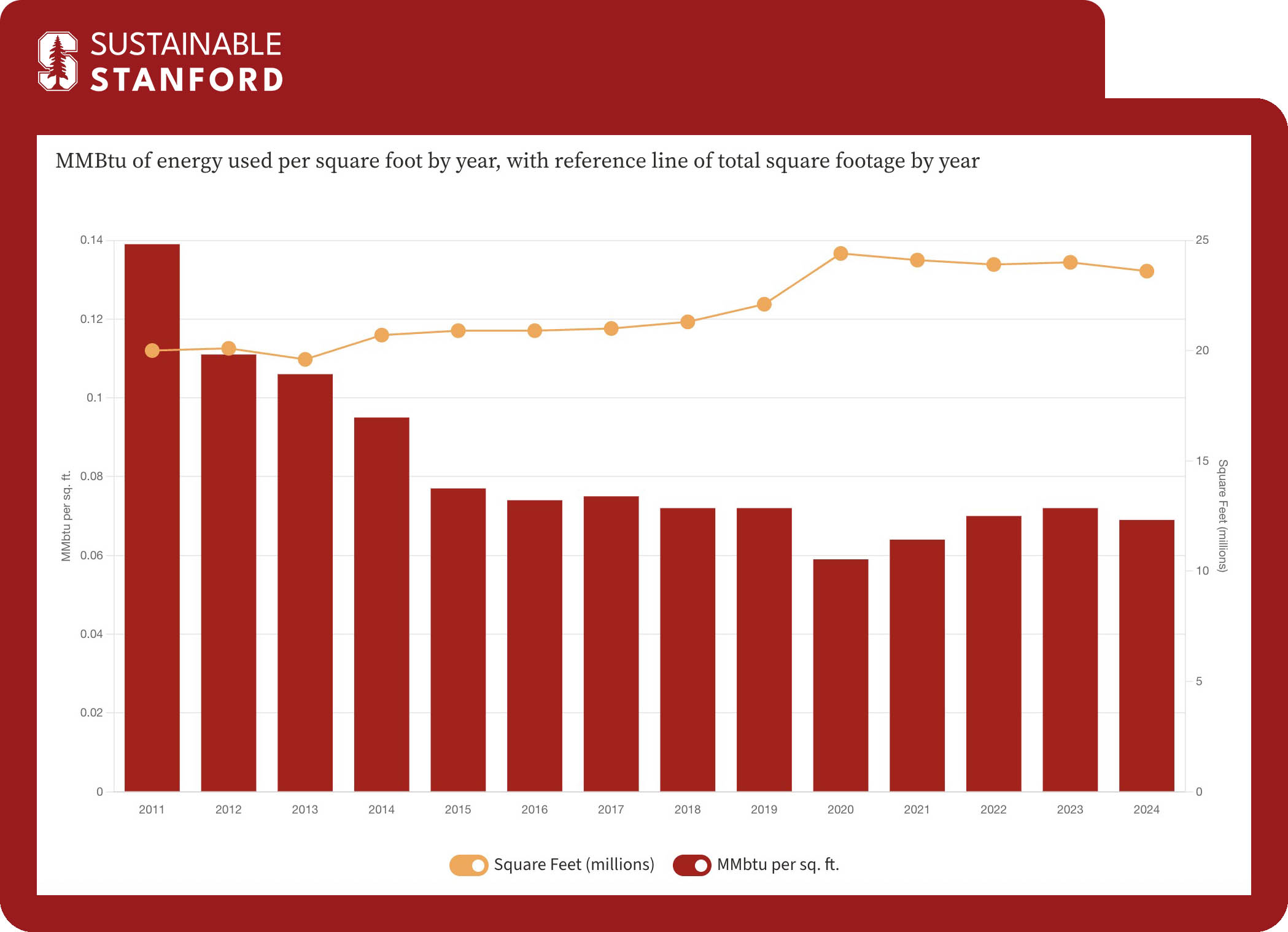
MMBtu of energy used per square foot by year, with reference line of total square footage by year
Loading…

1. Energy and building square footage data reported includes all Stanford locations that align with the university’s full Scope 1 and 2 emissions boundary. This includes all Stanford owned and operated buildings in North America.

2. Efficiency increases in Stanford’s energy system as a result of SESI in 2015 allowed for a significant reduction in the amount of natural gas needed to generate building heating and steam.

3. Building square footage served by Stanford Utilities building heating services increased ~26% from 2019 to 2022, prompting increased natural gas use. The impact of this was largely unrealized until ~2022 due to reduced occupancy during the global COVID-19 pandemic.

MMBtu – One million British thermal units; used to measure the heating content and value of a fuel

Electricity: Buildings / grounds – Electricity used in owned or leased buildings, such as buildings receiving electricity through Stanford Utilities submeters, buildings with their own utility meter on campus, residential rented apartments off campus, leased offices off campus, and outdoor equipment like streetlights and electric vehicles chargers

Natural gas: Buildings – Natural gas used in owned or leased buildings, such as buildings with their own utility meter on campus, residential rented apartments off campus, and leased offices off campus

Electricity: District heating and cooling systems – Electricity used by Stanford Utilities district heating and cooling systems, which may be used to generate hot or chilled water to provide heating and cooling to campus buildings or to provide process steam to buildings

Natural gas: District heating systems – Natural gas used by Stanford Utilities district heating systems, which may be used to generate hot water to provide heating to campus buildings or to provide process steam to buildings. Before 2016, natural gas was also used in a cogeneration plant for building cooling.

For more details about Stanford’s energy system and innovations, visit Stanford Energy System Innovations.