
Emissions Mitigation
Stanford’s ongoing dedication to mitigating emissions has yielded remarkable results, including an 82% direct reduction in Scope 1 and 2 emissions since 2011. Stanford is advancing its Scope 3 management by strengthening measurement methodologies that support broader climate action across higher education.
The Next Decade of Climate Action for Scope 1 & 2 Emissions
With major reductions in direct emissions already achieved, Stanford’s Climate Action Plan targets the remaining sources needed to reach the next phase of decarbonization, prioritizing actions that make the most effective use of available resources.

The Next Decade of Climate Action in Scope 3
Stanford is advancing Scope 3 emissions reduction by measuring, forecasting, and mitigating key sources, while its research and teaching help drive solutions that extend far beyond campus boundaries.
Disclaimer: Scope 3 emissions projections are based on the best available data, methodologies, and external scenarios at the time of analysis. These projections reflect a range of assumptions about future technologies, policies, and market conditions, all of which are subject to change. As a result, projected values should be understood as estimates rather than precise forecasts.

Measuring Our Emissions
Stanford measures, tracks, and manages emissions across all scopes, taking responsibility for mitigating our impact. Greenhouse gas emissions fall into three categories:
- Scope 1: Direct emissions generated on campus by fossil fuel combustion and from sources owned or controlled by Stanford.
- Scope 2: Emissions generated off campus by grid electricity purchased by Stanford.
- Scope 3: Emissions resulting from Stanford’s operations generated by sources not owned or directly controlled by Stanford. Eight out of 15 categories of Scope 3 emissions defined in the Greenhouse Gas Protocol are applicable to Stanford.
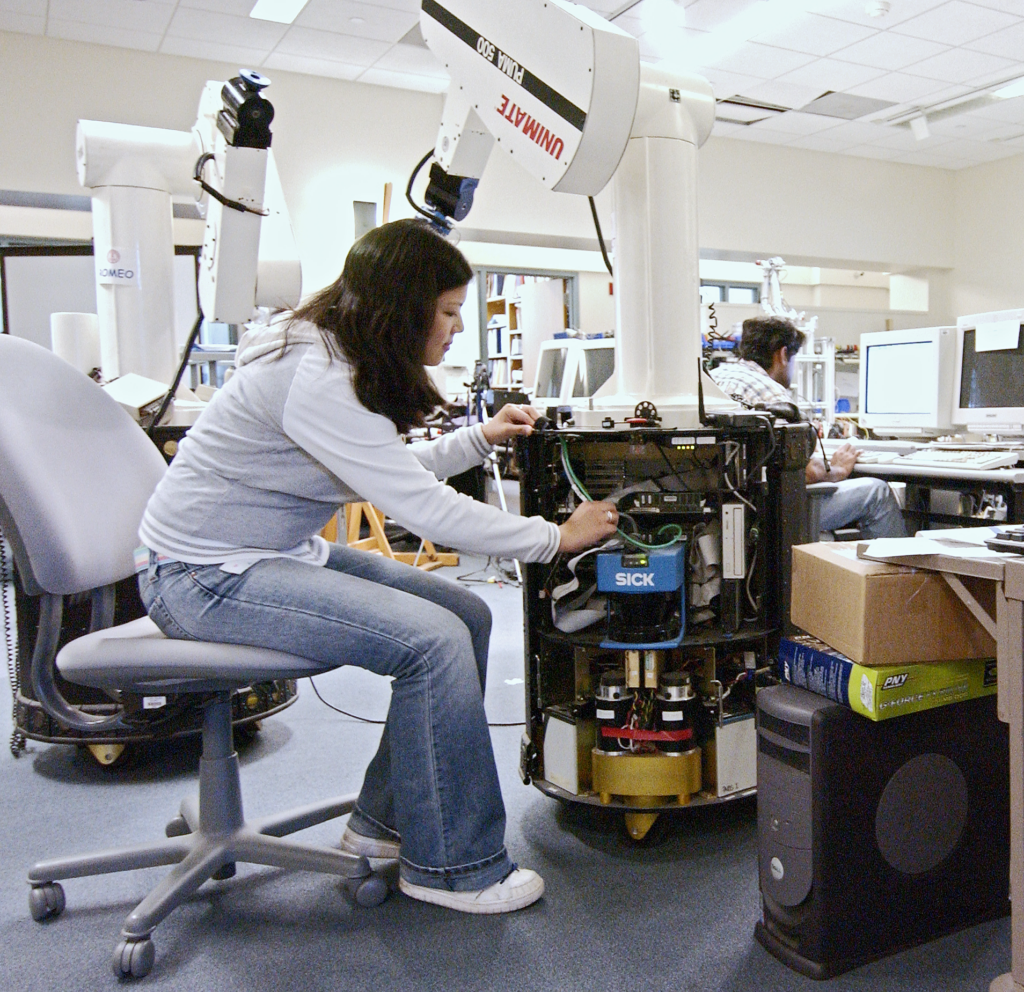
Assessing Impacts of Artificial Intelligence
AI is becoming an increasingly important tool in research, teaching, and campus operations. While advanced computing requires significant energy and infrastructure, Stanford is working to ensure that the growth of digital technologies aligns with its sustainability goals. The university is evaluating the environmental impacts of computing resources, exploring strategies to support digital infrastructure with renewable electricity, and developing guidance for responsible and efficient AI use. At the same time, Stanford is exploring responsible uses of AI tools that could support emissions modeling and energy demand analysis.

Quantifying Carbon Storage Across Stanford’s Open Spaces
Stanford manages thousands of acres of natural lands that function as long-term carbon sinks, offering a rare opportunity to quantify and enhance ecosystem-based carbon storage as part of the university’s climate action strategy. Stanford’s Natural Lands and Carbon Sequestration Living Lab Fellowship launched a research initiative to calculate carbon stored across Stanford’s open spaces, excluding infrastructure, wetlands, and reservoirs, to inform future restoration strategies. The project established a foundational carbon accounting baseline for the university’s natural lands.
The team used GIS analysis, field-based vegetation classification, literature review, soil sampling, and NRCS Web Soil Survey data to quantify both aboveground (grassland, scrub, woodland) and belowground (soil) carbon stocks. The analysis found that Stanford’s open spaces store between 210,000 and 610,000 tons of carbon, with aboveground carbon—primarily oak and redwood woodlands, grasslands, and shrublands—accounting for 14.4 percent and belowground carbon representing 85.6 percent.
These findings are not applied against the emissions profile but can guide future land stewardship, restoration priorities, and opportunities to increase carbon sequestration on Stanford’s natural lands.
For campus affiliates interested in voluntarily purchasing carbon removal offsets, explore Stanford’s carbon removal guidelines and guidance.